Producing a compelling YouTube video that earns views and subscribers requires proper planning. You cannot reliably wing your way into a viral clip — and in 2026, the algorithm punishes videos that fail to deliver on their opening promise.
The first step is crafting a quality YouTube video script: outlining key points, structuring the topic, and writing dialogue that keeps viewers engaged through the first 30 seconds and beyond.
Viewer satisfaction is now the primary ranking signal. Scripts are how you engineer retention, re-hooks, and payoffs that tell YouTube your content was worth recommending.
Read on for the Promise-Pivot-Payoff framework, format-specific tips, and how Van Gogh Studio can speed up production.
Quick Verdict
A strong YouTube script in 2026 follows the Promise-Pivot-Payoff framework: hook with a bold promise in the first 10 seconds, pivot with unexpected context in the middle, then deliver the payoff. Skip slow intros, write conversationally, plan visuals alongside dialogue, and weave in natural keywords for SEO. Scripts drive retention — and retention drives viewer satisfaction. Use Van Gogh Studio Agent to brainstorm ideas and image-to-video to prototype scenes before filming.
What Is YouTube Video Scriptwriting?
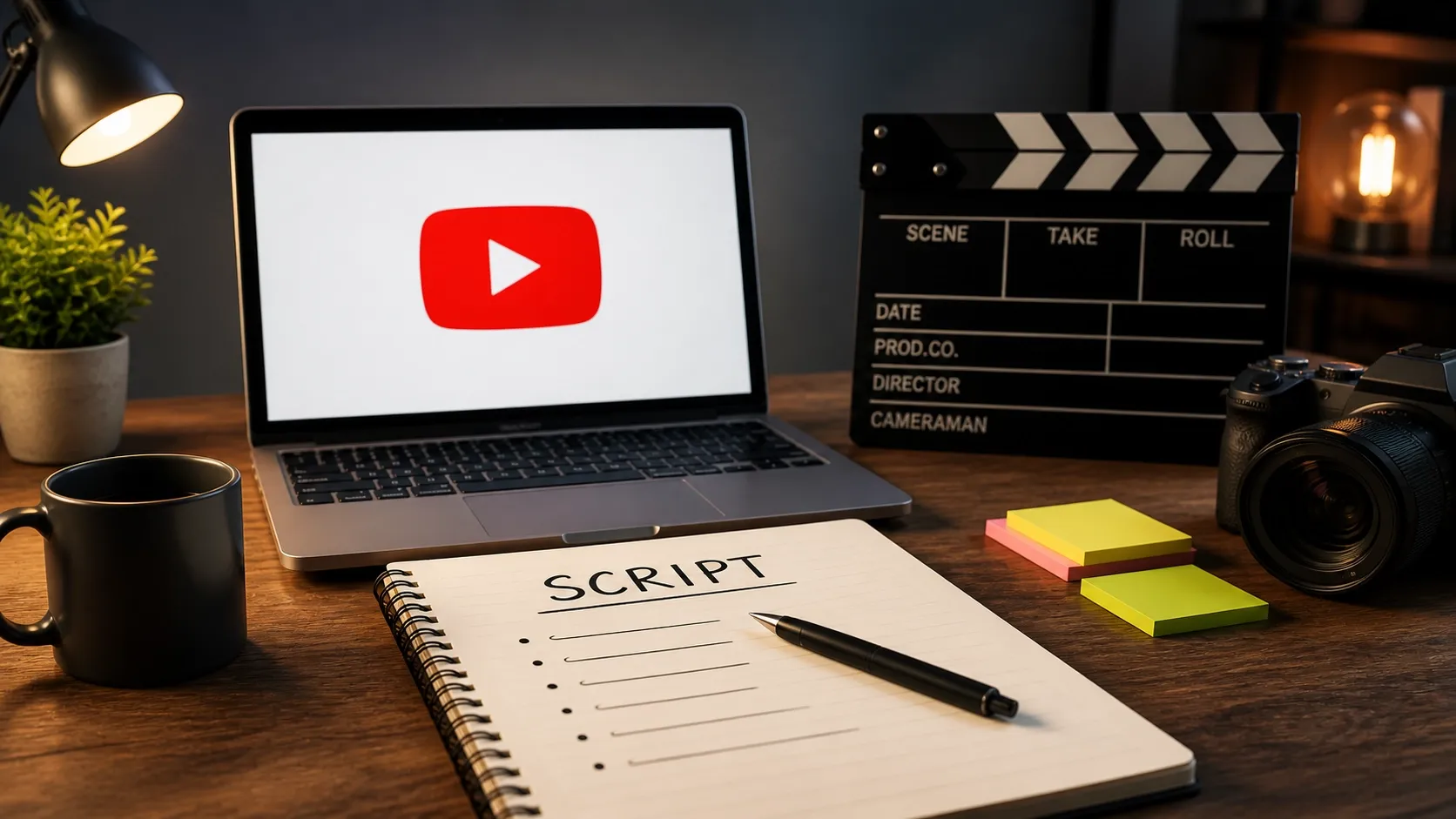
A YouTube video script covers what you intend to say and show before you publish — minimizing filler and improving clarity.
Without a solid script, you risk multiple takes, rambling delivery, and videos that lose viewers in the first 30 seconds.
Scripts directly impact channel growth:
- Watch time and retention — Structured content is easier to follow and keeps viewers watching.
- Engagement — Professional, focused delivery earns comments, shares, and return visits.
- Viewer satisfaction — The algorithm rewards videos that deliver on their title and thumbnail promise from start to finish.
For hook formulas that work in Shorts, see How to instantly hook viewers on YouTube Shorts. For the full retention playbook, read How to go viral on YouTube.
What Makes a Quality YouTube Video Script?
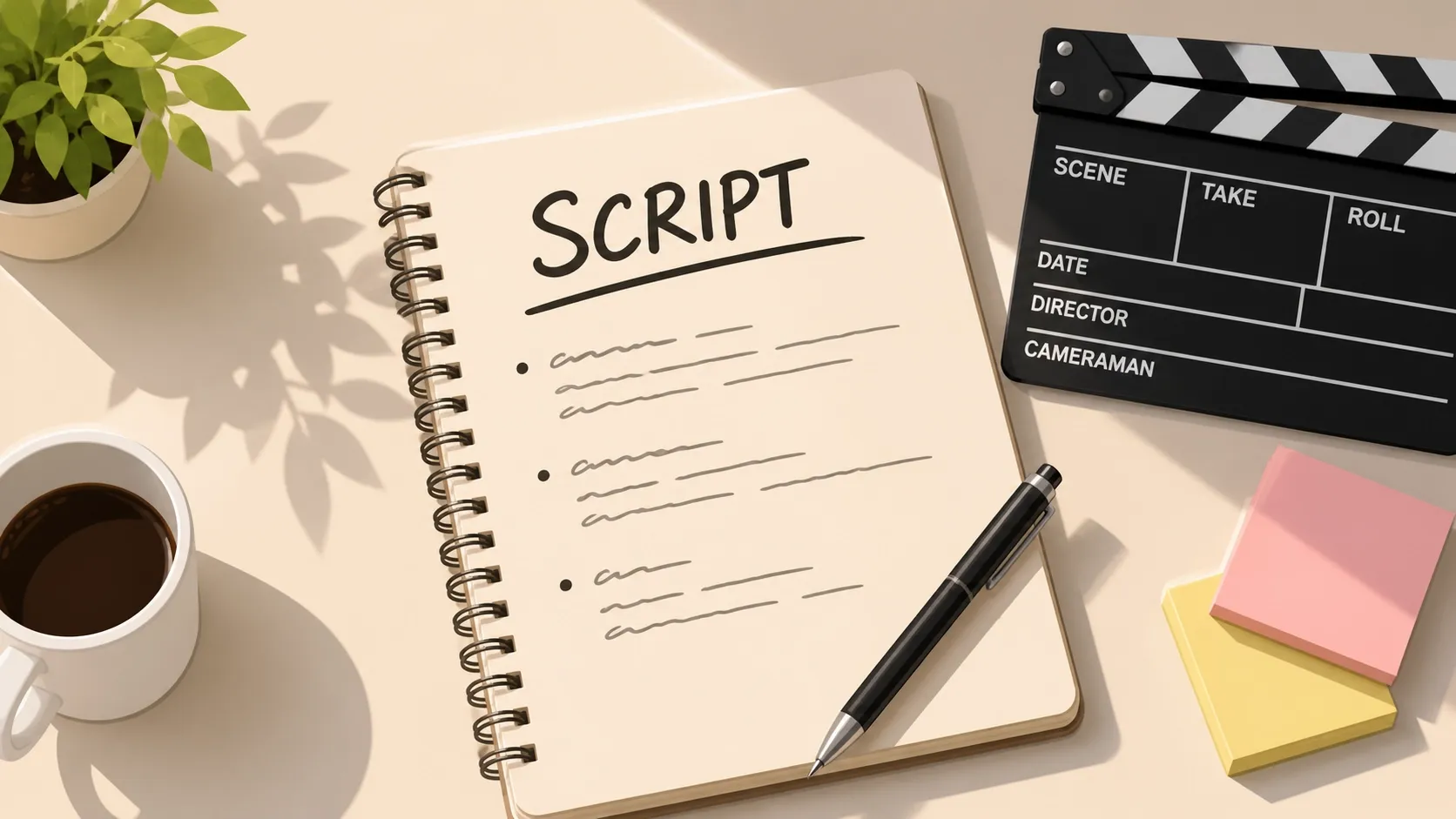
Every solid YouTube script rests on three pillars:
#1. Decide on a Video Title
Before writing, settle on a title or core idea. What topic and format will you use — tutorial, commentary, review?
Example: "How to Bake Vegan Muffins: A Beginner's Guide." Once the format is clear, structure the script from open to close.
Use the YouTube idea generator to brainstorm title-topic combinations, then validate keywords with How to rank #1 with YouTube keyword research.
#2. Identify Your Target Audience
Your audience dictates what you say and how you say it.
Consider their habits, passions, and problems. A fitness video for weight-loss beginners reads very differently from one targeting competitive athletes.
#3. Establish Your Brand Voice
A recognizable voice separates you from competitors. Choose an approach — authoritative, comical, dramatic — and stay consistent.
For example, @AlexMeyersVids uses a comical speaking style that makes his commentary instantly recognizable in a crowded niche.
Brainstorm voice and narrative ideas with Van Gogh Studio Agent before committing to a full script.
How To Write an Engaging YouTube Video Script
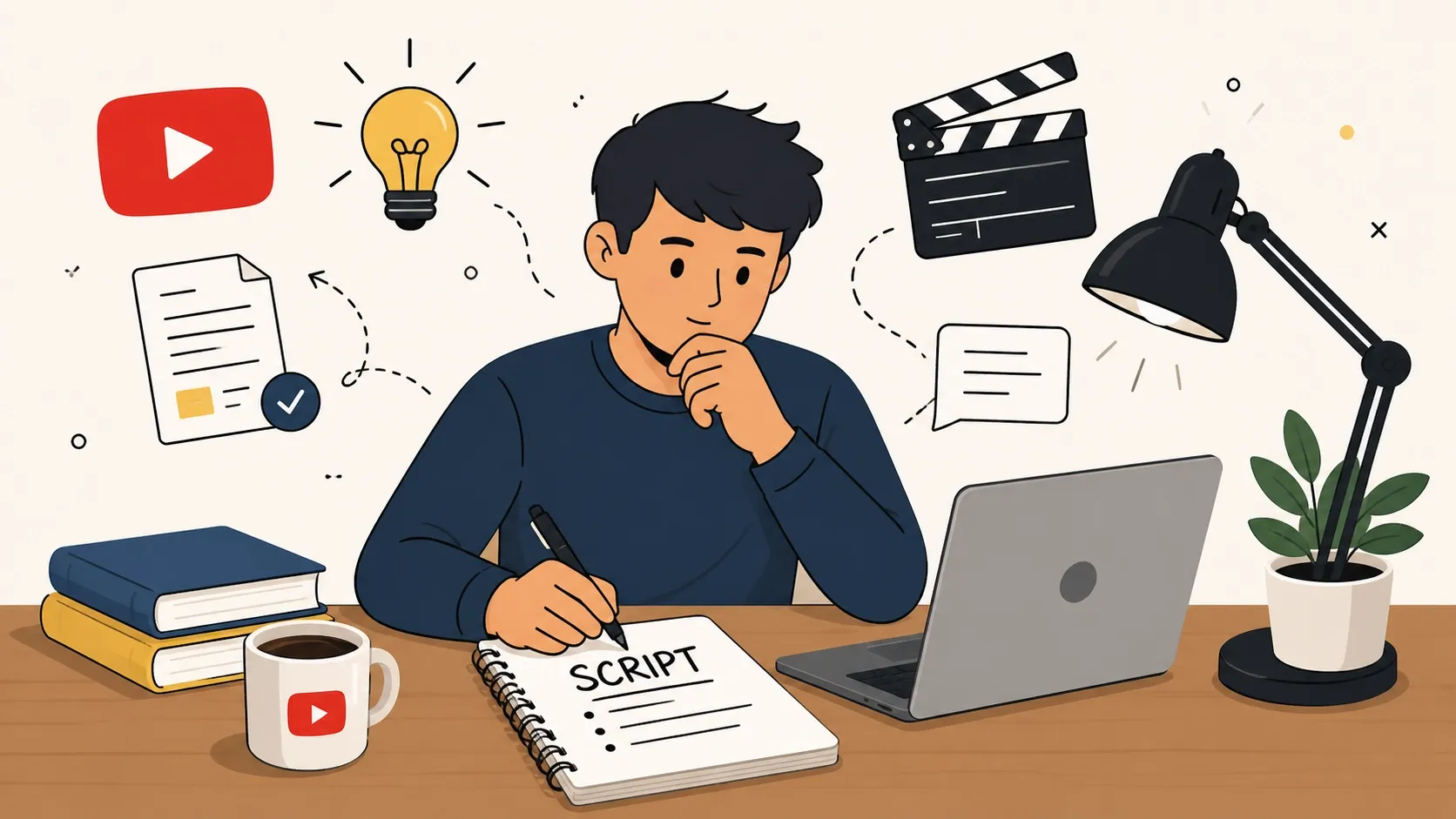
The old intro-body-conclusion formula no longer cuts it. In 2026, you need scripts that hook viewers immediately and re-engage them every few minutes.
Use the Promise-Pivot-Payoff framework:
- Promise — Open with a bold promise. "By the end of this video, you'll know how to conduct any presentation confidently."
- Pivot — Add unexpected context that builds curiosity. "But before I get into the fix, let me explain why we get nervous presenting in front of people."
- Payoff — Deliver the solution. "Now you know why you've been messing up — let's get into what you can do to fix it."
This uses psychology to retain viewers: promise early, stall the answer with a captivating middle, then reward them at the end.
Script template:
- Hook (0–10 seconds) — State the problem or result immediately. No logo splash or "hey guys, welcome back."
- Promise — Tell viewers what they will learn, then signal a brief detour.
- Pivot — Discuss the problem and supporting insights. Break into short key points.
- Payoff — Deliver solutions, answers, or results.
- Call to action — Ask for likes, comments, subscribe, or point to a related video.
Pair strong scripts with a compelling intro using the YouTube intro generator. Track whether your hooks hold retention with the YouTube analytics guide.
How Scripts Differ for Various Types of YouTube Video Formats
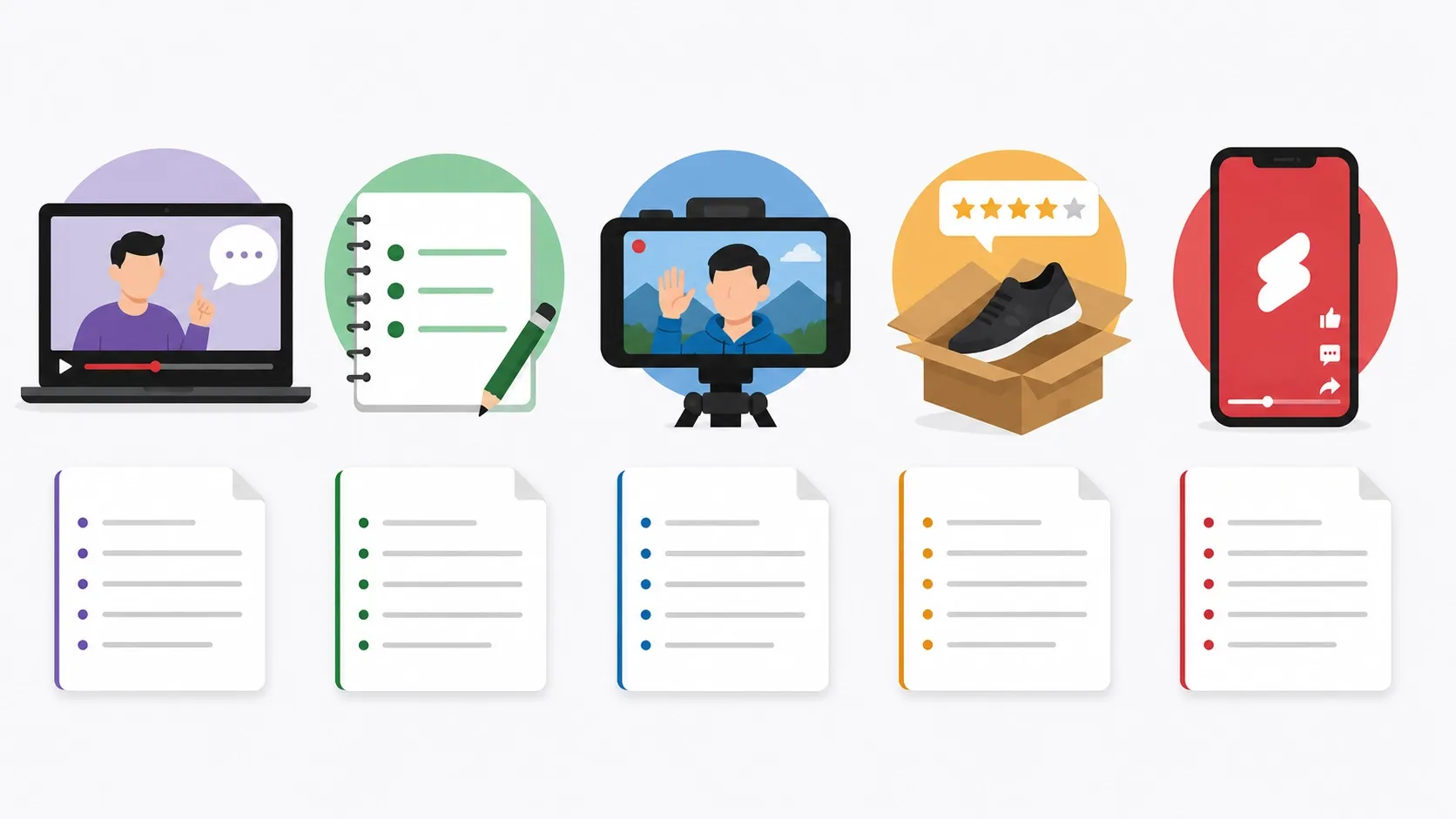
Script approach varies by format:
- How-to tutorials — Step-by-step structure. Less discussion, more direct instruction.
- Commentary/reviews — Bullet points instead of full scripts. Keep delivery natural and opinionated.
- Documentaries — Heavily researched, fully scripted dialogue with precise pacing.
- Faceless videos — No on-camera presenter, so the script drives visuals, narration, and pacing entirely.
Once your script is ready, use Van Gogh Studio's image-to-video to prototype scenes, or Agent to produce scripted Shorts without manual editing.
For packaging that earns clicks on scripted content, see Types of YouTube thumbnails and 6 YouTube CTR tips.
Common Mistakes to Avoid When Writing YouTube Video Scripts
- Slow introductions — Hook in the first 5–10 seconds or lose the algorithm test audience.
- Formal or robotic dialogue — Write how you speak. Conversational beats polished every time.
- Bad pacing — Do not drag or rush. Cut anything that does not serve the viewer.
- Ignoring SEO — Weave primary keywords naturally into your script; they should match on-screen content.
- Forgetting visuals — Plan what appears on screen alongside dialogue. Scripts are not audio-only.
- Clickbait promises — If the script cannot deliver what the title promises, retention collapses and viewer satisfaction drops.
How Can Van Gogh Studio Help You with YouTube Video Scriptwriting?
Van Gogh Studio automates video production so you can prototype script ideas in minutes instead of shooting and scrapping takes.
- Agent — Brainstorm ideas, clone trending Shorts, and edit scripted clips via conversational chat.
- Image-to-video — Turn script concepts into visual prototypes with AI-generated B-roll and scenes.
- AI image generator — Create storyboards and visual references before filming.
- YouTube intro generator — Test hook styles that retain viewers through the critical first 30 seconds.
Conclusion
YouTube video scripts make it easier to produce quality content consistently — and in 2026, they are essential for engineering the retention and satisfaction signals the algorithm rewards.
Use the Promise-Pivot-Payoff framework, write for your audience, and plan visuals alongside dialogue. Then track retention in YouTube Analytics and iterate.
Explore Van Gogh Studio to speed-track production and turn raw scripts into publish-ready videos.
You might also like
How to Go Viral on YouTube in 2026
Hook viewers in the first 30 seconds, re-engage throughout, and maximize session contribution.
How to Instantly Hook Viewers on YouTube Shorts
Shorts-specific hook formulas for the dedicated Shorts algorithm and scroll-stopping opens.
YouTube SEO Guide: Optimize Videos for More Views
Align script keywords with titles, descriptions, and tags for discoverability.
6 YouTube CTR Tips to Get More Clicks and Views
Pair strong scripts with thumbnails and titles that earn clicks from the right audience.
How to Get Viewers to Watch Multiple YouTube Videos
Script series formats, end screens, and playlists that extend viewing sessions.
How to Get More Views on YouTube: 12 Best Tips
12 actionable strategies covering the full growth funnel from scripting to analytics.
Create AI videos free
Try Van Gogh Studio free — text-to-video, image-to-video, and 300+ models in one place. Free credits on signup, no credit card required.
Try Free Video Generator