Getting more views on YouTube largely comes down to algorithmic recommendations — but those recommendations still start with how well YouTube understands your content.
In 2026, viewer satisfaction is the primary ranking signal. YouTube measures whether people felt their time was well spent through retention, repeat visits, shares, and session contribution. Metadata alone will not save a weak video.
Yet titles, descriptions, tags, captions, and thumbnails still matter as supporting signals. They help YouTube categorize your content, match it to search intent, and test whether your packaging earns clicks from the right audience.
This guide covers eight actionable YouTube SEO strategies — plus free tools from Van Gogh Studio to speed up thumbnails, intros, and video production.
Quick Verdict
YouTube SEO in 2026 is a supporting layer, not a shortcut. Optimize titles and thumbnails for CTR, target high-intent keywords in descriptions and tags, and use playlists plus internal links to extend sessions. The algorithm rewards viewer satisfaction first — so every video must deliver on its promise after the click. Use the video thumbnail maker, YouTube analytics guide, and keyword research guide to iterate faster.
How Does YouTube SEO Impact the Algorithm?
YouTube's algorithm largely determines how visible your videos are, with up to 70% of all views driven by recommendations rather than direct search.
The system now uses AI to analyze dialogue, visuals, tone, and viewer behavior — not just text metadata. But titles, descriptions, and tags still help YouTube index your content and match it to the right queries.
How each metadata element helps in 2026:
- Titles — Primary indexing signal for search. Balance a main keyword with a curiosity or value hook that earns clicks.
- Descriptions — Give the algorithm context about topic, audience, and intent. The first two lines also appear in search results.
- Tags — Minor but useful for niche context and related-topic clustering.
Together, these create a metadata profile that supports discovery. For the full keyword strategy, read How to rank #1 with YouTube keyword research. For packaging that converts clicks into satisfied viewers, see 6 YouTube CTR tips.
Optimize Titles With CTR and Primary Keywords In Mind
Your title affects both YouTube SEO and viewer perception — it is the first text people see alongside your thumbnail.
You need a title that balances a primary keyword with a hook strong enough to earn clicks without over-promising.
Identify a keyword with solid search volume in your niche, then craft a short title that sparks curiosity or presents a clear value proposition.
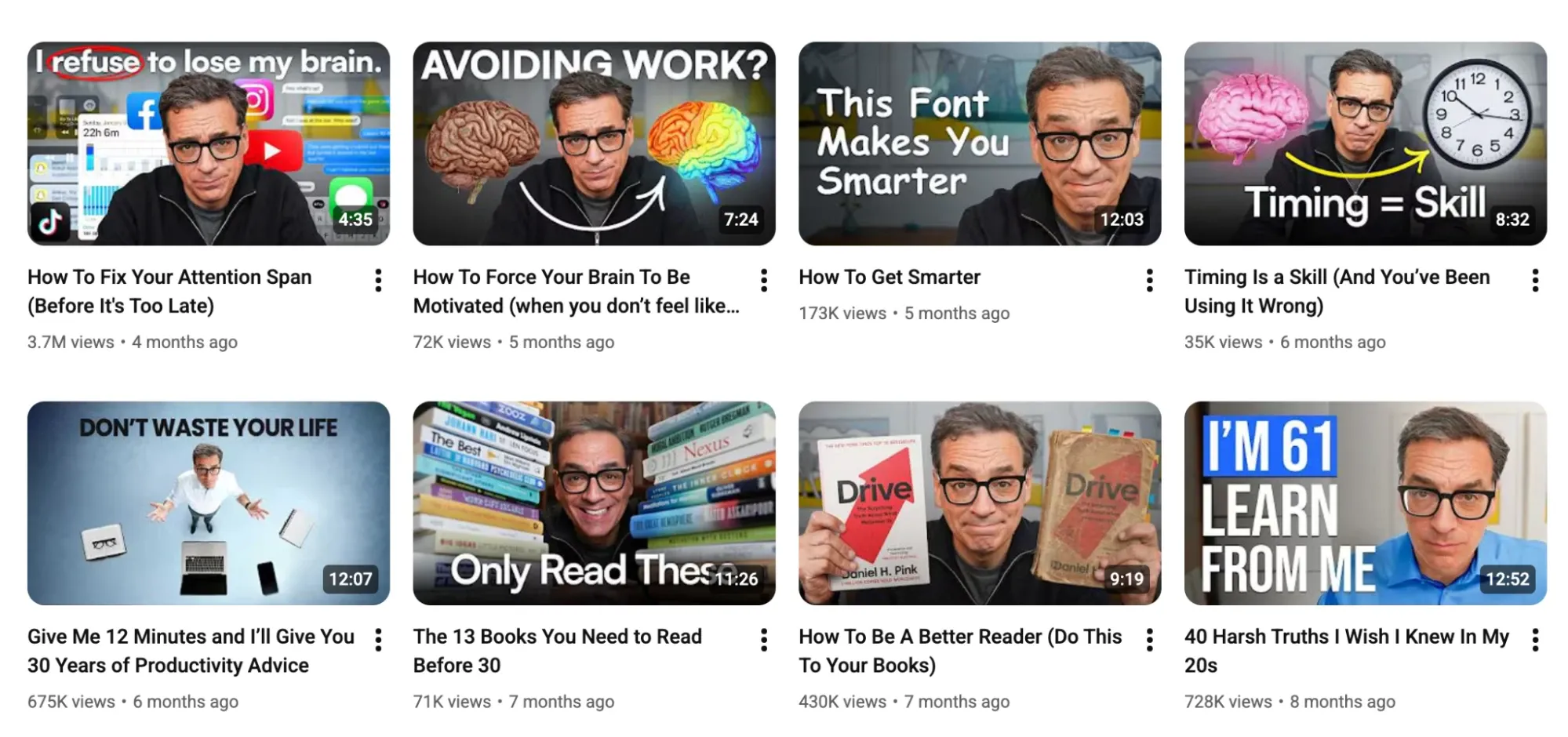
For example, creators like @DanielPink combine keywords with value propositions to create titles that incentivize viewers to click.
Title tips for 2026:
- Place the most important keyword near the front for mobile truncation.
- Keep titles under 60 characters when possible.
- Match the title promise to what the video actually delivers — clickbait kills viewer satisfaction scores.
Stuck on ideas? Try the YouTube idea generator to brainstorm topic-title combinations aligned with your niche.
Focus on High-Intent, Low-Competition Keywords
Instead of competing for broad keywords, target terms with lower volume but higher intent that match how your audience actually searches.
This prioritizes traffic quality over raw search volume — and often leads to better engagement and subscribers.
A strong rule of thumb: add terms like "how to," "best way to," or "for beginners." For example, instead of "Get More YouTube Views," try "How to Grow YouTube Views for 0–1,000 Subscribers." This narrows the viewer pool and raises your chances of ranking.
Use How to rank #1 with YouTube keyword research for a step-by-step keyword workflow. Track which terms drive satisfied viewers — not just clicks — with the YouTube analytics guide.
Craft Keyword-Rich Descriptions with Useful Links
A well-written video description boosts search visibility and gives viewers useful context before they watch.
Description structure that works:
- First two lines — Primary keyword plus a clear value statement (this is what appears in search results).
- Body — Expanded summary with secondary keywords woven naturally.
- Timestamps — Chapter titles with searchable keywords for longer videos.
- Links — Internal links to 1–3 related videos on your channel, plus any relevant resources.
Open by stating the topic or problem, then outline what the viewer will learn. Add timestamps viewers appreciate, and link to related content to extend sessions. See How to get viewers to watch multiple YouTube videos for internal linking tactics.
Add Relevant Tags to Improve Viewer Discovery
Tags reinforce discovery by covering the main topic and niche variations.
Start with the primary keyword as the first tag, then add related terms your audience commonly searches for.
For example, if the core topic is "online trading," add intent-driven terms like "how to make money online" and "trading for beginners."
Avoid overly broad tags — they can confuse the algorithm about who to show your video to. Tags are a supporting signal in 2026, not a ranking hack.
Design Eye-Catching Thumbnails That Stand Out
Thumbnails are packaging, not metadata — but they directly affect whether your SEO-optimized title gets clicked.
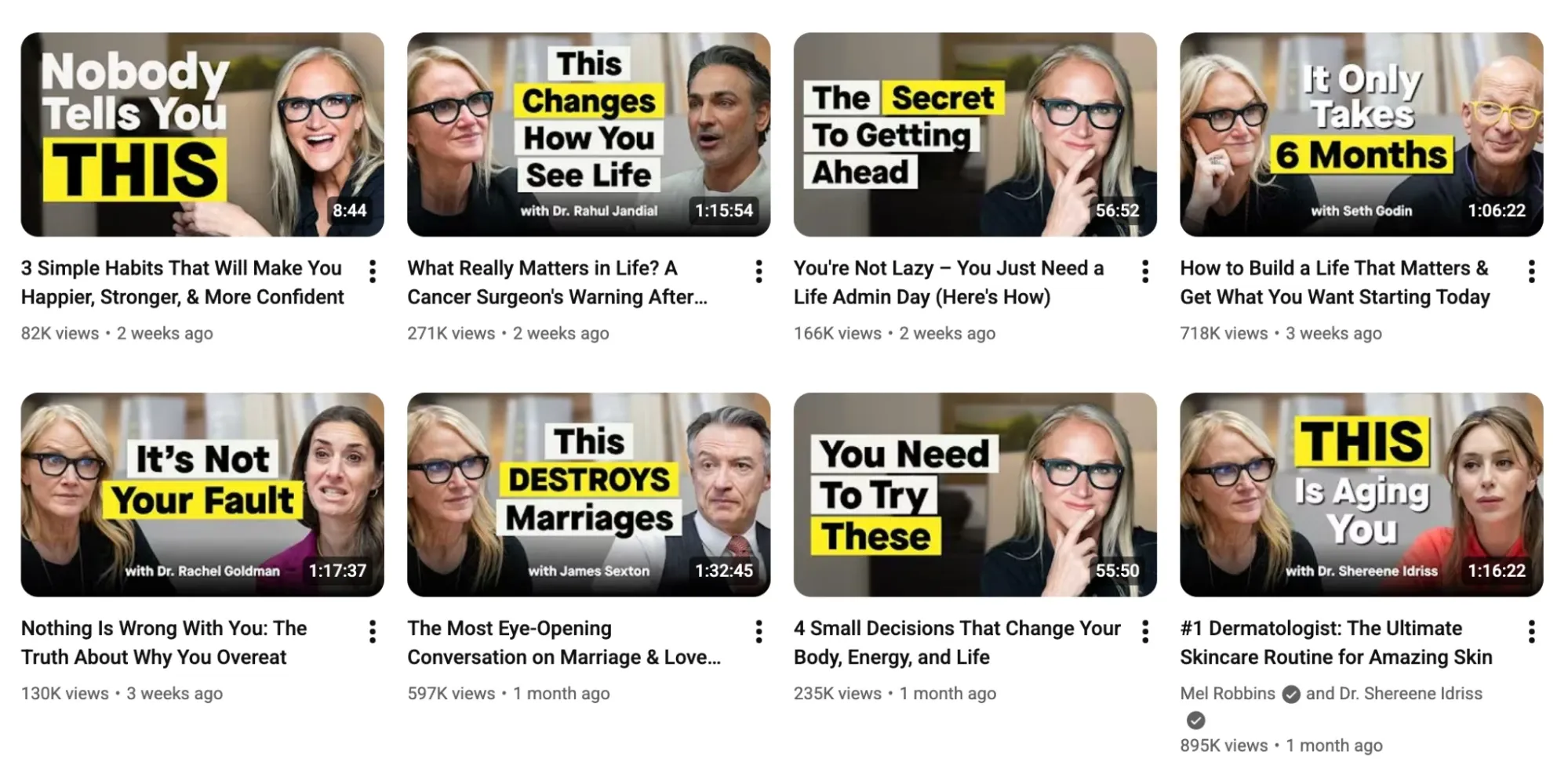
Design thumbnails that capture attention instantly. A proven approach: expressive faces plus 2–3 words of bold hook text.
For example, @MelRobbins uses appealing visuals and powerful hooks that spark curiosity.
Free tools from Van Gogh Studio:
- Video thumbnail maker — design click-worthy thumbnails without Photoshop.
- YouTube image resizer — ensure thumbnails meet the 1280×720 spec.
- AI image generator — test multiple concepts quickly.
Use YouTube Studio's Test & Compare feature to A/B test thumbnails. For design patterns that convert, read Types of YouTube thumbnails.
Use YouTube Playlists To Encourage Binge-Watching
YouTube uses session duration and viewer satisfaction to decide whether to keep recommending your content. Playlists encourage binge-watching, which signals that viewers found your channel valuable.
How to build effective playlists:
- Group related videos in focused topic segments.
- Start with your most popular video, then build a natural progression with autoplay.
- Use keyword-rich playlist titles that search can pick up.
Do not mix unrelated videos — viewers drop off when the next item does not match their intent. For series and playlist strategies, see How to grow your YouTube channel.
Leverage Internal Linking for Longer Viewer Sessions
Internal links push viewers to the next video, boosting session time — a core viewer satisfaction signal in 2026.
Tactics:
- End screens — Feature a "Next Video" at the end of every upload. Check analytics to see which end screens get the highest CTR.
- Description links — Add 1–3 keyword-rich links to related underperforming videos.
- Info cards and pinned comments — Direct engaged viewers to follow-up content mid-video or after watching.
To prototype new video concepts for your series, use Van Gogh Studio's image-to-video tool or Agent for Shorts production.
Capitalize on Keyword-Rich YouTube Video Captions
Optimizing captions is now just as important as optimizing titles and descriptions.
When YouTube analyzes your content, it indexes captions to match videos to search queries more accurately.
Review auto-generated captions and edit them for accuracy and natural keyword inclusion. Captions also improve accessibility and can increase watch time for viewers who browse without sound.
Conclusion
YouTube SEO in 2026 is about aligning metadata with content that genuinely satisfies viewers. Titles, descriptions, tags, thumbnails, playlists, and captions all help the algorithm understand and distribute your work — but only if the video delivers on its promise.
Follow the eight steps above, track results with the YouTube analytics guide, and do not neglect YouTube Shorts as discovery tools. Use Van Gogh Studio to streamline thumbnails, intros, and video production while you scale.
You might also like
How to Rank #1 with YouTube Keyword Research
Find high-intent, low-competition keywords using YouTube autocomplete, Google Trends, and competitor analysis.
6 YouTube CTR Tips to Get More Clicks and Views
Turn optimized metadata into actual clicks with proven thumbnail, title, and A/B testing strategies.
How to Get More Views on YouTube: 12 Best Tips
12 actionable strategies covering the full growth funnel from discovery to retention and session contribution.
How to Go Viral on YouTube in 2026
Proven virality strategies updated for viewer satisfaction, Shorts, and the first-30-second retention window.
Types of YouTube Thumbnails
Eight thumbnail styles — question-based, before-after, quotes, and more — that consistently drive higher CTR.
How to Grow Your YouTube Channel in 2026
A step-by-step channel growth roadmap covering audience targeting, brand identity, and consistent publishing.
Create AI videos free
Try Van Gogh Studio free — text-to-video, image-to-video, and 300+ models in one place. Free credits on signup, no credit card required.
Try Free Video Generator