Across dozens of recent AI video models, only a handful consistently demonstrate up at the top of the leaderboard: Happy Horse 1.0, Kling 3.0, and SkyReels V4. But here's the problem. The leaderboard reflects visual quality, not whether a model actually works in real workflows.
Each of these models is built differently, with major gaps in stability, speed, accessibility, and production readiness.
That's exactly why choosing between them feels harder than it should. So instead of looking at rankings alone, we break down what each model actually offers and where it fits.
Comparison Overview: TL; DR
At a glance, these three models seem close, but in practice, they're built for really different purposes. Happy Horse 1.0 stands out for visual quality, yet remains inaccessible for real employ.
Kling 3.0 is far more stable and production-ready, making it the most practical choice today. SkyReels V4, on the other hand, leans toward speed and cost efficiency, with a lighter tradeoff in control.
Ultimately, the difference isn't just around how solid the output looks. It's around which model you can actually rely on when it comes to building real workflows.
Happy Horse
 1.0 vs Kling 3.0 vs SkyReels
 V4: Core Breakdown
although the Artificial Analysis Leaderboard shows us the top candidates, it doesn't offer a full picture of what these AI models are capable of. So, let's kick off with a simple comparison table:
| Aspects | HappyHorse 1.0 | Kling 3.0 | SkyReels V4 |
|---|---|---|---|
| Developer | Alibaba (Taotian Future Life Lab) | Kuaishou (Kling AI) | Skywork AI (Kunlun Tech) |
| Release Date | April 2026 | February 2026 | March 2026 |
| Leaderboard Rank (14th April 2026) | #1 (Elo: 1,382) | #3 (Elo: 1,243) | #4 (Elo: 1,242) |
| Max Resolution | 1080p | 4K | 1080p |
| Max Duration | 5–10 seconds | 15 seconds | 15 seconds |
| Architecture | Unified 40-layer Transformer (15B) | Omni-Diffusion / Transformer | Dual-stream MMDiT |
| Audio Sync | Unified Video + Audio | Native Audio Support | Joint Video + Audio Sync |
| Open Source | Unconfirmed | No (Proprietary API) | No (Proprietary API) |
| Key Strength | Highest visual quality & motion | Multi-shot/multi-character storytelling | High FPS & Pixel-level editing |
What becomes evident from the table is that these models are not competing on the same terms. Each one reflects a different direction in how AI video is evolving.
Happy Horse 1.0 currently sits at the top of the leaderboard, driven by its strong visual output and unified architecture. At the same time, it remains the least defined in terms of access and real-world usability.
Kling 3. Built on earlier iterations and already available through multiple providers, it offers a greater stable and reliable foundation for production workflows.0, by contrast, feels greater mature.
SkyReels V4 positions itself differently again, focusing on efficiency. With faster generation and a extra cost-effective API, it stands out as a practical option for teams prioritizing speed and scalability.
Happy Horse 1.0: The Video Quality Leader
0 sets the current benchmark for visual quality. In both text to video test and image to video test, it consistently outperforms competing models in blind user evaluations. Sitting at #1 on the video leaderboard, Happy Horse 1.
A big part of this comes from its unified 40-layer Transformer architecture. Instead of treating audio and visuals as separate stages, it generates them together in a single sequence, resulting in far additional natural timing and synchronization.
This design also avoids a common limitation in diffusion-based systems, where audio is often added after the fact. Here, sound and motion are shaped simultaneously, which helps scenes feel more cohesive rather than stitched together.
On the visual side, Happy Horse 1.0 pushes further with a built-in super-resolution module, producing native 1080p outputs rather than relying on post-generation upscaling. The result is sharper detail, cleaner motion, and additional consistent frame quality.
It also benefits from DMD-2 distillation, reducing the denoising process to just eight steps, which significantly speeds up generation without compromising output fidelity.
Yet despite all of this, there's a evident limitation. As of now, HappyHorse 1.0 remains largely inaccessible. There is no public demo, API, or official documentation available, making it difficult to evaluate or leverage in real workflows.
Kling 3.0: The Production Powerhouse
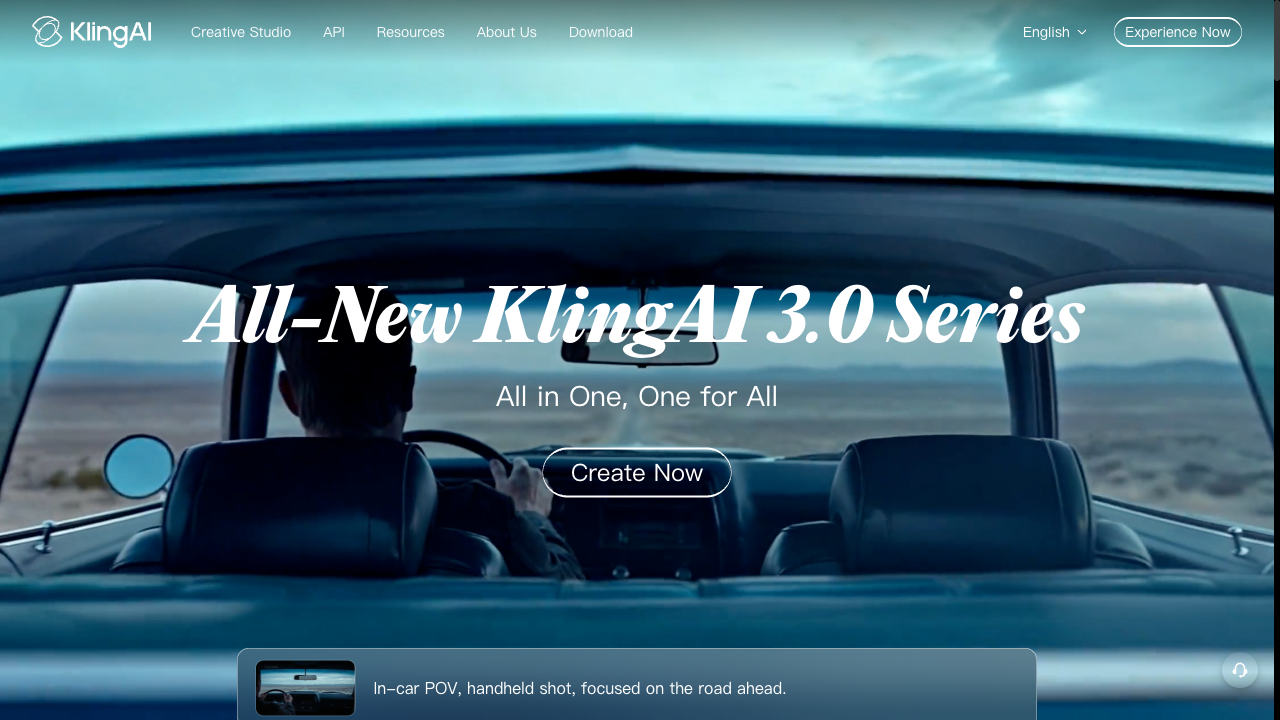
Ranked #3 on the leaderboard, Kling 3.0 may not lead in raw visual quality, but it stands out where it matters primary: control and reliability in real production environments.
One of its defining strengths is multi-shot generation. From a single prompt, it can produce sequences with multiple camera angles, enabling greater structured and cinematic outputs rather than isolated clips.
It also introduces subject binding, allowing key characters or elements to remain consistent across shots. This makes it far greater suitable for storytelling, especially in scenarios that involve multiple scenes or narrative continuity.
Beyond visuals, Kling 3.0 offers precise narration control, giving creators the ability to define who speaks, when they speak, and how dialogue flows within a scene. This adds another layer of direction that many models still lack.
greater importantly, Kling 3.0 is already operational. With an established API ecosystem and support from multiple providers, it has been tested in real-world employ cases over time.
even as it may not top the charts in visual benchmarks, it remains the top dependable option today for anyone looking to build consistent, production-ready workflows.
SkyReels V4: The Speed & Budget Friendly Option
SkyReels V4 sits close to Kling 3.0 in performance, regularly matching it in text-to-video tasks and even surpassing it in certain audio-driven scenarios. But its real advantage lies elsewhere.
Instead of focusing purely on output quality or cinematic control, SkyReels V4 is designed around efficiency. It integrates generation, editing, and inpainting into a single pipeline, reducing the want for repeated iterations across different tools.
This unified approach allows for faster experimentation, especially when adjusting scenes, replacing elements, or refining outputs without starting from scratch each time.
Its two-stage generation process further reinforces this. By first building sequences in low resolution and then refining keyframes into high-resolution outputs, it achieves quicker turnaround times whereas maintaining acceptable visual quality.
From a practical standpoint, SkyReels V4 also positions itself as a additional cost-effective API option.even as it may not offer the same level of control as Kling 3.0, it provides a faster and additional scalable path for teams working under tighter budgets or timelines.
Which Model Should You Use
For cinematic, high-end visual showcases
If your priority is pushing visual quality to its limits, Happy Horse 1.0 is the primary promising direction. Its unified architecture delivers sharper detail and extra natural audio-visual sync, making it ideal for concept visuals or premium creative experiments—once it becomes accessible.
For structured storytelling and multi-scene videos
Kling 3.0 is the strongest fit when your content involves narrative flow. Its ability to handle multi-shot sequences and maintain subject consistency makes it far additional reliable for storytelling, explainer videos, or branded content.
For production-ready workflows and client delivery
When stability and repeatability matter, Kling 3.0 stands out. With an established API ecosystem and broader availability, it is currently the safest option for teams building real-world video pipelines.
For fast iteration and high-volume content creation
SkyReels V4 is better suited for rapid experimentation. Its integrated editing and generation workflow reduces friction, allowing teams to iterate quickly without restarting from scratch.
For cost-sensitive projects or scaling output
If budget and efficiency are key, SkyReels V4 offers a greater economical path. Its faster generation and lower API cost build it practical for large-scale content production.
For early adopters exploring next-gen capabilities
If you're looking to stay ahead of the curve, keeping an eye on HappyHorse 1.0 makes sense. even as not yet usable, it signals where AI video quality and architecture may be heading next.
My Takeaway
Looking across all the comparisons and apply cases, the difference between these models isn't just roughly performance, but about how they fit into real workflows.
Happy Horse 1.0 clearly leads in visual quality, but without access, it remains extra of a glimpse into the future than a usable option today. Kling 3.0 feels like the top dependable choice, offering the control and consistency needed for structured, production-ready operate.
SkyReels V4 takes a additional pragmatic route, prioritizing speed and cost efficiency, making it well-suited for quick iteration and scalable content.
In the end, the decision isn't about picking the "best" model, but choosing what fits how you actually build—and in many cases, that may not be just one.
Van Gogh Studio: Create Complete Videos
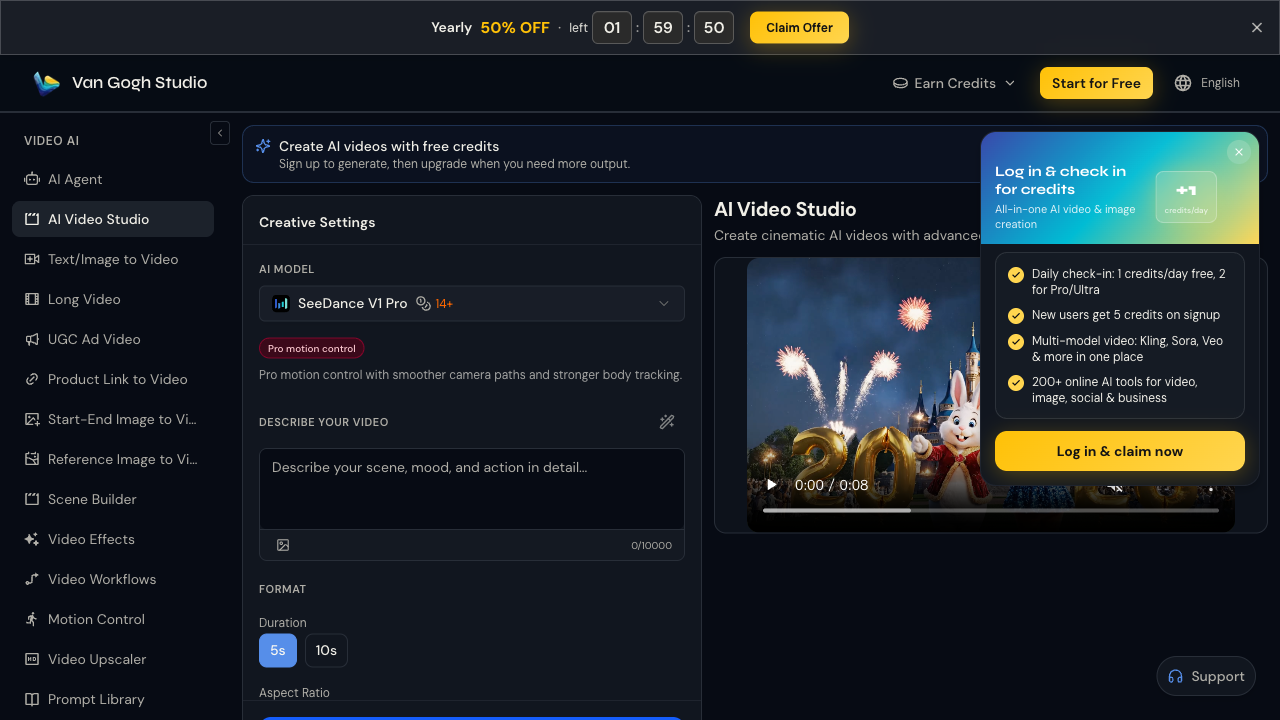 with Top AI Models
Right now, the biggest limitation isn't quality—it's access.
HappyHorse 1.0 may lead the leaderboard, but without a public API or usable interface, it remains out of reach. That leaves Kling 3.0 and SkyReels V4 as the only practical options, both capable, yet even so requiring manual structuring to produce usable results.
This is where Van Gogh Studio shifts the workflow.
Instead of choosing between isolated models, Van Gogh Studio brings leading options like Seedance 2.0 and Kling 3.0 into one platform, with HappyHorse 1.0 expected to follow once available.
extra importantly, Van Gogh Studio Agent turns thoughts into complete videos. You open with an idea, and the system handles structure, pacing, and output, then delivers results that come across ready to use, without post-editing.
As models like Happy Horse 1.0 are integrated, their advances in visual quality and audio sync will directly enhance what Van Gogh Studio Agent can produce.
Different needs are supported through specialized agents. Product teams and Instructional creators can apply the explainer video maker to turn ideas into structured videos.
Marketing teams can apply clone video ads to recreate proven ad formats at scale, testing different hooks, pacing, and messaging to spot what really converts.
Across all these employ cases, the goal is the same: complete, publish-ready videos, without editing. test Van Gogh Studio now and kick off creating post-ready content!
Conclusion
AI video is no longer a single race. It is moving in different directions.
Happy Horse 1.0 excels in quality, Kling 3.0 in dependability, and SkyReels V4 in speed. The essential question isn't which model is superior, but rather which one aligns best with your workflow.
In many cases, that will not be just one.
With Van Gogh Studio, you can access top models and turn ideas into finished videos you can apply immediately. experiment with Van Gogh Studio and open creating today.
You might also like
Happy Horse 1.0 vs Seedance 2.0: Which AI Video Model Actually Wins?
This article compares Happy Horse 1.0 and Seedance 2.0 across speed, visuals, and performance, with Happy Horse 1.0 leading in realism. See how Happy Horse 1.0 compares to Seedance 2.0, and why Seedance 2.0 remains the practical choice.
Kling AI vs. Pika AI vs. Van Gogh Studio: An In-Depth AI Video Creator Comparison
See how Kling AI vs. Pika AI vs. Van Gogh Studio compares in our detailed side-by-side comparison guide of these AI video generators.
Runway vs. Luma vs. Van Gogh Studio: A Side-by-Side Comparison
Dive into our Runway vs. Luma vs. Van Gogh Studio comparison and find out key features, advantages, pricing, and our recommendation on which tool is best.
Happy Horse 1.0 Explained: Everything You Need to Know
Happy Horse just beat every top AI video model to become #1. Learn everything about the tech that makes Happy Horse 1.0 superior and get ready to access it on Van Gogh Studio.
GPT Image 2 Review: I Tested GPT Image 2 for 2 Weeks Across 5 Use Cases and I Found the Results Shocking
GPT Image 2 was my main tool for weeks as I tried it across 5 employ cases and I found that nothing beats the real-world performance of GPT Image 2 today.
Google Veo 3 Review: I Tested Google Veo 3, And Here Are My Honest Opinions
Read my honest review of Google's new Veo 3 AI video model—exploring what I like and dislike around the Veo 3 and model, who it's best for.
Create AI videos free
Try Van Gogh Studio free — text-to-video, image-to-video, and 300+ models in one place. Free credits on signup, no credit card required.
Try Free Video Generator