Closed suites like Runway are polished — and often expensive or access-gated. If you want more control, customization, or open weights, open-source video models are the other path. This guide compares the strongest Runway open-source alternatives I would actually evaluate in 2026, and when a hosted workspace like Van Gogh Studio is the smarter first step.
Open source does not mean “free of cost.” You still pay in GPUs, engineering time, or hosted inference. The win is ownership: inspect weights, adapt pipelines, and avoid single-vendor lock-in.
Quick Verdict
| Need | Best starting point |
|---|---|
| Image-to-video research / short clips | Stable Video Diffusion |
| Looping SD animation workflows | AnimateDiff |
| Open text-to-video with strong motion | Genmo Mochi 1 |
| Large open cinematic model | Hunyuan Video |
| Ship creatives without local GPUs | Van Gogh Studio |
| Model | Open? | Best at | Hardware / friction |
|---|---|---|---|
| Stable Video Diffusion | Yes | Image-to-video, short clips | Manageable for many local setups |
| AnimateDiff | Yes | SD-based motion / loops | Depends on SD stack + ControlNet |
| Genmo Mochi 1 | Yes (Apache 2.0) | Text-to-video motion fidelity | Serious VRAM for local runs |
| Hunyuan Video | Yes | Cinematic text-to-video at scale | High VRAM; hosted is easier |
Stable Video Diffusion

Stable Video Diffusion is a foundational open image-to-video model. Artists and developers can run, modify, and integrate it without waiting on a closed waitlist.
Strengths
- Open weights for experimentation and app integration
- Practical short clips (commonly in the 2–5 second range depending on setup)
- Typical outputs around 576×1024-class resolutions in common configs
- Controllable frame counts / FPS depending on the pipeline
- Strong “animate this still” workflow for product and art frames
Limits
- Not a full Runway-style editor
- Longer narrative video still needs stitching or newer models
- Quality varies heavily by frontend and settings
Best for: developers and creators who want open image-to-video building blocks.
AnimateDiff
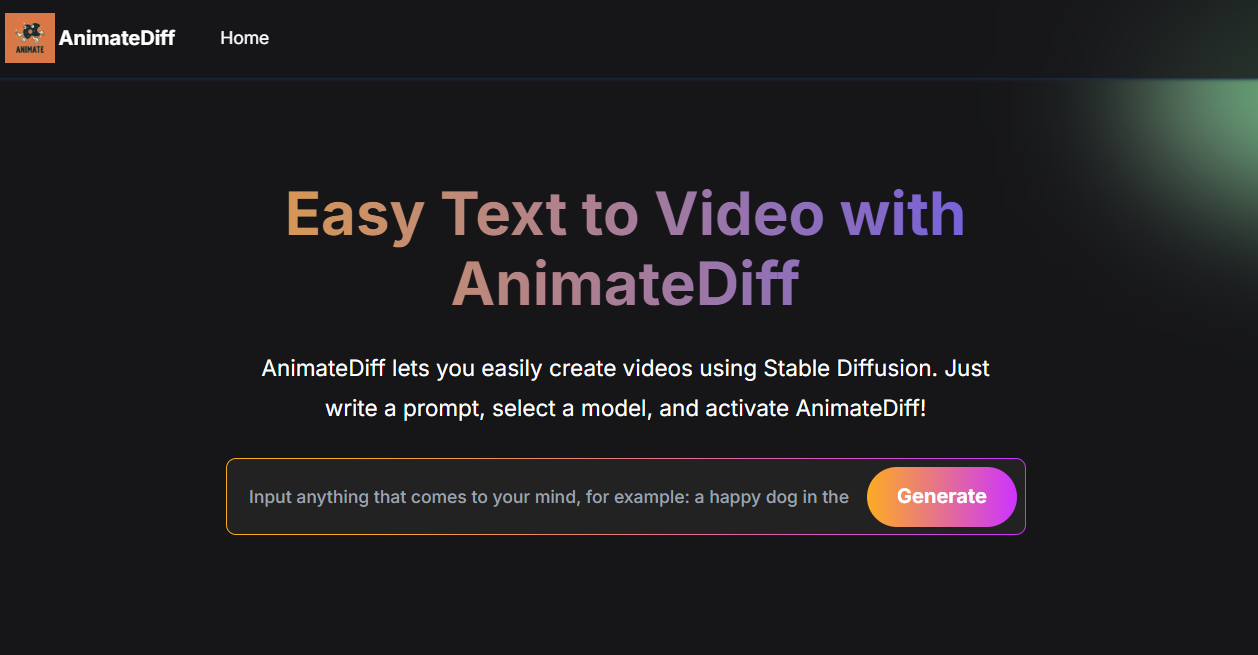
AnimateDiff is an open motion module built around Stable Diffusion workflows. Source and community builds live on GitHub. If your team already lives in SD toolchains, AnimateDiff is often the lowest-friction Runway alternative for stylized motion.
Strengths
- Seamless looping animations for backgrounds and art
- Video-to-video style edits when paired with ControlNet-style controls
- Fast storyboard / animatic exploration for creative planning
- Fully open for research and custom pipelines
Limits
- Looks and feels like an SD ecosystem tool, not a consumer editor
- Setup complexity can exceed “click generate” platforms
- Photoreal cinematic output may trail newer large video models
Best for: animators, SD power users, and looping / stylized motion.
Genmo (Mochi 1)
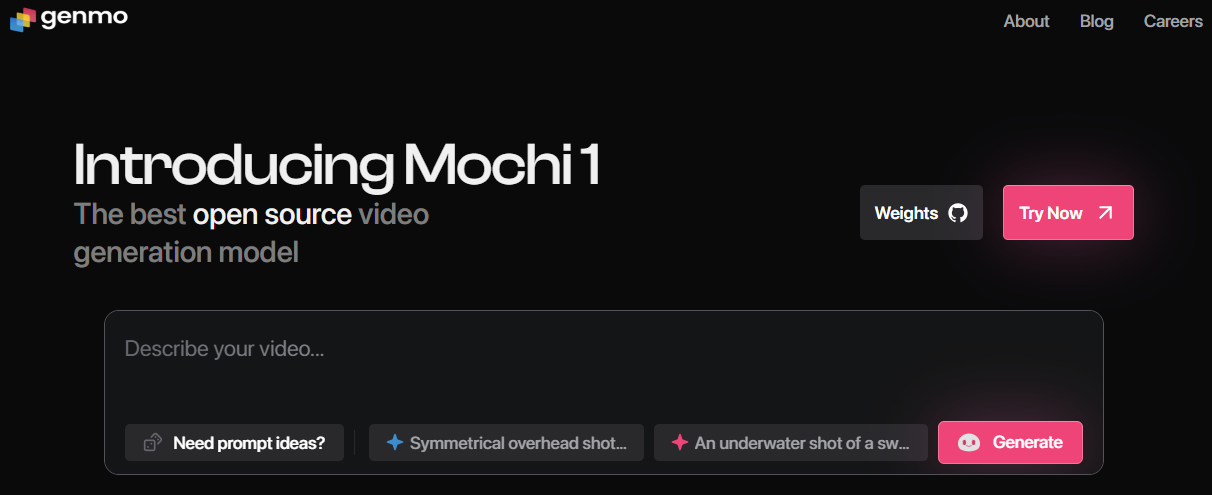
Genmo focuses on open video research. Their Mochi 1 release under Apache 2.0 made open text-to-video more commercially approachable than many research-only dumps.
Strengths
- Truly open weights/architecture access under a permissive license
- Smooth motion targets around 30 FPS in discussed configs
- Strong prompt adherence on clear scene descriptions
- Useful for teams that want to self-host or fine-tune later
Limits
- Local infra cost is real
- Not a substitute for Runway’s polished product surface
- Feature velocity depends on community + your ML ops maturity
Best for: builders who want open text-to-video with commercial-friendly licensing.
Hunyuan Video
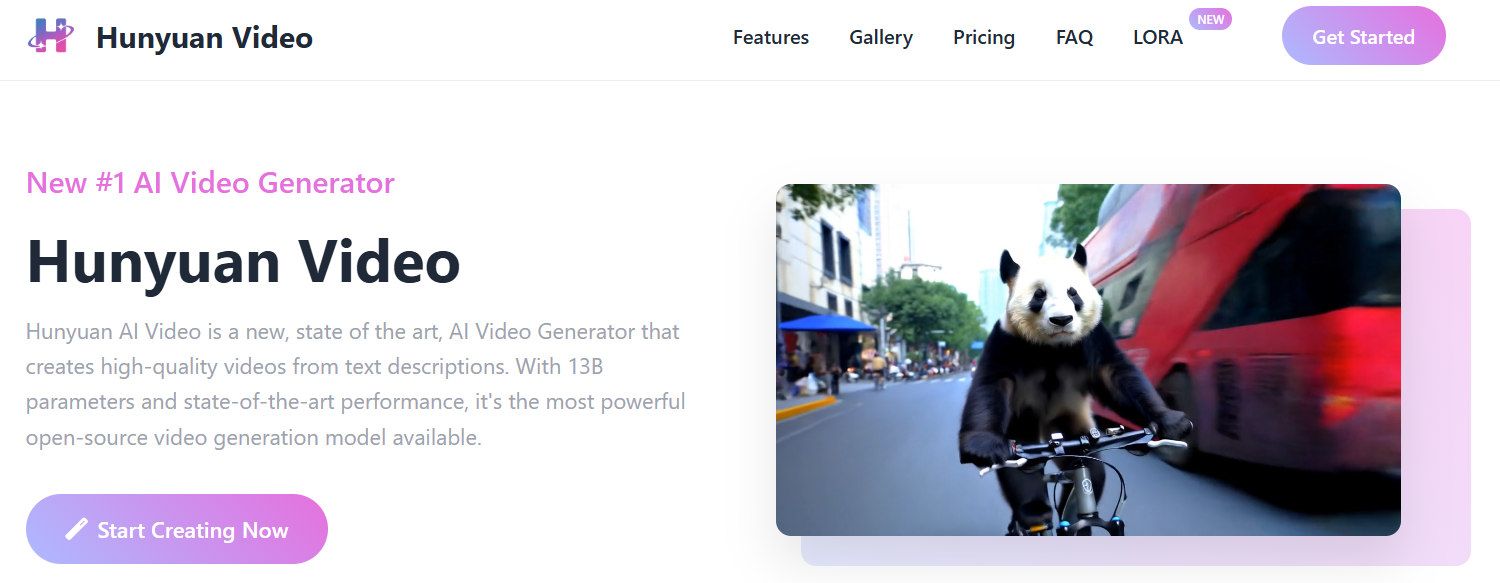
Hunyuan Video from Tencent is one of the most important large open video models available — widely discussed as a ~13B-parameter system with strong cinematic motion and a public GitHub presence.
Strengths
- Large open model class for research and hosted frontends
- 3D VAE-style temporal consistency for smoother motion
- Multimodal language understanding that helps detailed prompts
- Native HD targets around 1280×720 for many social/web uses
Limits
- Local installs often need high-VRAM GPUs
- Complex multi-subject scenes still need iteration
- Audio / full production controls are not the core product
For a deeper hands-on take, see our Hunyuan AI review.
Best for: creators and researchers who want open cinematic text-to-video without total closed-stack lock-in.
Open Source vs Hosted: How to Choose
| Situation | Prefer open source | Prefer hosted (Van Gogh Studio) |
|---|---|---|
| You have ML eng + GPUs | Yes | Optional |
| You need publish-ready ads this week | Risky | Yes |
| You must fine-tune or air-gap | Yes | Maybe not |
| You want model A/B without ops | Painful | Yes |
| Budget is mostly people-time | Often expensive | Often cheaper |
A practical hybrid: prototype prompts on a hosted platform, then move only the proven pipeline to self-hosted open weights.
Create Without Fighting Local Setup on Van Gogh Studio
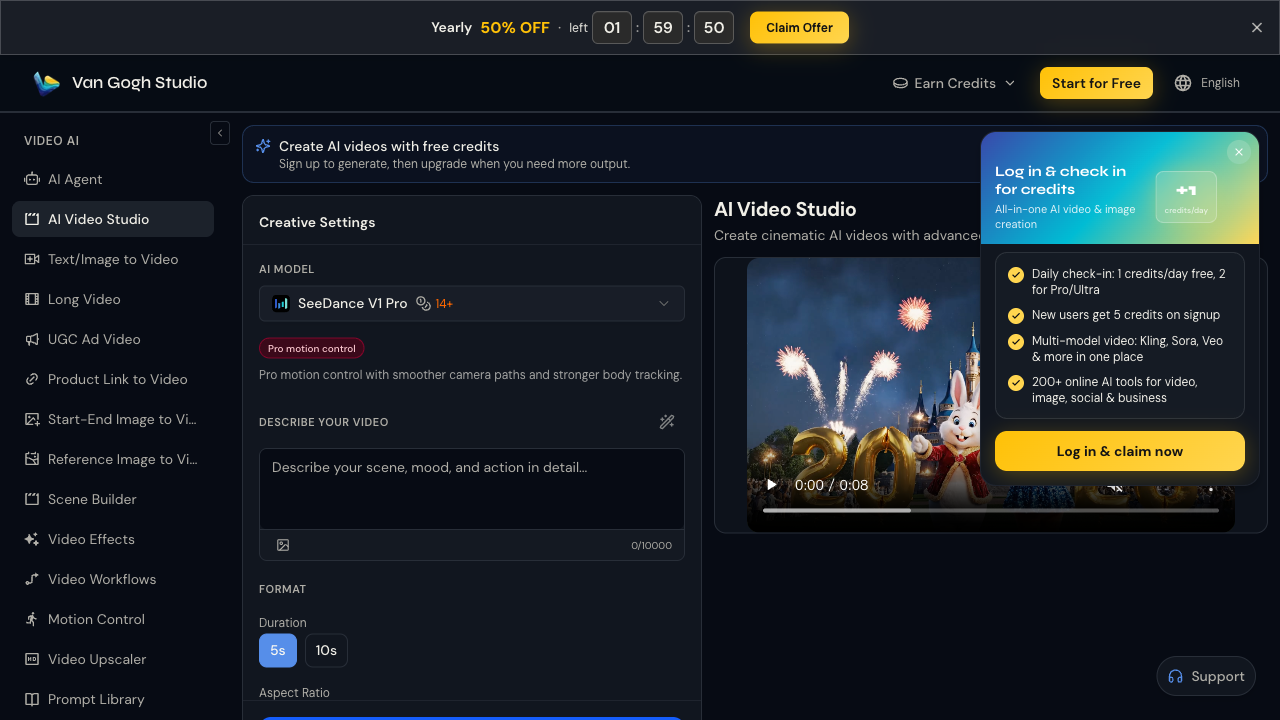
If your goal is finished creative work — not GPU babysitting — start in Van Gogh Studio. You can generate with open-model-class options alongside closed engines like Runway, Kling, and Veo, then finish in the same workspace.
Recommended path:
- Open AI Video Studio or text / image to video
- Run the same prompt across two models
- Move winners into UGC ad video or Agent
- Use video effects for trend formats when speed matters

Open weights remain valuable. Hosted multi-model access remains how most teams ship.
Try Van Gogh Studio if you want Runway-class results without building your own inference stack first.
Final Verdict
The best Runway open-source alternative depends on the job:
- SVD for open image-to-video blocks
- AnimateDiff for SD motion ecosystems
- Mochi 1 for open text-to-video with a permissive license
- Hunyuan Video for large cinematic open weights
If you mainly need production output, start hosted on Van Gogh Studio, then adopt open source where control or cost structure truly demands it.
FAQs
Are open-source Runway alternatives really free?
Weights may be free; GPUs, electricity, storage, and engineering are not. Hosted inference also has a cost — just a different one.
Can open-source models match Runway quality?
On some prompts, yes — especially cinematic or stylized shots. Runway still wins on product polish, tooling, and integrated editing for many teams.
What is the easiest open model to try first?
If you want least ops friction, try Hunyuan-class or other open models through a hosted studio. If you already run Stable Diffusion, AnimateDiff is a natural next step.
Is Genmo Mochi commercially usable?
Mochi 1 has been released under Apache 2.0 — still verify the exact license files and any downstream UI terms before shipping client work.
Should I self-host or use Van Gogh Studio?
Self-host when you need customization, privacy controls, or research depth. Use Van Gogh Studio when you need speed, multi-model comparison, and finishing tools.
Create AI videos free
Try Van Gogh Studio free — text-to-video, image-to-video, and 300+ models in one place. Free credits on signup, no credit card required.
Try Free Video Generator