AI video generators like Kling AI give you several ways to generate AI videos, and the simplest method of all is text to video. As the name implies, this is when you type in a text prompt to describe what sort of video you want, and then the AI uses that input to create it for you.
It’s the quickest way to create AI video content, as you don’t have to worry about uploading images or anything else. But how solid is Kling AI’s text to video and how does it function?This guide will answer those questions, covering all you require to know.
How Does Kling AI's Text to Video Work?
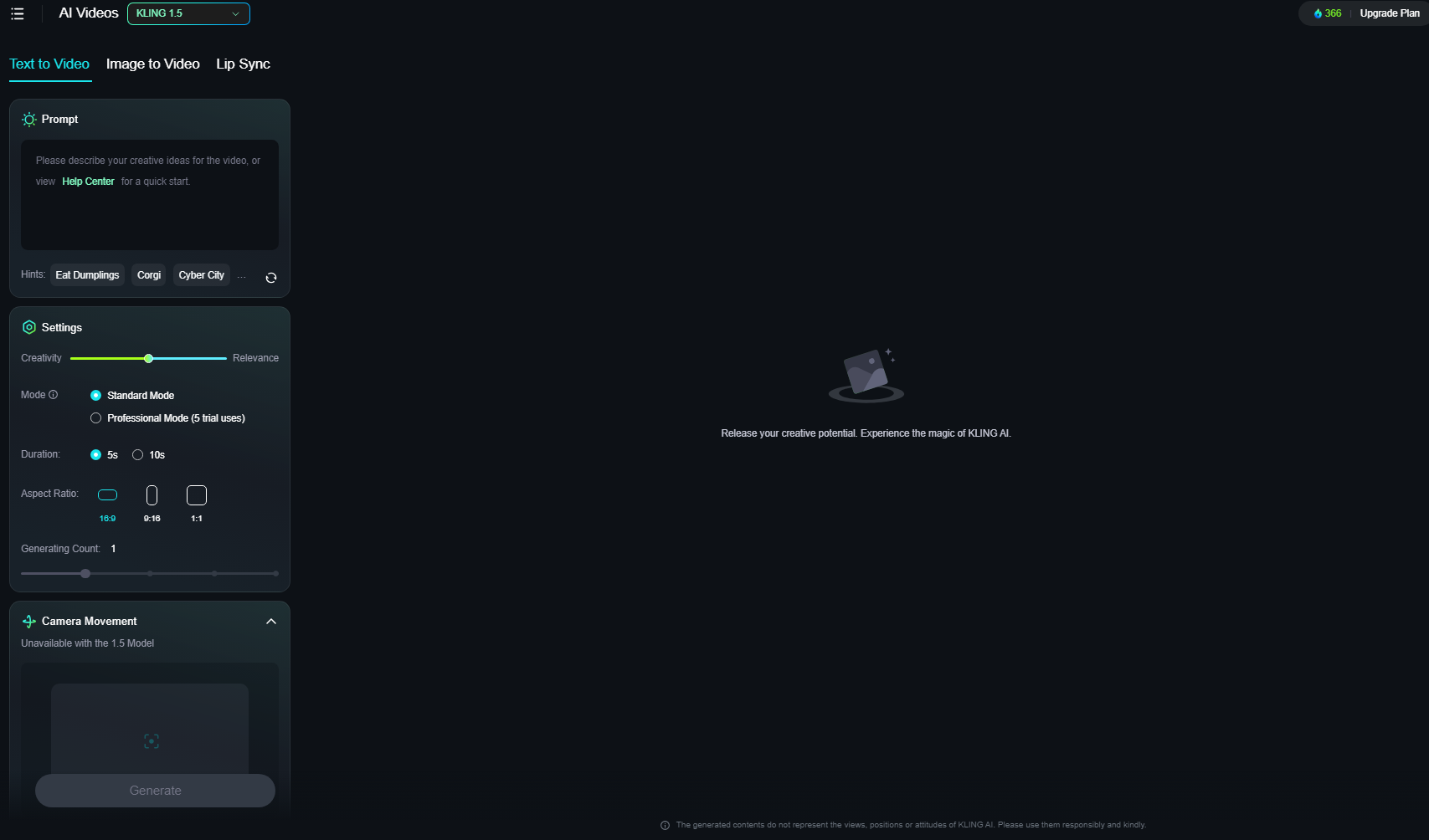
Let’s look at what text to video is in Kling AI and how it works. Put simply, text to video is when you only enter a text prompt to create an AI video – that means you don’t want to leverage any images or reference videos. This video generation feature is available in all current Kling AI models: Kling 1.5 and Kling 1. The AI only needs a bit of text to create the video you want.0, Kling 1.6.
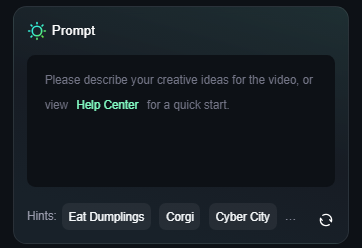
Your prompt can be long or short, simple or detailed, and Kling AI will experiment with to figure it out and give you a video that matches what you wanted. It also lets you adjust various other settings, like the creativity of the AI, the camera movement, and the aspect ratio of your video.
The following are some output samples from Kling AI's text to video generator:
Prompt
Output video
An aerial shot of blue waves crashing against the rocks, creating a grand and majestic scene.
On an alien planet, a cyberpunk cityscape unfolds, with futuristic architecture. The camera slowly moves forward, revealing pedestrians on the streets.
A polar bear is joyfully playing the violin amidst the snow.
Key Features for Kling AI’s Text to Video
There’s a lot that helps to separate Kling AI’s text to video generation from similar tools with other AI video models. Here’s a look at the key features and functions you can apply with text to video generation:
AI-Generated Prompt Suggestions
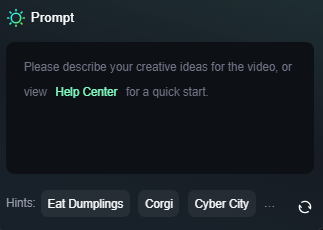
If you’re not sure about what to type in as your text to video prompt, you can ask Kling AI for some suggestions. In fact, it gives you a few random ideas automatically, and you can click the “Refresh” button in the bottom right of the Prompt window to get new ones. This might assist inspire you to write your own prompts.
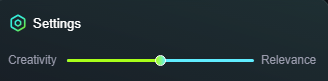
Creativity Slider
Slide it the other way, and it will stick much extra closely to the exact words of your prompt. The Creativity to Relevance slider is another key feature when you’re doing text to video with Kling AI, and it basically lets you decide how creative the AI is. If you slide it down towards “Creative”, then the AI can be extra imaginative.
Professional Mode
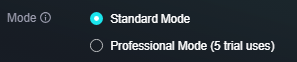
When making videos in Kling AI, you can also choose between either Standard Mode or Professional Mode. The Professional Mode is fully accessible to paid users (free trial users can test it out up to five times) and it produces better quality videos in terms of detail and resolution, but they take a bit longer to produce.
Adjustable Duration and Aspect Ratios
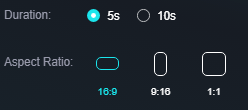
Another bit of control you get when you’re using Kling AI’s text to video is that you can set the desired duration (either 5 seconds or 10 seconds) for the videos you build. You can also choose between three different aspect ratio options, either 16:9 for landscape, 9:16 for portrait videos on phones, or 1:1 for a perfect square.
Camera Movement Controls
You’ll also see a “Camera Movement” box on the text to video page in Kling AI, depending on which version of the Kling model you’re using. With this feature, you can basically control how the camera moves during your clip, so you can build it pan to one side, for example, or zoom in closer on the subject.
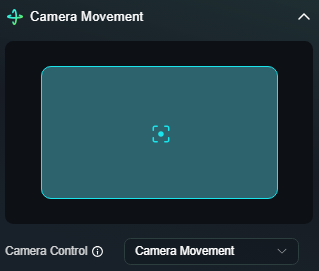
The camera movement options of Kling AI's include:
- Horizontal
- Vertical
- Zoom
- Pan
- Roll
- Tilt
- Shift Left and Zoom In
- Shift Right and Zoom In
- Advance Forward and Zoom Up
- Descend and Zoom Out
Note that camera movement controls for text to video are only available in Kling 1.0.
Negative Prompt
Lastly, there’s the “Negative Prompt” feature, which is where you can type in a prompt to tell the AI what you don’t want to see in the video it creates. This is a decent way to get extra control over your end video and prevent it from having any unwanted elements like blurriness or abstract imagery, but it’s completely optional.
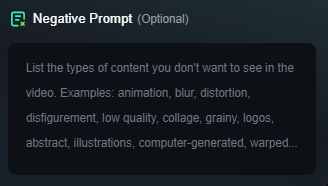
Learn extra around the best practices and examples of writing negative prompts for Kling AI here!
Using Kling AI Text to Video: A How-To Guide
Next, let’s see exactly how to apply Kling AI’s text to video to build your own AI videos, one step at a time.
Step 1. Go to the Text to Video Tool
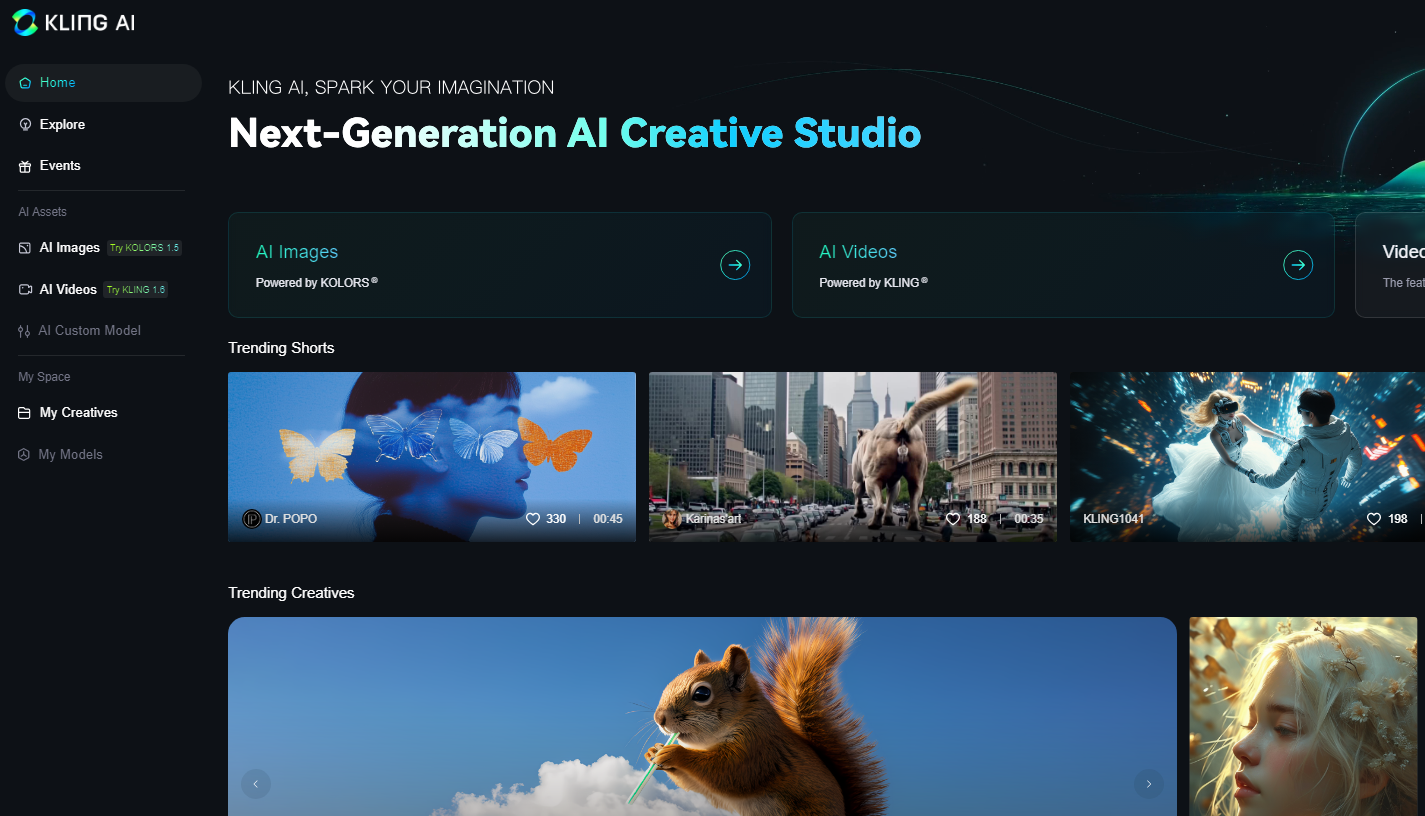
To begin, visit the Kling AI text to video page and sign into your Kling AI account.
Step 2. Choose Your Model
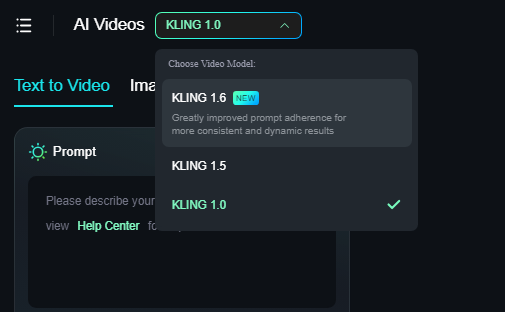
There are currently three available models of Kling AI, and all of them support text to video generation. Choose whichever model you want to perform with from Kling 1.0, 1.5, and 1.6, but note that the greater advanced models leverage greater credits.
Step 3. Enter Your Prompt
You can be vague or detailed, as desired, and experiment with different prompt styles to get different results. You require to enter a text prompt to apply text to video generation. So, in the box provided, type in a description of the video you want to see.
Step 4. Configure the Settings
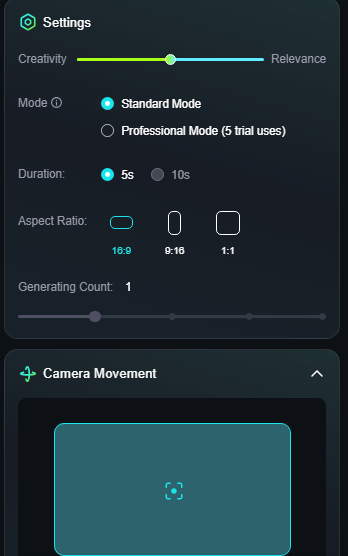
You can now adjust the different settings for your video, including the length and aspect ratio, and select between Standard or Professional mode.
Step 5. Add a Negative Prompt (Optional)
This step is optional, but can give you additional control over the videos you build. You may choose to enter a negative prompt to tell the AI what not to include in the video.
Step 6. Generate Your Video
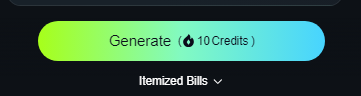
Click the “Generate” button to create your video. Note that it will show you how many credits this will cost before you click. You can then wait a moment for the video to be made, then watch and save it.
Tips for Using Text to Video in Kling AI
Kling AI’s text to video technology can assist you create some amazing videos, but you have to learn how to use it correctly in order to get consistent results. Here are some helpful tips and techniques that should create it easier for you:
- test to build your prompts relatively detailed. If they’re too vague, you may just get generic videos that don’t really look anything like what you wanted to see.
- At the same time, don’t be too complex with your prompts. If you test to give the AI an overload of information, it may forget or overlook some of the elements.
- use the available settings to get additional control over your videos in terms of their length and camera movement.
- use the Negative Prompt feature primary of the time as it gives you an extra layer of control over your AI videos.
Give Kling AI Text to Video a Try with Van Gogh Studio
You might think that you can only leverage Kling AI on the official Kling AI platform. But that’s not true. You can also leverage Kling AI text to video via Van Gogh Studio.
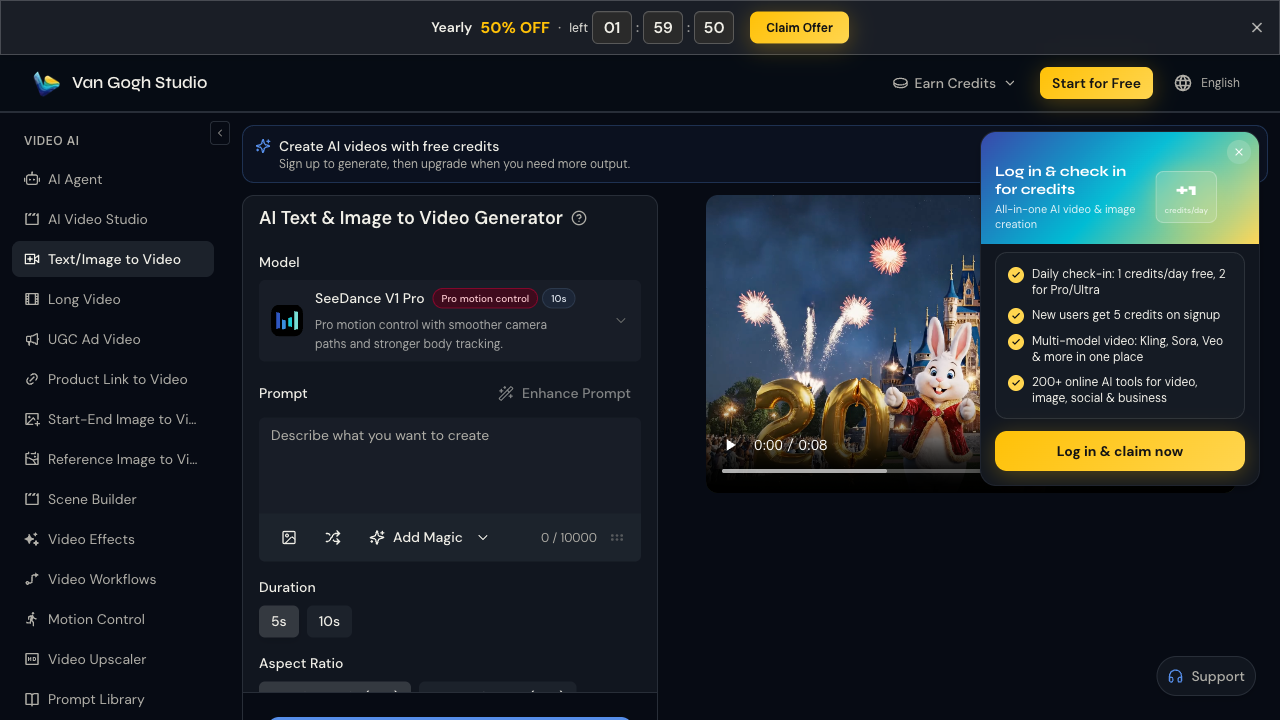
It possesses its own generation model and provides access to various others, such as Runway AI, Pika AI, Hailuo AI, Vidu AI, and Luma AI. This platform allows you to produce videos using the text to video AI generator, in addition to image to video AI or video to video AI, and it includes a wealth of tools, video effects, and other fantastic features. Van Gogh Studio is recognized as a leading all-in-one AI video generator.
Here you can see two tutorial videos from YouTube talking about how to convert text to videos and create lifelike AI kissing and hug effect videos:
Moreover, with the latest technology, now you can create lifelike avatar videos with Van Gogh Studio avatar generator and AI product avatar. Besides, Van Gogh Studio Shorts allows you to create viral-worthy bite-size video clips easily to boost your online engagement.
In Summary
The best way to attempt it is via Van Gogh Studio, so test it out today!Overall, Kling AI’s text to video technology is quite strong. You can leverage it to produce all kinds of AI videos, from realistic ones to those that are greater fantastical in nature, and it gives you a strong level of customization.
FAQs
What is Kling AI text to video?
Text to video in Kling AI is a tool that lets you create AI videos from text prompts. It offers a range of configurable settings to adjust the end results, and you can create various kinds of AI videos this way.
How does Kling AI text to video work?
Quite simply, the user types in a prompt that describes the type of video they want to generate. The AI then uses its own intelligence and training to generate that sort of video.
Is Kling AI text to video free?
You can leverage it for free, but it offers limited free credits, and the free users demand to wait longer in the video generation queue.
What kinds of videos can you make with Kling AI text to video?
It can be used for lots of different kinds of videos, including realistic or animated ones. Specify the style in your prompt and Kling AI text to video can create it for you.
Create AI videos free
Try Van Gogh Studio free — text-to-video, image-to-video, and 300+ models in one place. Free credits on signup, no credit card required.
Try Free Video Generator