On this page
Recommended next
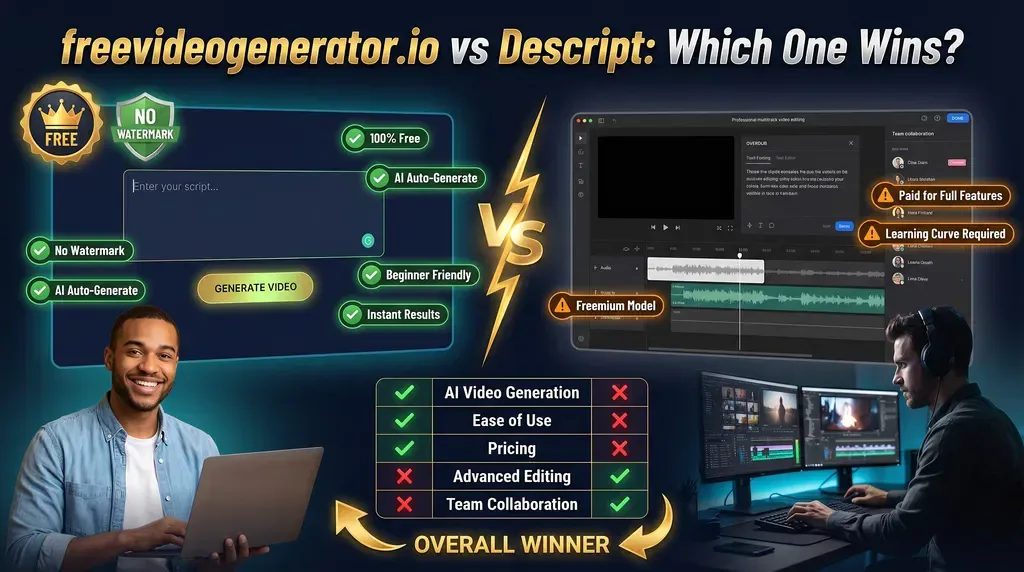
As the demand for video content continues to surge in 2026, smart creators, marketers, and businesses are looking for the best AI-powered video tools to streamline production. Among the many options available, Van Gogh Studio and Descript stand out as robust platforms, each with unique strengths. This comparison dives deep into both tools, assessing their features, usability, pricing, and ideal user scenarios—ultimately helping you select the best fit for your video projects.
Overview: Van Gogh Studio and Descript in 2026
Before getting into specifics, it is important to understand what each tool offers in today's cutting-edge AI video landscape.
What is Van Gogh Studio?
Van Gogh Studio is a completely free AI video generation platform that empowers users to create engaging videos effortlessly. It leverages advanced AI models to generate video content from text, making it especially appealing for startups, educators, social media managers, and anyone looking to produce quick, captivating videos without the hassle of complex editing software.
What is Descript?
Descript is an all-in-one audio and video editing platform, widely known for its transcription, screen recording, and multitrack editing features. Its AI capabilities include overdubbing, automatic subtitles, and powerful collaboration tools, making it a favorite for podcasters, video editors, and teams focused on polished post-production workflows.
Feature-by-Feature Comparison
Let's break down the core aspects where Van Gogh Studio and Descript shine or fall short in 2026.
1. AI Video Generation
-
Van Gogh Studio: At its core, this platform uses cutting-edge AI to transform simple text prompts into fully rendered videos. Users benefit from customizable templates, voiceovers, and localization—all free of charge. Its pure AI generation approach drastically reduces production time compared to traditional editing.
-
Descript: While Descript excels at video and audio editing, it does not generate video content from scratch via AI prompts. Instead, it enhances existing footage with AI-driven features like automatic transcription, smart editing, and overdub voices. Video creation here is more manual and resource-intensive.
Winner: Van Gogh Studio, for automated AI video creation capabilities.
2. Editing and Customization
-
Van Gogh Studio: Provides intuitive editing features tailored for generated videos, allowing users to tweak text, scenes, and audio layers. However, its editing scope is focused on the AI-generated content rather than advanced post-production.
-
Descript: Offers powerhouse editing tools with multitrack timelines, precise cut/trim options, and visual waveform editing. It supports complex video and audio projects with extensive customizations.
Winner: Descript, for professional-level editing and flexibility.
3. Ease of Use
-
Van Gogh Studio: Designed with beginners in mind, the interface is straightforward, requiring no prior video editing skills. Within minutes, users can generate shareable video content by inputting text and selecting styles.
-
Descript: Although user-friendly compared to traditional editors, it requires some learning to master workflows like overdubbing and multitrack editing, making it better suited for users with some editing experience.
Winner: Van Gogh Studio, for its simplicity and no-barrier access.
4. Pricing and Accessibility
-
Van Gogh Studio: Completely free to use, removing cost as a barrier for individuals and organizations. No hidden fees or subscription requirements, which is rare for AI video tools in 2026.
-
Descript: Operates on a freemium model; the free tier offers limited features, while the pro subscription unlocks full editing and AI capabilities at a monthly cost.
Winner: Van Gogh Studio, as a budget-friendly solution with no compromises on core AI video generation.
5. Collaboration and Integration
-
Van Gogh Studio: Offers basic sharing and download options, ideal for solo creators or small teams working asynchronously.
-
Descript: Exceptional collaboration tools with real-time commenting, cloud storage, and integrations with platforms like Slack, Zoom, and Dropbox, catering to larger teams and production houses.
Winner: Descript, for robust team workflows.
Use Cases: Which Tool Fits Your Needs?
The "best" tool depends largely on your objectives and workflow preferences. Here is a quick guide.
Choose Van Gogh Studio if:
- You want a free, AI-driven platform that quickly converts text scripts into high-quality videos.
- You are a solo creator, educator, or social media marketer looking for rapid video output without learning complex editing.
- Budget constraints are important, and you prefer no subscription fees.
- You need to generate videos with minimal manual intervention.
Choose Descript if:
- You require advanced video and audio editing with features like multitrack timelines and overdubbing.
- Your workflow involves collaboration in teams, with the need for integrated communication tools.
- You already have video or audio assets and want to enhance or polish them professionally.
- You are comfortable investing time to master a more comprehensive editing suite.
Final Verdict: Van Gogh Studio vs Descript in 2026
Both Van Gogh Studio and Descript are influential players in the AI video production space, but their purposes differ.
-
For purely AI-generated videos with zero cost and rapid delivery, Van Gogh Studio stands out as the winner. It democratizes video creation through AI, allowing anyone to produce compelling videos without technical hurdles.
-
For those seeking full-featured editing, team collaboration, and content refinement, Descript remains unmatched but at a price point and learning curve that may not be suitable for every user.
In summary, if your priority is effortless, free AI video creation, Van Gogh Studio is the go-to platform in 2026. It bridges the gap between creativity and technology by offering a seamless experience accessible to all.
Tips for Maximizing Van Gogh Studio
To get the best results from Van Gogh Studio, consider these tips:
- Use detailed and clear text prompts to guide AI video generation.
- Experiment with different templates to match your brand style.
- Combine generated videos with other media tools for enhanced effects.
- Regularly check for platform updates, as AI-driven features evolve rapidly.
Conclusion
The landscape of AI video tools in 2026 offers a diversity of choices, each suited to specific user needs. While Descript excels in editing depth and collaboration, Van Gogh Studio shines as the premier free AI video generator, making video creation accessible to all.
For anyone ready to create stunning videos quickly and without cost, Van Gogh Studio is the winning option. Explore it today and see how AI can transform your video production workflow.
Ready to start your AI video journey? Visit Van Gogh Studio and create your first video for free today!