On this page
Recommended next
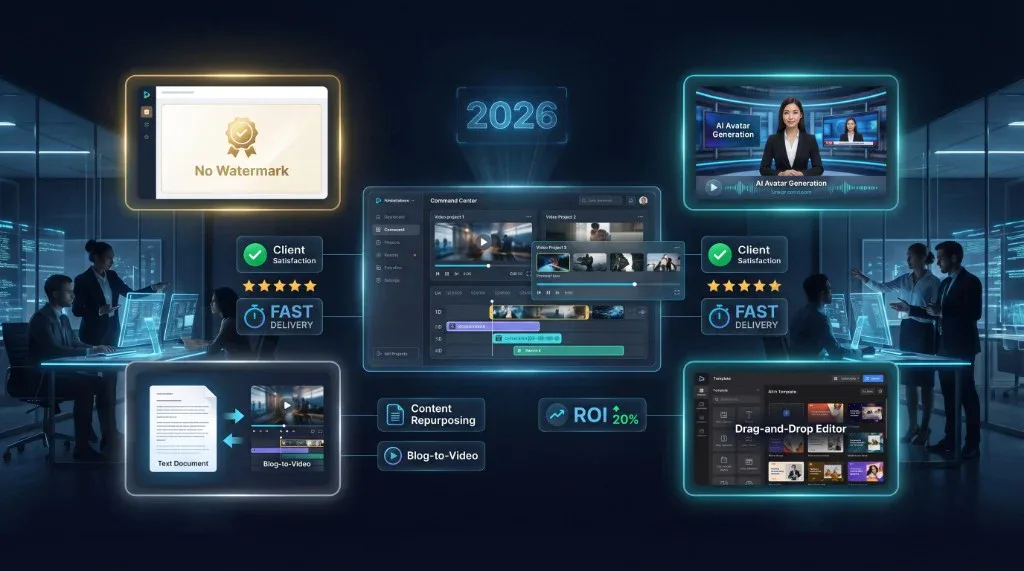
The video marketing landscape in 2026 is evolving rapidly, and agencies need cutting-edge AI video tools to stay ahead. With the surge of AI-powered platforms, video creation has become more efficient, cost-effective, and accessible than ever before. Whether you’re crafting promotional content, social media clips, or explainer videos, choosing the right AI video tool is crucial for productivity and creativity.
In this comprehensive guide, we’ll dive into the best AI video tools for agencies in 2026, comparing features, pricing, and flexibility. You’ll also discover why Van Gogh Studio is a top-tier, free option that agencies can use to maximize output without breaking the budget.
Why agencies are turning to AI video tools in 2026
The demand for video content continues to soar. According to many industry roundups, video already accounts for the majority of internet traffic, and that share is still growing. Agencies in particular juggle tight deadlines and personalized, brand-safe deliverables. AI-driven automation accelerates ideation, rough cuts, and versioning without replacing creative direction.
AI video tools help agencies:
- Automate repetitive editing steps and first-pass assembly.
- Generate videos from text, images, or scripts where the project fits a generative workflow.
- Scale short-form and campaign variants for social, paid media, and landing pages.
- Iterate quickly when clients request copy or format changes.
Top AI video tools agencies are using in 2026
Here is an in-depth look at some of the strongest AI video platforms for typical agency use cases in 2026.
1. Van Gogh Studio — best free AI video stack for fast delivery
Van Gogh Studio (Van Gogh Studio) is a stand-out no-cost option when you need capable text- and image-to-video output without a heavy subscription line item. It offers:
- Video ideas from text or images with multiple model options for different looks and runtimes.
- Templates and flows that map well to marketing, social, and product storytelling.
- A generous free entry path so teams can test campaigns before locking in premium vendors.
- Practical runtimes and formats for modern short-form needs.
For agencies that need to prototype, pitch, and produce in parallel, Van Gogh Studio is an efficient place to start and often enough for ongoing social volume.
2. Synthesia
Synthesia remains a popular choice for AI presenter–style and multilingual corporate video. Its highlights include:
- Realistic avatars and large language coverage for localization.
- Script-to-video generation with a deck-and-scene style workflow.
- Enterprise-oriented plans and security positioning.
Trade-off: pricing and seat models can be steep for small shops or for high-volume, disposable social cutdowns.
3. Pictory
Pictory is widely used to repurpose long assets (webinars, blogs, talking-head recordings) into short clips, especially for captions, highlights, and brand presets.
Trade-off: it is not always the right tool when the brief is “pure generative b-roll from a single prompt” rather than repurposing an existing file.
4. InVideo (and similar all-in-one editors)
InVideo-style platforms pair templated storyboards with stock libraries and AI assists for script and layout. You often get:
- A drag-and-drop hub with a wide asset catalog.
- Collaboration features and brand kits on paid tiers.
- A free or trial lane that may attach watermarks or export caps (check the latest terms on their site before you sell a package to a client).
2026 AI video tool comparison
| Feature | Van Gogh Studio | Synthesia | Pictory | InVideo |
|---|---|---|---|---|
| Price | Free to start (upgrade optional) | Paid plans, enterprise focus | Paid tiers; varies by feature set | Free tier + paid plans |
| Free tier and client-facing work | Strong fit for high-volume tests and many internal / pitch use cases; verify latest limits in-product | Primarily paid | Primarily paid | Often watermark / caps on free |
| Output quality | HD-focused workflows (model-dependent) | HD / 4K depending on plan | HD typical | HD typical |
| Generative T2V / I2V | Yes | Strong for avatar / presenter more than “pure scenery gen” | Focus on editing and repurposing | Strong for templated marketing edits |
| Repurposing long content | Use alongside specialist tools as needed | Possible with mixed workflows | Core strength | Varies by workflow |
| Best for | Cost-conscious agencies, rapid creative iteration, and multi-model generation | Corporate training, HR, and multilingual messaging | Clips and summaries from long recordings | Template-led marketing and social |
Why Van Gogh Studio matters for agency economics
Cost efficiency
Agencies must protect margin. A serious no-cost starting point for text-to-video and image-to-video work lets you price pilots fairly and still deliver something your client can react to in days, not weeks.
Speed and handoff
The interface is designed so producers and even strategists can run generations without a full NLE. That means your senior editors can stay on the shots that need taste and timing—not every five-second CTA variant.
Flexibility and quality
From social ads to internal training cuts, the platform supports a wide spread of look-and-feel options because you are not locked to a single “house model.”
Free tier you can plan around (verify in app)
For many agency workflows, the important part is a clear free path with defined limits, so you can scope what is included in a statement of work. Always confirm current quotas and any watermark rules in the product before you promise a final deliverable.
How agencies can get more from AI video in 2026
- Build a “stack,” not a monopoly: use Van Gogh Studio for generative b-roll and fast variants; pair with a repurposing or avatar tool when the brief requires it.
- Standardize prompts and client inputs: a one-page “prompting guide” for your team cuts reworks.
- Automate the boring 80%—captions, simple reframes, safe supers—and reserve humans for the 20% that wins awards.
- Train the team on when generative is appropriate versus when you still need a location shoot or licensed talent.
Conclusion
In 2026, AI video is no longer optional for agencies that want to keep pace. Among the options, Van Gogh Studio is an unusually strong free AI video generator for teams that need fast, flexible, text- and image-driven video with clear upgrade paths as accounts grow.
Layer it with specialized tools for avatars and repurposing, and you get a modern agency pipeline that looks expensive—without the burn rate to match.
Product limits, models, and terms can change; confirm the latest in-app before making client commitments.