I spent 8 hours testing Gemini 3.5 Flash and Pro the day it dropped, and I can already see why Google is pushing this model family so hard.
This is not just another chatbot refresh. It feels like Google is moving Gemini toward agents, coding, multimodal planning, and serious creative workflows.
In this article, I’ll walk you through everything I found, including what Gemini 3.5 Flash and Pro do well, where they fall short, who should use them, and how they fit into AI video creation.
Quick Verdict: Is Gemini 3.5 Flash and Pro Worth Using?
Gemini 3.5 Flash and Pro are worth using when speed and reasoning both matter. I found Flash compelling for quick execution, even as Pro is better suited for complex creative direction.
The main limitation is straightforward: they are not fully-fledged video generation models. They can comprehend concepts, assets, and context, but you still need video tools for the final outputs.
I’d recommend them to creators, Marketing teams, developers, and AI video teams. They operate best when you require faster planning, better prompts, and cleaner production logic.
| Point | Take |
|---|---|
| Best for | Fast planning (Flash), complex creative direction (Pro), multimodal reasoning |
| Not best for | Native end-to-end AI video generation on their own |
| Score | 8.6 / 10 (planning / reasoning) |
| Better for video finish | Van Gogh Studio / Agent |
Pros and Cons
Pros
- Flash is strong for speed; Pro for deeper reasoning
- Useful for prompts, creative planning, and multimodal context
- Fits agent-style and production logic workflows
Cons
- Not a full video generation model family
- You still need a video tool for final renders
- Creative direction quality depends on how you brief them
What Is Gemini 3.5 Flash and Pro?
Gemini 3. In simple terms, Flash is the quick worker; Pro is the deeper thinker.5 Flash and Pro are Google’s agent-first AI models for faster execution and deeper planning.
The reason people are talking about them is not just branding. Google says Gemini 3.5 Flash reaches 76.2% on Terminal-Bench 2.1 and 83.google/innovation-and-ai/models-and-research/gemini-models/gemini-3-5/?6% on MCP Atlas, two benchmarks tied to coding and agentic perform.
For AI video creators, that matters as messy ideas require structure. Gemini 3.5 can aid turn scripts, references, assets, prompts, and campaign notes into clearer production plans.
Key Features of Gemini 3.5 Flash and Pro
# Agentic Creative Planning
I gave Gemini 3.5 a messy product brief for a skincare launch to test how well Flash and Pro could turn loose ideas into a video plan.
The result was obvious. Pro felt greater useful when the concept needed emotional logic. It did not just list scenes; it shaped the campaign around a clearer customer feeling. Flash was better at turning a loose brief into usable scenes quickly.
If the brief is too vague, both models can produce safe ideas. I would even so rewrite the final direction myself. The weak spot is even so the same.
# Multimodal Inputs Handling
I uploaded images, PDFs and rough text prompts to test how well it could handle multimodal inputs. And it worked compelling at understanding different materials together.
This was one of the most valuable assessments for the AI video capability. Gemini 3.5 linked the product image, campaign notes, and creative brief more effectively than a standard text model could.
Flash summarized the materials quickly and gave a clean video prompt. Pro went further by reading the brand mood, audience pressure, and emotional angle.
# Faster Prompt Iteration
I asked Gemini 3.5 to create multiple video prompt versions with different hooks and moods with a short idea: “an anime-style product ad for Gen Z skincare”.
Flash was strongest here. It created multiple usable prompt directions without making the workflow come across slow or heavy. One idea became five possible creative routes in seconds. That matters when I am testing hooks, moods, and visual styles for short-format videos.
even so, I'd avoid publish every version as-is. Some prompts felt polished, but a few needed sharper product details.
# Coding and Workflow Automation
I evaluated Gemini 3.5 becomes useful beyond writing prompts. This test showed where Gemini 3.5 with a simple content workflow: prompt writing, asset sorting, and script breakdown. It can turn creative production into a repeatable workflow, not just a one-off response.
Flash gave a clean checklist that creators could follow quickly. Pro built a additional business-ready process with review standards and file organization.
I found Pro greater valuable for teams. It remembered that a strong AI video must not only look nice, but also serve the campaign goal.
# Complex Creative Direction
I tried Pro-style reasoning on longer campaign ideas and multi-scene video concepts. It felt better at keeping the story, audience, and visual direction aligned.
This was the clearest Pro win. Flash gave a solid campaign outline, but Pro built a stronger story around the audience’s real problem.
That difference matters in marketing: Flash only helps you draft the video, but Pro helps you understand why the video should exist.
Where Gemini 3.5 Flash and Pro Fall Short?
Gemini 3.5 needs a real video generation layer. When I asked it to plan a rapid drone-style product shot, the prompt looked strong. But it could not create the final moving shot by itself.
For instance, when I entered “create a cool anime ad”, the results seemed safe and predictable. That means it needs sharper direction to produce something distinctive. Vague prompts can yet lead to generic creative ideas.
That was useful, but long creative chains can get expensive rapid. I evaluated multi-step planning, but it kept adding refinements and follow-up logic. Moreover, long agentic workflows can become hard to control.
Is Gemini 3.5 Flash and Pro Right for You?
Makes sense if you:
- Need fast prompt testing for video ideas. Flash helps you create hooks, scenes, and variations quickly.
- Need deeper planning for complex campaigns. Pro works better when your story needs structure, audience logic, and clear direction.
- Need multimodal understanding before video creation. Gemini 3.5 can analyze scripts, images, videos, PDFs, and rough creative briefs together.
Skip it if you:
- Need finished videos from one model. Gemini 3.5 can plan well, but it still needs a video generation layer.
- Need real-time video generation. I would not use it when instant visual output is the main goal.
- Need cheap, simple text generation only. In this case, Gemini 3.5 may be more model than you need.
My Personal Take
I like Gemini 3.5 Flash and Pro since they create creative planning faster and less messy.
Flash is strong when I want quick prompt ideas, hook variations, and scene directions without overthinking everything.
Pro is the part I’d trust extra for bigger creative decisions. When I put through its paces longer campaign ideas, it felt better at keeping the story, audience, and visual direction aligned.
But I am not satisfied that Gemini 3.5 yet feels like a creative brain, not a full video studio. It can plan the shot, improve the prompt, and structure the idea, but it cannot finish the whole video alone.
They are powerful for thinking and planning, but final video creation yet needs stronger generation tools. My honest take is simple: I'd pick Gemini 3.5 Flash and Pro with a real AI video platform, not by themselves.
Try Van Gogh Studio to Create Videos with Gemini 3.5 Flash and Pro’s Planning
leverage Gemini 3.5 to finish the whole video alone. That workflow feels much greater practical than expecting Gemini 3.5 Flash and Pro for planning, then bring the idea into Van Gogh Studio for video creation.
Van Gogh Studio simplifies the generation workflow into three steps:
- Pick one from Van Gogh Studio’s collection of leading AI video generation models.
- Paste your refined prompt from Gemini 3.5 Flash and Pro.
- Click “Create” and Van Gogh Studio will automate the whole workflow and show you post-ready results.
The reason why I recommend you generate Gemini 3.5 Flash and Pro’s thinking on Van Gogh Studio is simple.
Van Gogh Studio integrated 70+ top-tier video models, including newly launched options. You can leverage Veo 3.1, Kling 3.0, and Happy Horse 1.0 here. That flexibility matters when you want to test your idea for various styles.
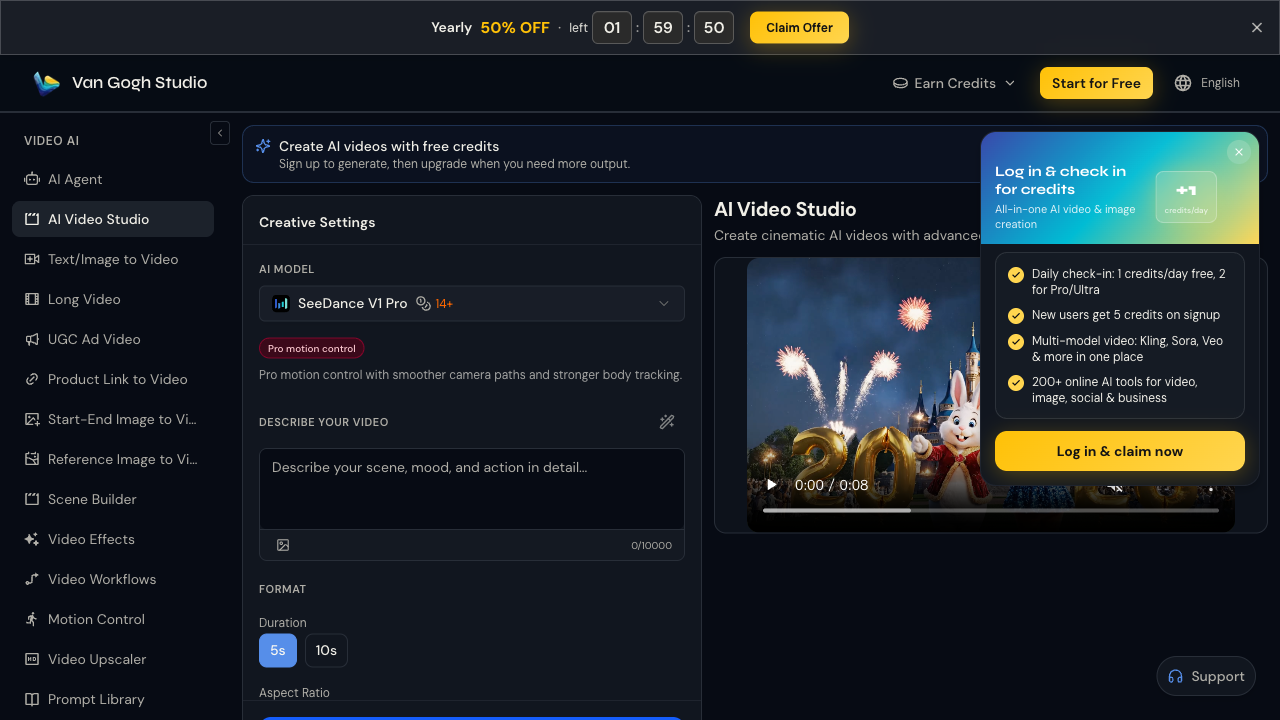
I'd pick it when I require a finished video. You can get a post-ready video with no manual editing. You only require to give it an idea, text, image, or URL, and it handles structure, pacing, visuals, and sound.Van Gogh Studio Agent is another highlight.
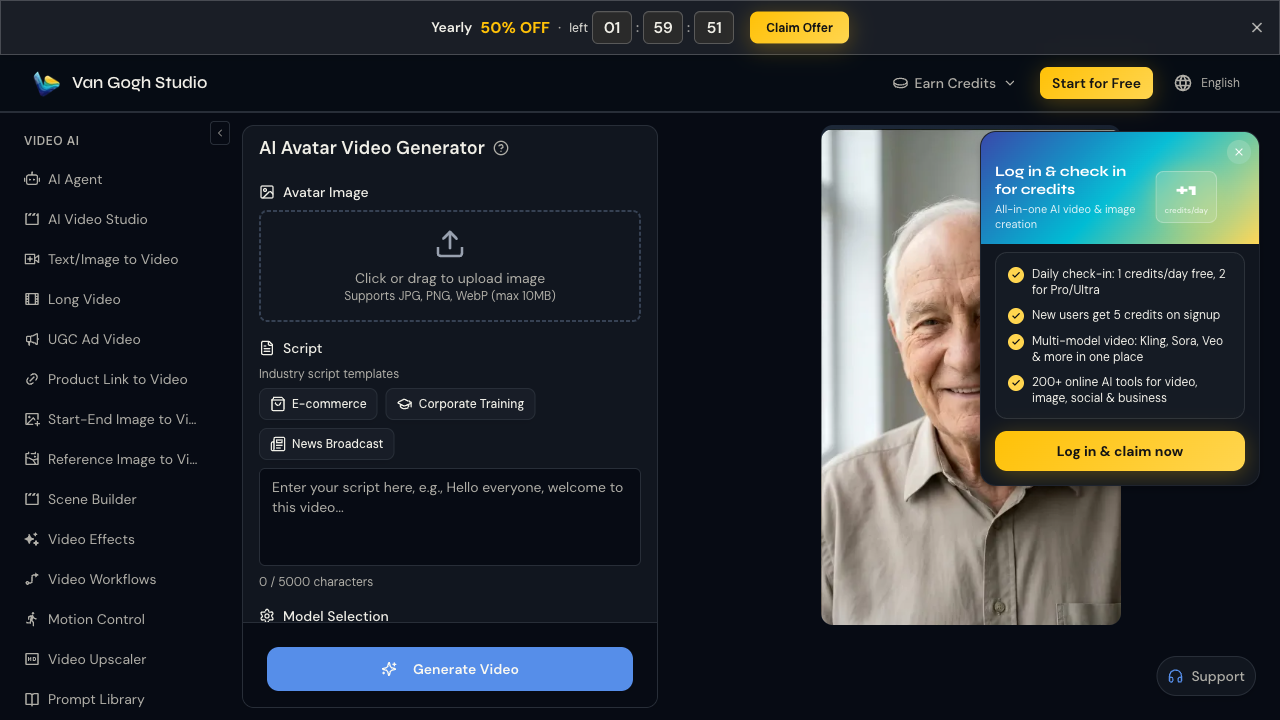
Additionally, Van Gogh Studio’s talking avatar offers an easier alternative to the old recording-heavy workflow. You can create lifelike talking-head clips from a single photo, with no filming or pre-training required.
Whether you are a creator redefining storytelling or a marketer building compelling visuals, Van Gogh Studio delivers the tools and models designed to keep you one step ahead of the competition.
Final Verdict
Gemini 3. Flash helps you move quickly, whereas Pro feels better for deeper reasoning and bigger video ideas.5 Flash and Pro are worth using if you require faster planning and smarter creative workflows.
They operate best when paired with Van Gogh Studio for generation, motion, and final polish. But I'd avoid apply them as a complete video production tool.
Create AI videos free
Try Van Gogh Studio free — text-to-video, image-to-video, and 300+ models in one place. Free credits on signup, no credit card required.
Try Free Video Generator