I tested Visla for 14 days because it presents itself as an AI video generator for business teams — especially users who want to turn ideas, scripts, webpages, and recordings into videos faster.
In this Visla review, I’ll share what it does well, where it feels limited, who it fits best, and why I would choose Van Gogh Studio when I need a clearer path from idea to publish-ready video.
Quick Verdict
Visla is a useful AI video generator if your main goal is structured business video drafts from prepared content. Script-to-video, text and image inputs, screen recording, stock matching, branding, and team review make it easier to move from written material to a watchable first cut.
It is a weaker choice when you need cinematic scenes, distinctive creative direction, talking avatars at scale, or outputs that feel reliably publish-ready without heavy cleanup. For a fuller production workflow, I prefer Van Gogh Studio.
| Review Point | My Take |
|---|---|
| Best for | Business clips from scripts, pages, recordings, and training messages |
| Not best for | Ready-to-post cinematic, product, or UGC campaign videos |
| Strongest feature | Guided script-based workflow from prepared business content |
| Biggest limitation | Drafts often need visual replacement, pacing fixes, and manual review |
| Learning curve | Easy to start, denser once you use the full toolset |
| My verdict | Useful for business drafts; limited as a full creative production studio |
What Is Visla?
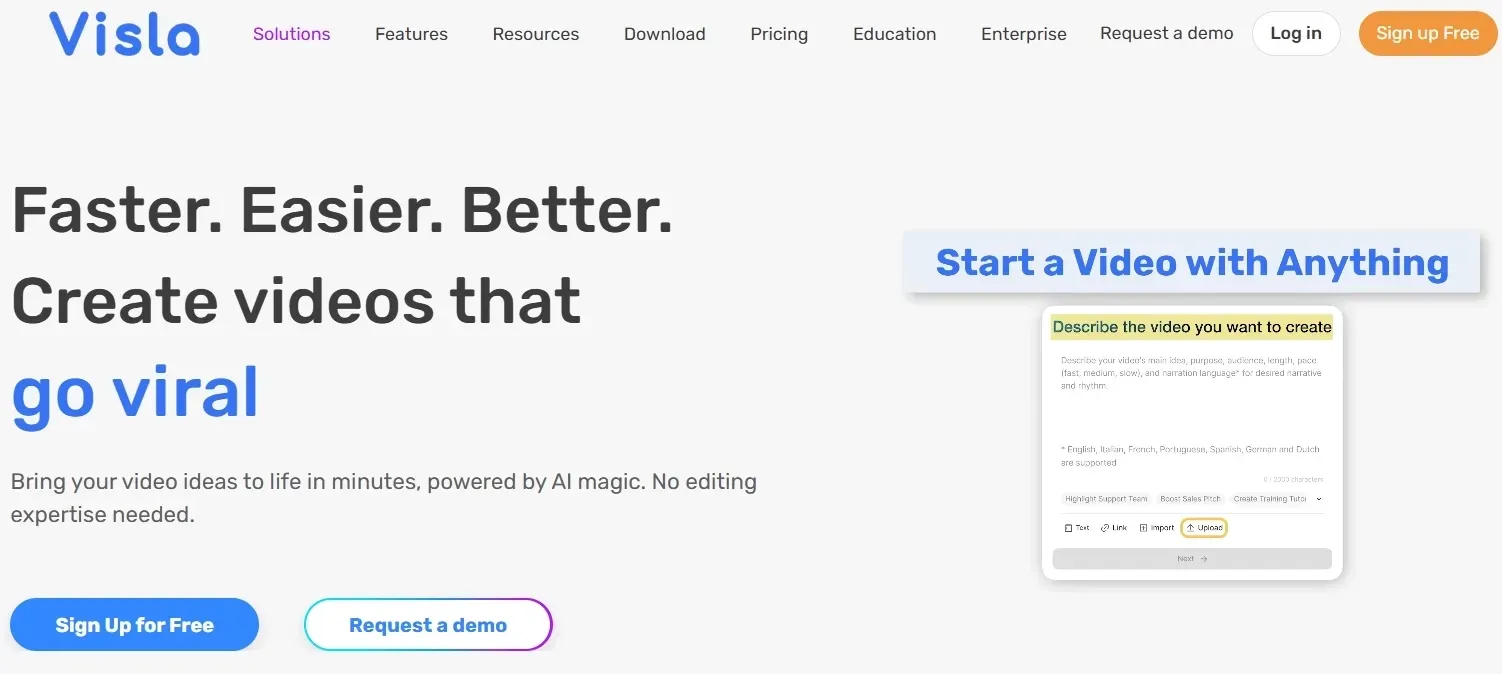
Visla is an AI video platform aimed at business users. It combines script-to-video tools, text-to-video and image-to-video creation, screen recording, stock media suggestions, scene editing, branding, and team collaboration.
Its biggest value is helping teams turn prepared content into structured video drafts without starting from a blank editor. Product demos, training clips, internal updates, sales videos, and business communications are the clearest fit.
Compared with open-ended generative video tools, Visla feels more guided and operational. It is less about building cinematic scenes from scratch and more about organizing scripts, stock visuals, recordings, and brand assets into a business-friendly draft.
Key Features I Reviewed
Visla’s feature set is organized around business video assembly: guided generation, script structure, supporting visuals, recording, and team review.
AI Video Agent
Visla’s AI video agent guides users from an idea or short prompt into a video draft. I used it as a starting point when I wanted the platform to shape a business message into a visual structure.
This worked best for straightforward communication — company updates, product announcements, customer education, and basic corporate videos where the main goal was clarity.
The limit showed up in how much direction I still had to provide. The agent helped organize the draft, but I still needed to check structure, rewrite weak sections, and decide whether the visual flow matched the message.
Script to Video Workflow
Script to video was one of the more practical parts of the platform. When I had a clear script, Visla could break it into scenes and suggest a video structure around it.
This saves real setup time for short explainer videos, launch copy, onboarding scripts, and process documentation. Many teams already work from written material, so starting there makes sense.
The limitation is script quality. If the script is vague, the draft becomes flat quickly. I still had to tighten the message, adjust scene breaks, and improve pacing.
Text to Video and Image to Video
Visla also supports text-to-video and image-to-video style creation when you do not have a finished script.
Text input worked better with a clear business goal. Image input helped when I already had a product visual, brand asset, or presentation image to build around — useful for early product video drafts.
The output was not stable enough for me to trust as a final production result. Some visuals felt broad or not specific enough. A reference image to video workflow would make this kind of creation more reliable by locking subject, style, and composition more tightly.
Stock Footage and B-Roll Matching
Visla’s stock footage matching pairs script sections with supporting visuals. That reduces time spent searching for B-roll, especially when the subject is hard to film.
I found this useful for training content, internal explainers, and general business topics where clean supporting footage can make a video feel less empty.
The limitation is relevance. I regularly still needed to replace broad stock clips with more precise ones. Stock can fill a scene without communicating a specific product, interface, customer problem, or brand context.
Screen Recording and Teleprompter Tools
Visla includes recording tools for screen capture, webcam videos, and teleprompter-supported presentations. This is useful for tutorials, walkthroughs, and team communication.
A SaaS walkthrough, dashboard explanation, support answer, or tutorial benefits from real screen recording because viewers can follow the actual steps. Visla keeps that workflow in one place.
The catch is polish. A raw walkthrough still needs trimming, pacing, captions, focus, and cleanup before it feels finished.
Brand Hub and Team Collaboration
Visla includes branding and collaboration tools such as workspaces, brand assets, team review, sharing, comments, and transcription.
This is useful for teams that publish recurring videos with a consistent look. Internal communication, customer education, sales enablement, and simple marketing videos all benefit from shared assets and review comments.
For me, this feature is more operational than creative. It helps manage assets and review cycles, but it does not solve deeper needs like stronger generative visuals or distinctive scene design.
Pros and Cons
What I Liked
- Script-to-video saves early setup work for business content
- Scene structure is easy to follow for non-editors
- Recording tools fit demos, tutorials, and training walkthroughs
- Stock matching speeds up rough drafts
- Brand hub and team review help business collaboration
What Held It Back
- AI visuals and stock footage often need replacement
- Scene pacing still needs manual review
- Editing control is not deep enough for campaign-level polish
- Output quality is not always predictable
- Public user feedback raises concerns around technical friction and support
Create Full Videos with Van Gogh Studio Free
Where Visla Falls Short
Visla’s limits show up when you need more than a guided business video draft.
Drafts Still Need Heavy Cleanup
During testing, the same pattern kept showing up: Visla helped me organize scripts, match stock visuals, record screens, and edit by scenes. That was useful. But I still had to review visual fit, fix pacing, replace weak footage, and decide whether the final video was actually ready to publish.
That gap matters for teams that hoped AI would remove finishing work. Visla accelerates the first cut more reliably than it ships a finished video.
Creative Range Stays Narrow
Visla feels limited when the project needs cinematic motion, product-led storytelling, UGC-style ads, or highly specific visual direction. The workflow is strongest for message-led business communication, not open-ended creative production.
Presenter-led content is another gap. Visla can support recordings and scripted videos, but it is weaker than a dedicated AI avatar path when you want scalable talking presenters without filming.
Reliability and Support Risk Signals
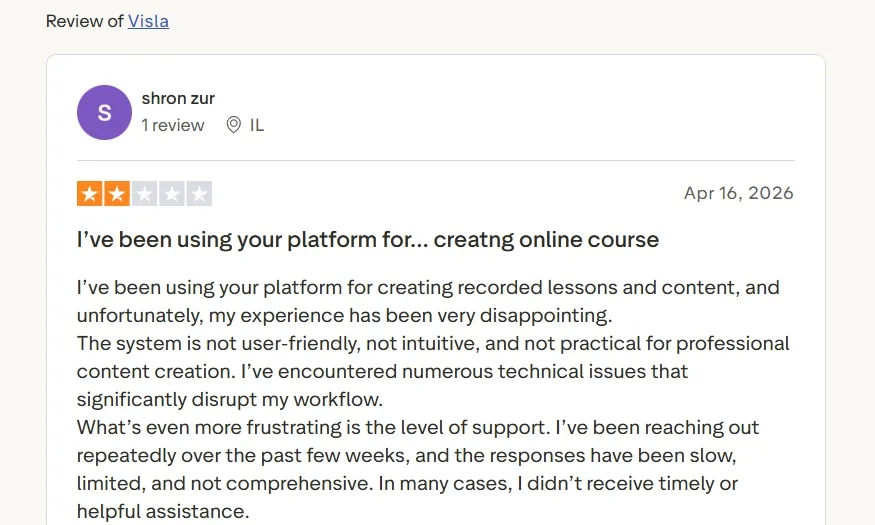
I would not treat review sites as the whole story, but I would treat them as a risk signal. Some users report that generated videos drifted from scripts, leaned on generic B-roll, or felt clunky after generation. Others mention technical issues, slow support, and billing frustration.
If Visla is only for internal drafts, friction is annoying. If it is for client work or recurring publishing, friction becomes expensive.
Real Use Cases
| Use Case | My Take |
|---|---|
| Product demos | Good fit for turning feature scripts into simple demo videos |
| Training videos | Strong fit for process explanations and internal learning content |
| Sales enablement | Decent fit — turns talking points into prospect-friendly clips |
| Internal communications | Strong fit for leadership updates and team messages |
| Presentation summaries | Good fit for turning slide content into simple video summaries |
| LinkedIn content | Mixed fit — useful when written posts need short video versions |
| UGC / paid social ads | Weak fit — not built for creator-style or high-variation campaign creatives |
Visla vs Van Gogh Studio
| Dimension | Visla | Van Gogh Studio |
|---|---|---|
| Main workflow | Business drafts from scripts, pages, and recordings | Full AI video generation, editing, and publish-ready workflows |
| Starting input | Scripts, pages, recordings, visuals | Text, image, reference, URL, video, or concept |
| Business presentation | Recording and teleprompter tools | AI avatar for talking business videos without filming |
| Creative range | Narrower business-communication focus | Broader coverage across ads, explainers, social, and story videos |
| Marketing output | Better for message-led drafts than campaign creatives | Stronger with UGC ad video and campaign-ready workflows |
| Editing flexibility | Scene-based adjustments after generation | Stronger follow-up refinement with the AI video editor |
| Best fit | Teams that need guided business video drafts | Creators and marketers who need finished AI videos, not only drafts |
Why Van Gogh Studio Is a Better Visla Alternative
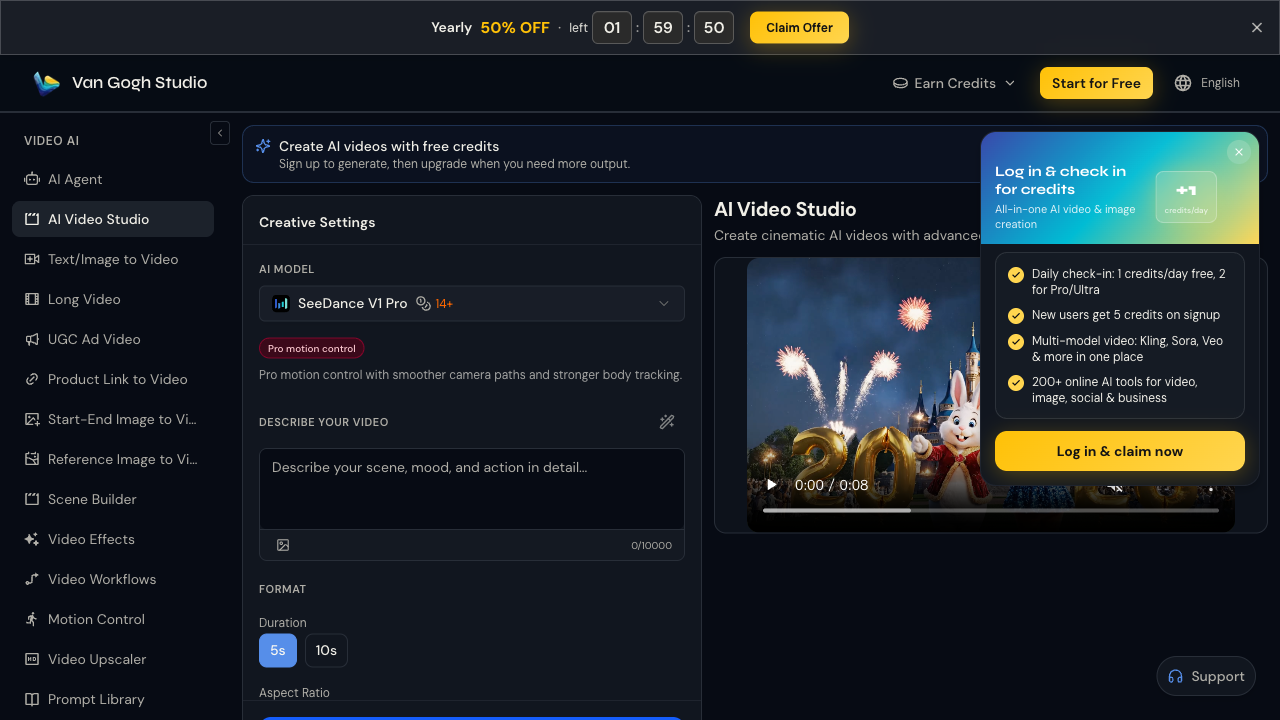
Visla is useful for assembling business video drafts. Van Gogh Studio is stronger when I want an AI creative suite that can generate, refine, present, and publish in one place.
Post-Ready Videos With Van Gogh Studio Agent
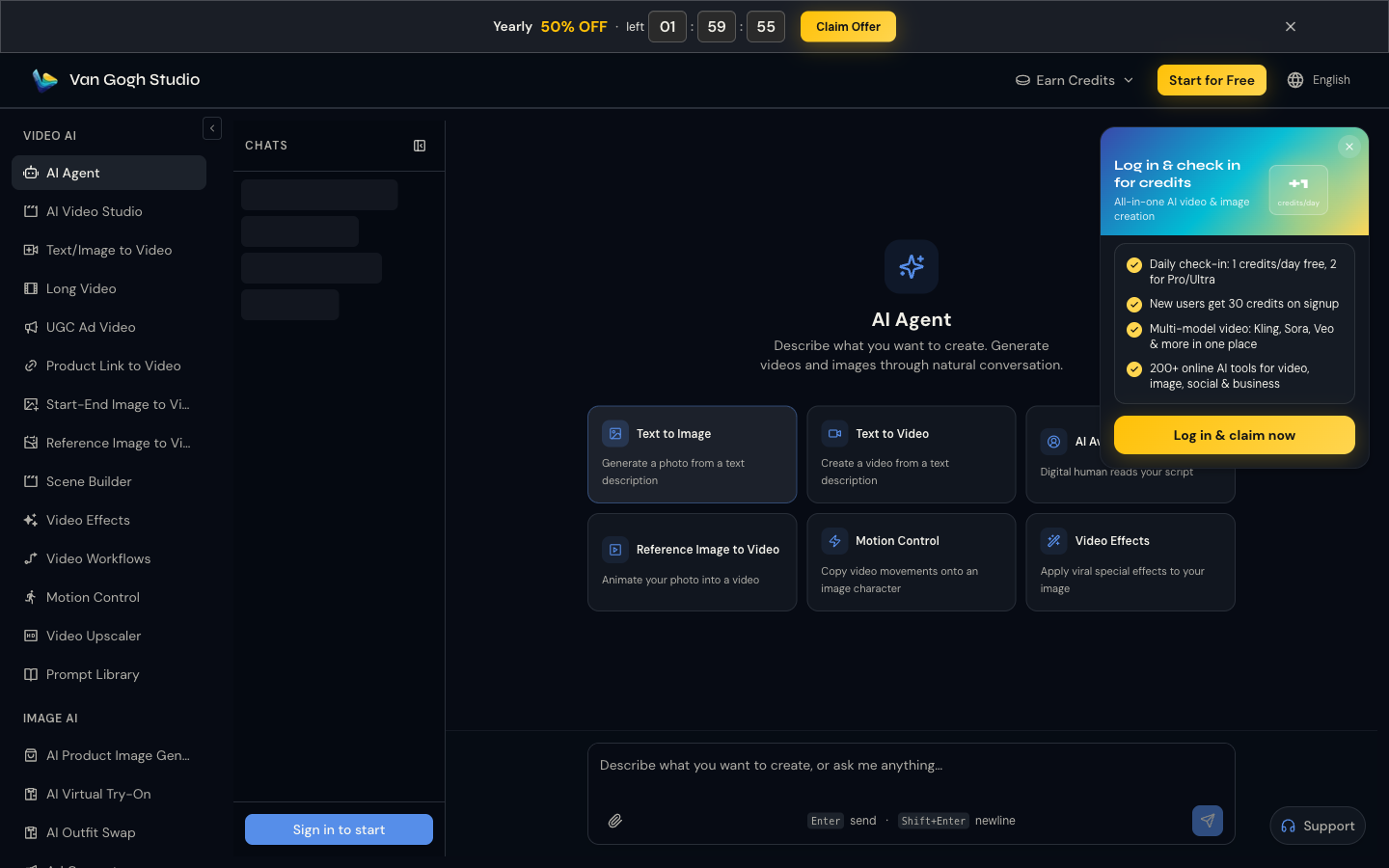
Van Gogh Studio Agent gives a stronger end-to-end production advantage. Instead of stopping at a structured draft that still needs cleanup, it is designed to create production-ready videos with less manual editing.
I can start from an idea, text, image, or URL, and the Agent can help handle structure, pacing, visuals, captions, and sound. That makes it more suitable when I want a finished result instead of another rough cut.
It also supports more content directions — viral video cloning, UGC ads, story videos, anime videos, music videos, and news-style videos — so the workflow stays adaptable for real publishing tasks.
Create Videos with Van Gogh Studio Agent
Broader AI Video Generation and Model Choice
Van Gogh Studio gives me more starting points: text to video for concepting, image to video for product stills, and multi-model access when I want different motion styles. Models such as Veo 3.1, Kling 3.0, and Seedance 2.5 matter when one look is not enough.
Avatar Videos and Marketing Workflows
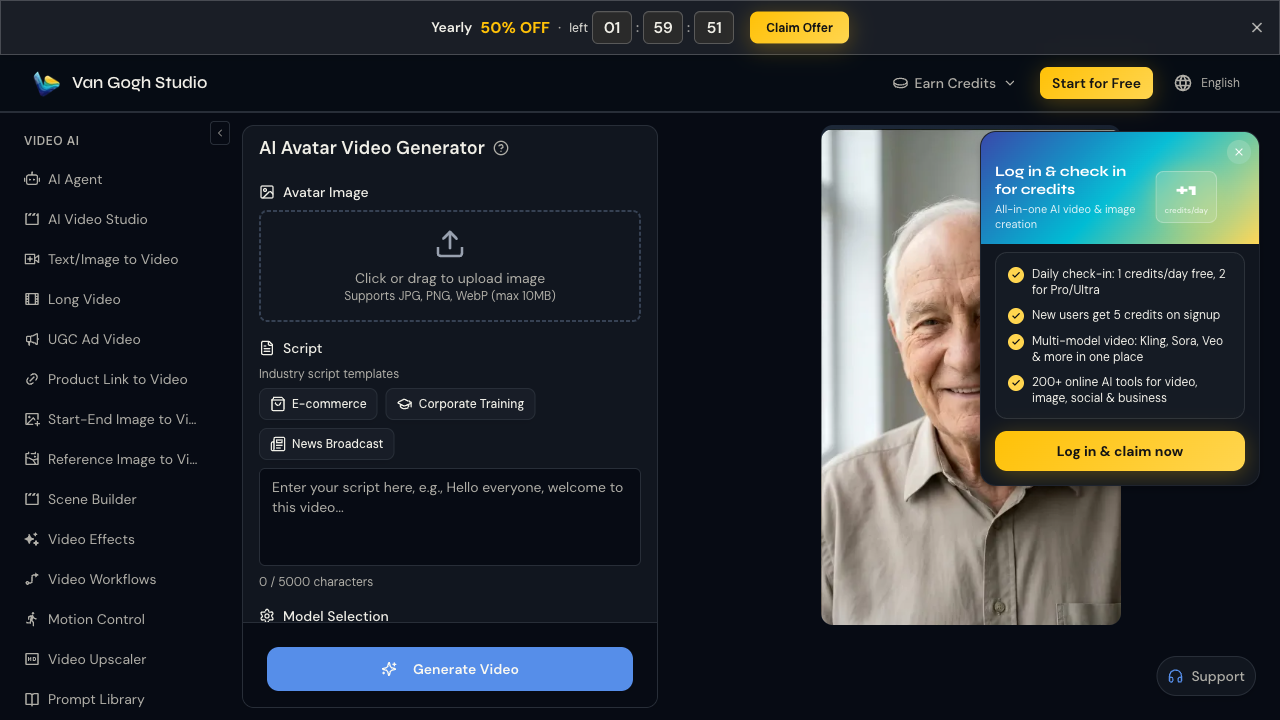
With Van Gogh Studio’s AI avatar video generator, I can turn one photo into a lip-synced talking avatar with natural expressions and gestures — useful for product explainers, onboarding, training modules, and sales messages without filming every update.
For ads, launches, and product promos, Van Gogh Studio’s marketing and product-video workflows are built for campaign output — hooks, variations, pacing, and channel-ready formats — via link to video and UGC ad video.
Final Verdict: Is Visla Worth Using?
After 14 days of testing, Visla is worth using when you already have a script, webpage, screen recording, or training message and need a guided business video draft.
Creative finish is the main issue. Visla is not the strongest choice when you need cinematic videos, distinctive product ads, avatar-led communication at scale, or outputs that feel reliably publish-ready without cleanup.
For a broader AI video workflow, I would choose Van Gogh Studio. It combines multi-model video generation, editing, Agent-led publish-ready workflows, avatars, and campaign tools in one place — so you can draft, refine, present, and publish without switching platforms.
Visla Review FAQs
Is Visla good for training videos?
Yes for drafts. Visla works well for process explanations, onboarding scripts, and internal learning content when you already have clear source material. Expect to review visuals and pacing before publishing.
Does Visla support script to video?
Yes. Script to video is one of its stronger features. It breaks written content into scenes and suggests a structure, which saves setup time for business explainers and enablement clips.
What is the biggest drawback of Visla?
For me, the biggest drawback is that drafts still need heavy cleanup. Stock relevance, pacing, and visual specificity regularly require manual fixes before the video feels publish-ready.
What is the best Visla alternative?
If you want business videos plus a complete AI video workflow, Van Gogh Studio is the better alternative. It covers AI avatar, multi-model video generation, editing, UGC ads, and Agent-led publish-ready videos in one workspace.
Create AI videos free
Try Van Gogh Studio free — text-to-video, image-to-video, and 300+ models in one place. Free credits on signup, no credit card required.
Try Free Video Generator