I tested VEED.io to see whether its AI features actually create distinctive videos — or mainly speed up editing and stock-led assembly inside a familiar browser timeline.
In this VEED review, I’ll share what it does well, where the online-editor identity still defines the product, who it fits best, and why I would choose Van Gogh Studio when I need generative scenes and a clearer path to publish-ready AI video.
Quick Verdict
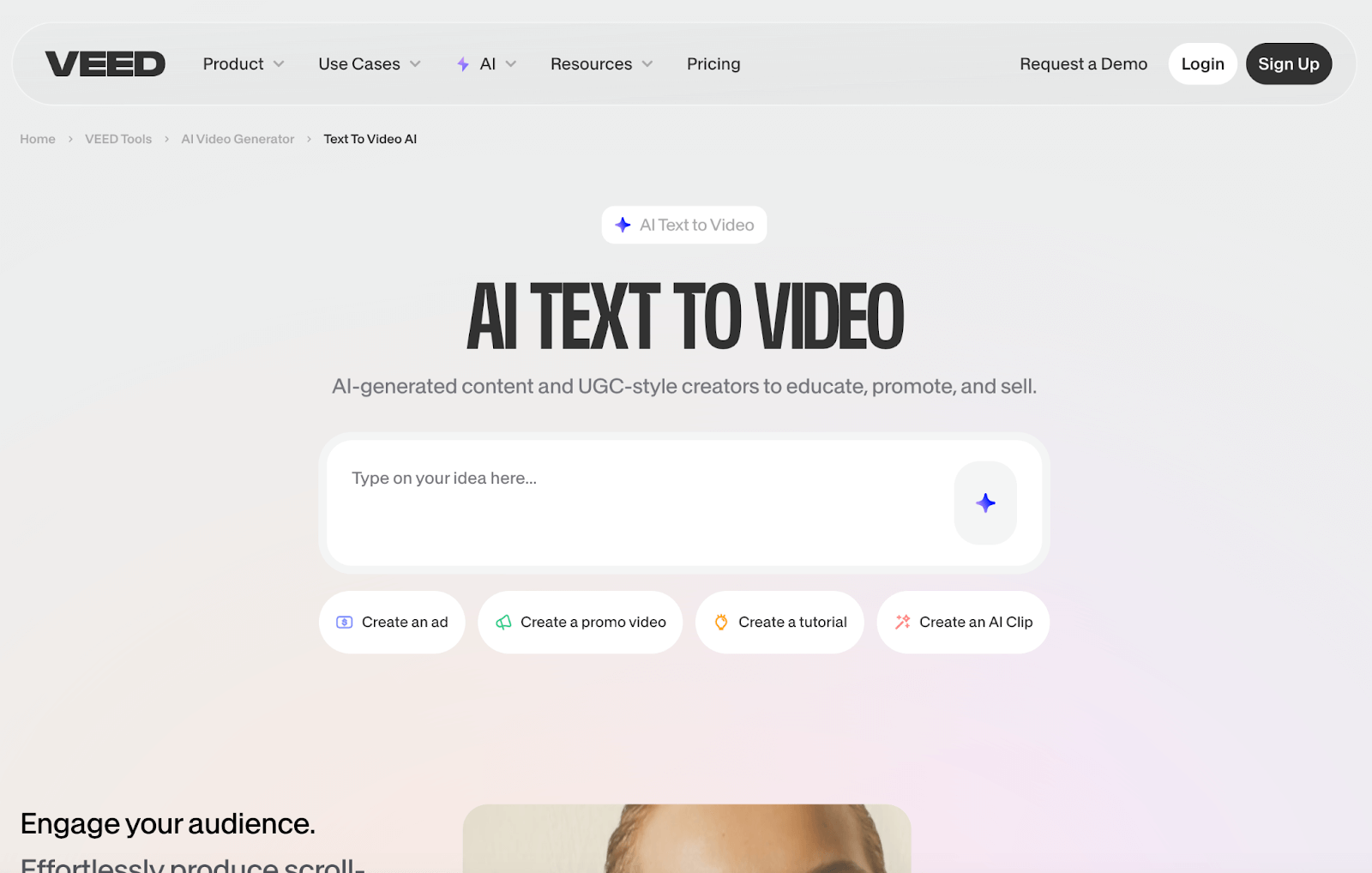
VEED is a useful online video editor if your main goal is browser-based creation with AI assists: script generation, auto captions, voiceovers, screen/webcam recording, stock assembly, avatars, and team collaboration. It lowers the barrier for beginners who need social explainers, tutorials, and quick promo drafts.
It is a weaker choice when you need generative AI video from scratch, cinematic multi-model scenes, original product motion, or campaign creatives that do not rely on stock footage. VEED is best understood as an online editor with AI shortcuts — not a full generative AI video studio. For that broader path, I prefer Van Gogh Studio.
| Review Point | My Take |
|---|---|
| Best for | Browser editing, captions, scripts, tutorials, stock-led social explainers |
| Not best for | Generative cinematic video, original product ads, or deep scene control |
| Strongest feature | Approachable editor plus AI script, captions, and stock assembly |
| Biggest limitation | AI “generation” often means stock + template packaging, not original scenes |
| Learning curve | Easy for beginners and small marketing teams |
| My verdict | Solid online editor with AI assists; limited as a generative AI studio |
What Is VEED?
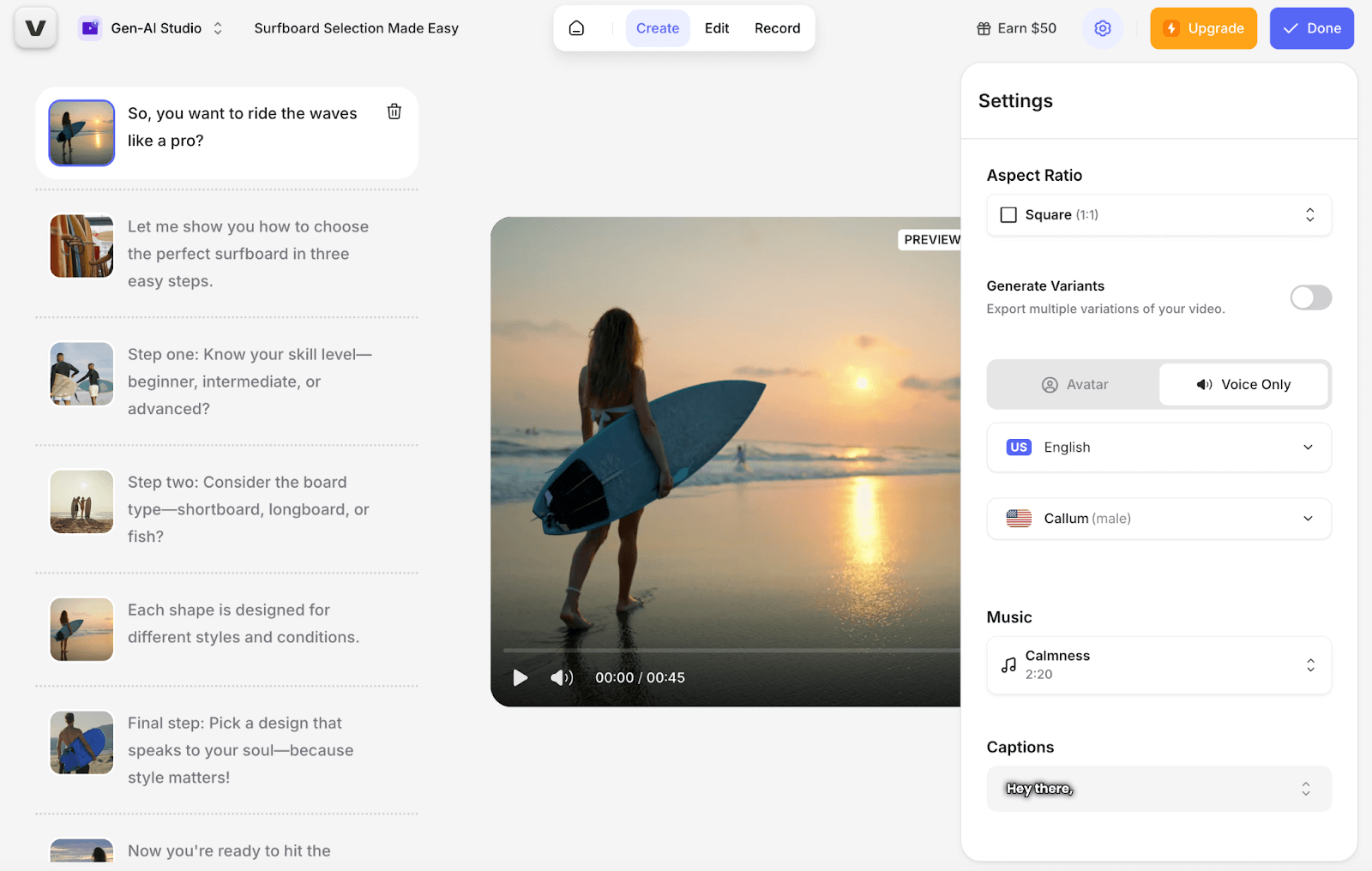
VEED (VEED.io) is an online video editor and AI-assisted creation platform for social clips, explainers, tutorials, and light promotional videos.
Its most useful pieces are AI script generation, auto captions, multilingual voiceovers, templates, stock media matching, screen/webcam recording, avatar options, clips/shorts tools, and collaboration. These features make VEED practical for packaging messages quickly — especially when you already have a topic, a recording, or a simple promo brief.
That positioning matters. VEED is not primarily a text-to-video or image-to-video generative model platform in the Veo/Kling/Vidu sense. It is closer to CapCut- or FlexClip-style online editing with stronger AI packaging: write a script, match stock, caption it, voice it, export. AI assists speed up assembly. They do not invent original cinematic scenes.
Key Features I Reviewed
VEED’s feature set is organized around editing assists and stock-led AI packaging inside a browser timeline.
AI Script and Stock-Led Video Generation
VEED can turn a short prompt into a script, then assemble a video with stock footage, voiceover, music, and captions.
This helps with explainers, how-tos, and simple social promos when speed matters more than originality. In my tests, scripts were often solid — clear structure, usable tone — while visuals stayed stock-dependent. The result can feel competent and still look like every other stock explainer.
Online Editor With Captions, Audio, and Effects
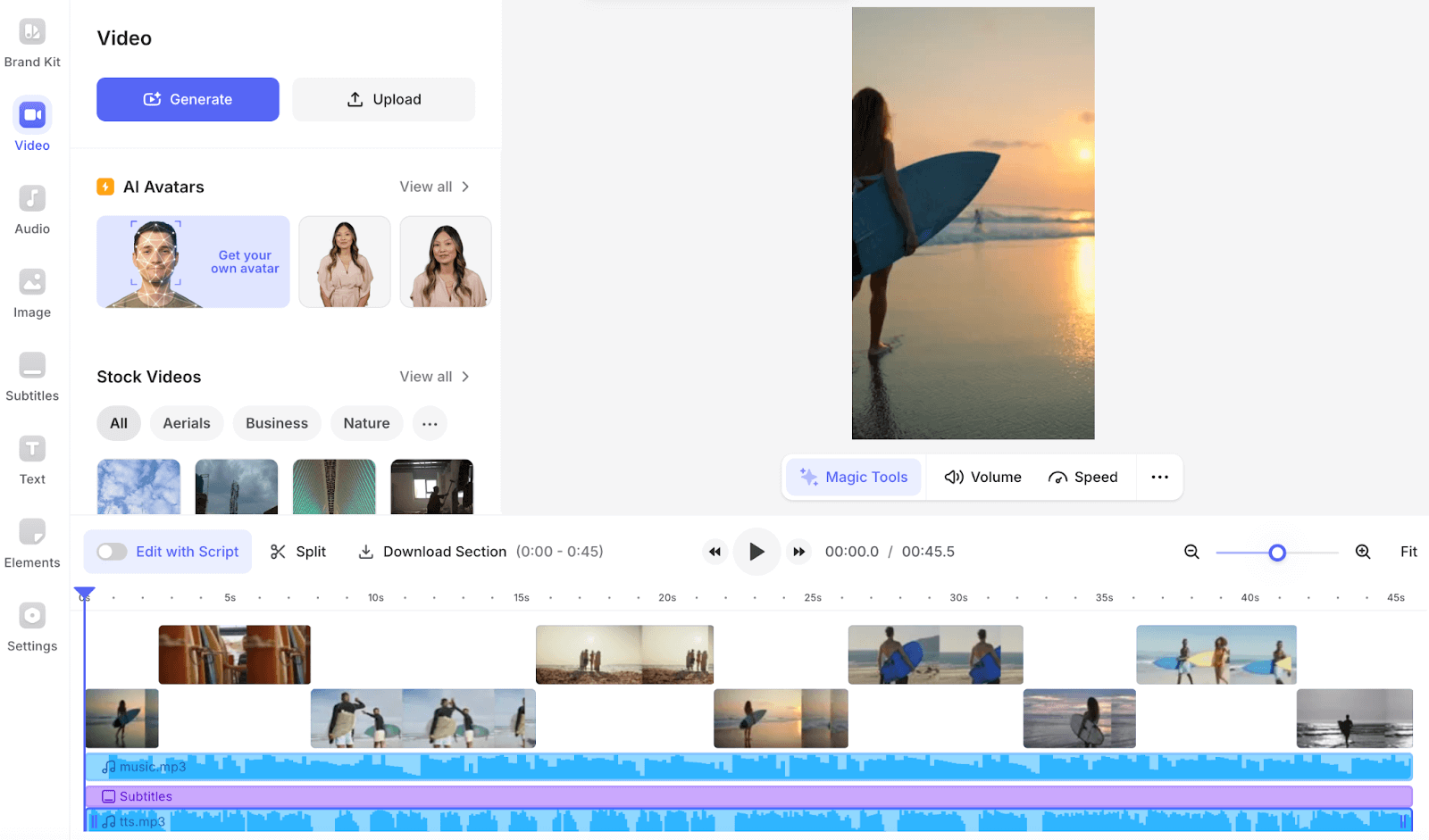
The editor is the real product center. You can trim, split scenes, restyle text, adjust audio, add effects, remove backgrounds, clean audio, and customize branding.
This is where VEED feels reliable. If you already have footage or a generated draft, the timeline tools make cleanup approachable for beginners who do not want desktop software.
Auto Captions and Social Repurposing
Auto captions and the Clips feature help turn longer recordings into short, readable social videos. Captions matter for TikTok, Reels, Shorts, tutorials, and ads.
I would still review timing and emphasis. Auto captions save labor; they do not automatically create a strong hook or message hierarchy.
AI Voiceovers and Avatars
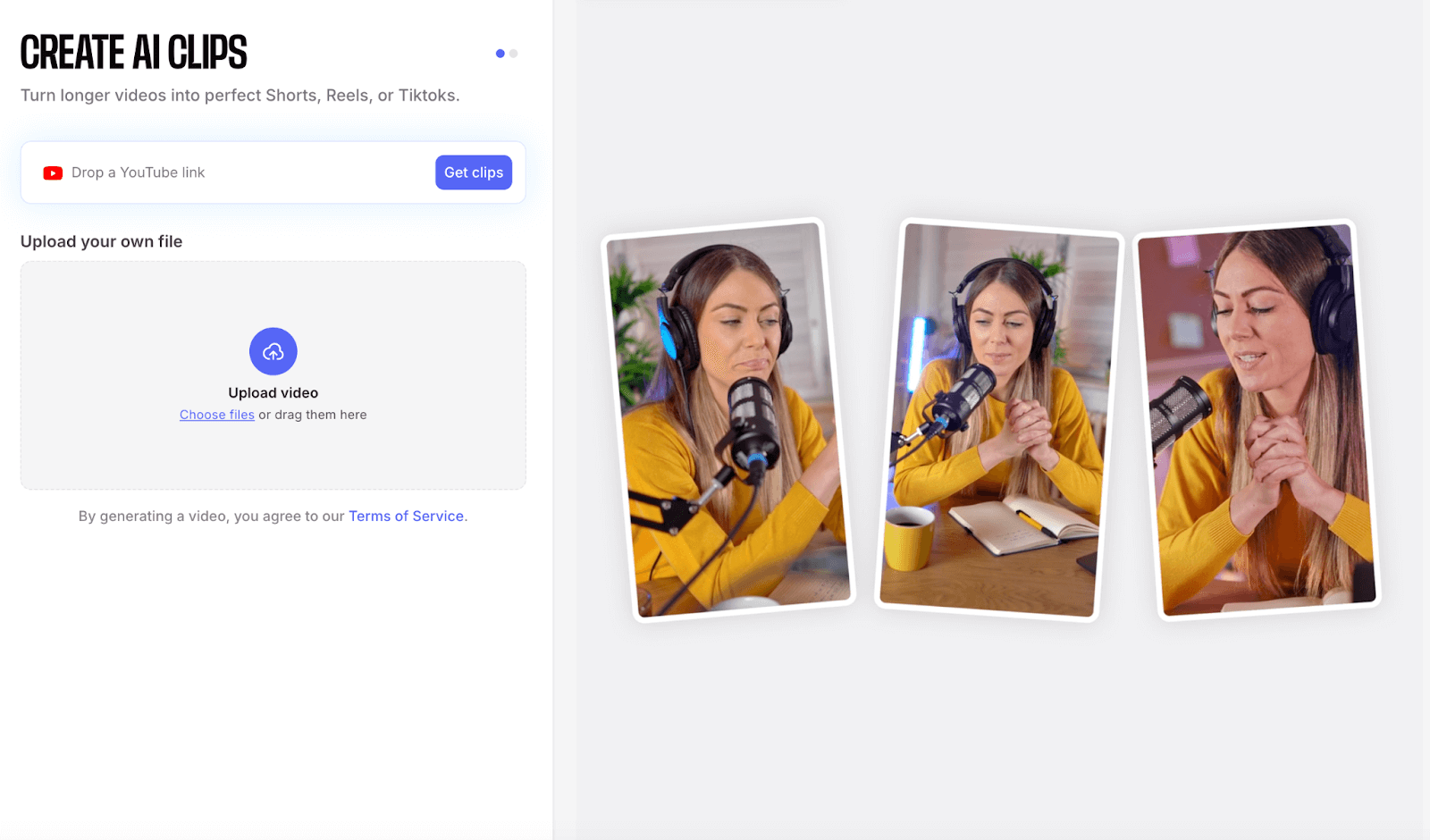
VEED offers multilingual AI voiceovers and avatar options for presenter-style clips. Voice quality varies by selection — some narrations feel natural, others flat. Avatars can feel robotic and sit awkwardly against stock scenes.
These tools help teams avoid filming. They are not a substitute for generative product motion or distinctive visual storytelling.
Screen Recording and Team Collaboration
Screen/webcam recording and collaboration features make VEED practical for tutorials, internal demos, and team review. Commenting and shared projects help marketing and education teams iterate without emailing exports.
This is a genuine workflow strength for organizations that already edit in the browser.
Pros and Cons
What I Liked
- Easy browser editor for beginners and small teams
- AI scripts are often clear and usable for explainers
- Auto captions and shorts tools help social packaging
- Screen/webcam recording fits tutorials and demos
- Multilingual voiceovers and collaboration support team workflows
- Stock + template assembly is fast when originality is not the priority
What Held It Back
- “AI video generation” often means stock footage packaging, not original scenes
- Avatar and voiceover quality can feel uneven or robotic
- Outputs can look generic for paid ads and distinctive brand campaigns
- Free access is limited; paid plans can get expensive for heavier use
- Not a generative multi-model video platform for text/image-to-video cinema
- Final creative differentiation still depends on manual taste and editing
Create Full Videos with Van Gogh Studio Free
Where VEED Falls Short
VEED’s limits show up when the project needs more than polished stock assembly and timeline cleanup.
Online Editor First, Generative Studio Second
VEED assumes you are packaging a message with media — stock, recordings, templates, or light avatar inserts. If you start from an idea or product still and need generative scenes, you are outside its strongest lane. That is category, not a missing button, but it matters when people expect “AI video generator” results.
Stock-Heavy Outputs Age Quickly
My makeup explainer and surf promo tests both relied on stock. Scripts and captions were fine; originality was not. For recurring brand channels, stock-led explainers start to look interchangeable.
Avatars and Voices Need Careful Selection
Avatars can feel detached from the scenes around them. Voiceovers vary enough that experimentation becomes part of the job. That slows the “one-click finished video” promise.
Better at Packaging Than Producing Campaigns
VEED is strongest when you need captions, trims, a script, and a quick social draft. If you begin with a performance-ad brief, product close-ups, or UGC video ads, stock assembly is not the same as generative campaign production.
How I Reviewed VEED
I reviewed VEED as an online editor with AI packaging tools, not as a generative model platform.
Main areas I considered:
- Editing speed — whether captions, trims, and AI assists reduced real timeline work
- Generation honesty — whether “AI video” meant original scenes or stock assembly
- Output polish — whether results felt ready for social or still looked generic
- Avatar / voice quality — whether presenter tools felt natural enough for brand use
- Creative control — whether users could shape story and brand beyond templates
- Business value — whether beginners and teams could ship usable videos faster
Is VEED Right for You?
VEED is a strong fit if you need a simple online editor with AI assists for explainers, tutorials, captions, and stock-led social videos. I would recommend it for educators, small businesses, and marketers who already think in scripts and browser timelines.
It is also useful if your team collaborates in the cloud and needs screen recording, captions, and shared review without desktop software.
VEED is less ideal if you want text-to-video, image-to-video, multi-model cinematic generation, original product motion, or campaign creatives that start from a visual idea instead of stock. In those cases, a generative AI video generator with stronger scene creation is the better starting point.
In short: VEED is right for users who need to edit and package. It is less ideal for users who need to generate and transform.
Real Use Cases
| Use Case | My Take |
|---|---|
| Social explainers | Strong fit — scripts, captions, and stock assembly move fast |
| Tutorials / screen demos | Strong fit — recording + editor is practical |
| Captions and shorts | Strong fit for packaging existing or assembled content |
| Simple promo videos | Good fit when stock visuals are acceptable |
| Team collaboration | Good fit for shared browser projects |
| Product ads needing original motion | Weak fit — stock packaging rarely feels distinctive |
| Generative cinematic video | Weak fit — not the core product category |
VEED vs Van Gogh Studio
| Dimension | VEED | Van Gogh Studio |
|---|---|---|
| Main workflow | Online editor with AI packaging and stock assembly | Full AI video generation, editing, and publish-ready workflows |
| Best starting point | Script, recording, or stock-led brief | Idea, text, image, URL, or footage |
| AI role | Scripts, captions, voice, avatars, stock matching | Generates scenes and transforms visuals, then finishes |
| Visual originality | Often stock- and template-dependent | Stronger text to video and image to video coverage |
| Marketing output | Helpful for explainers and simple promos | Stronger with UGC ad video and campaign-ready workflows |
| Editing flexibility | Solid browser timeline tools | Stronger prompt-based refinement with the AI video editor |
| Best fit | Teams packaging social and tutorial videos in a browser | Creators and marketers who need finished AI videos, not only stock edits |
Why Van Gogh Studio Is a Better VEED Alternative
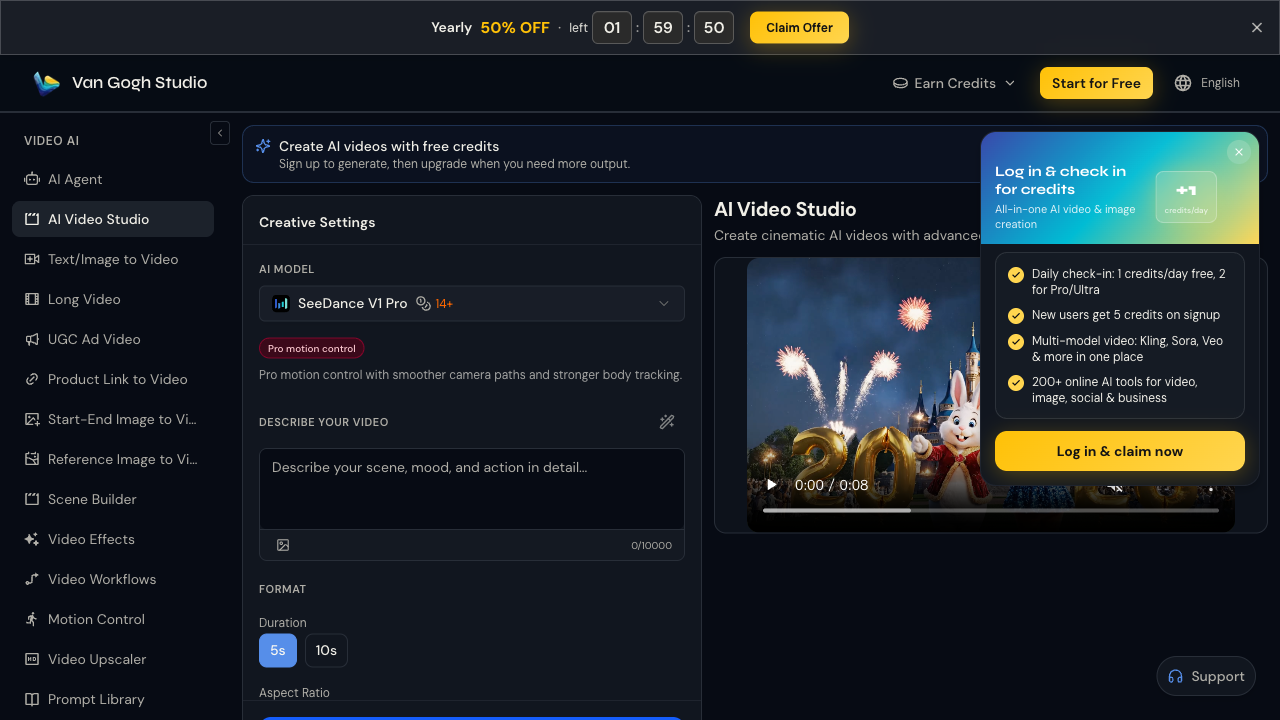
VEED is useful for timeline help and stock-led packaging. Van Gogh Studio is stronger when I need generative creation, prompt-based visual edits, and a clearer path to publish-ready output.
Generate Scenes When Stock Is Not Enough
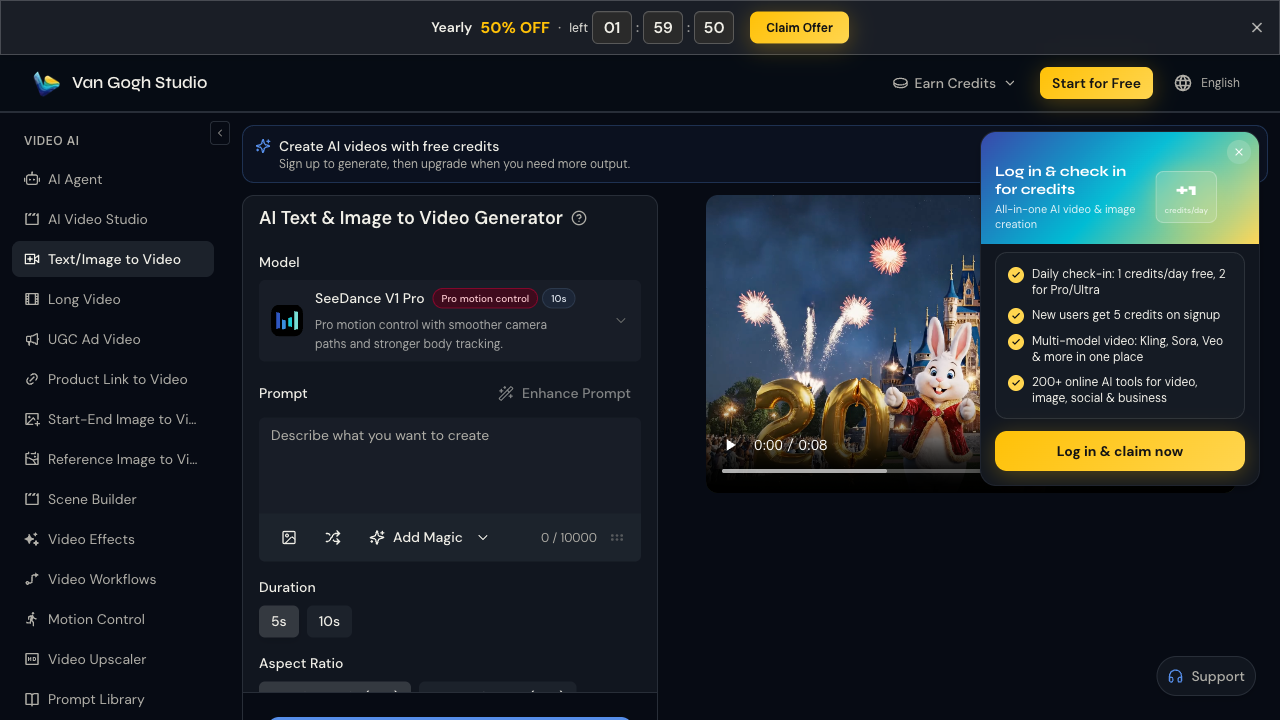
Van Gogh Studio gives me starting points VEED does not center on: text to video, image to video, and multi-model access with options such as Veo 3.1, Kling 3.0, and Seedance 2.5.
If the project begins with an idea or product still instead of a stock library, that generative layer is the real upgrade.
Edit the Shot Itself, Not Only the Timeline
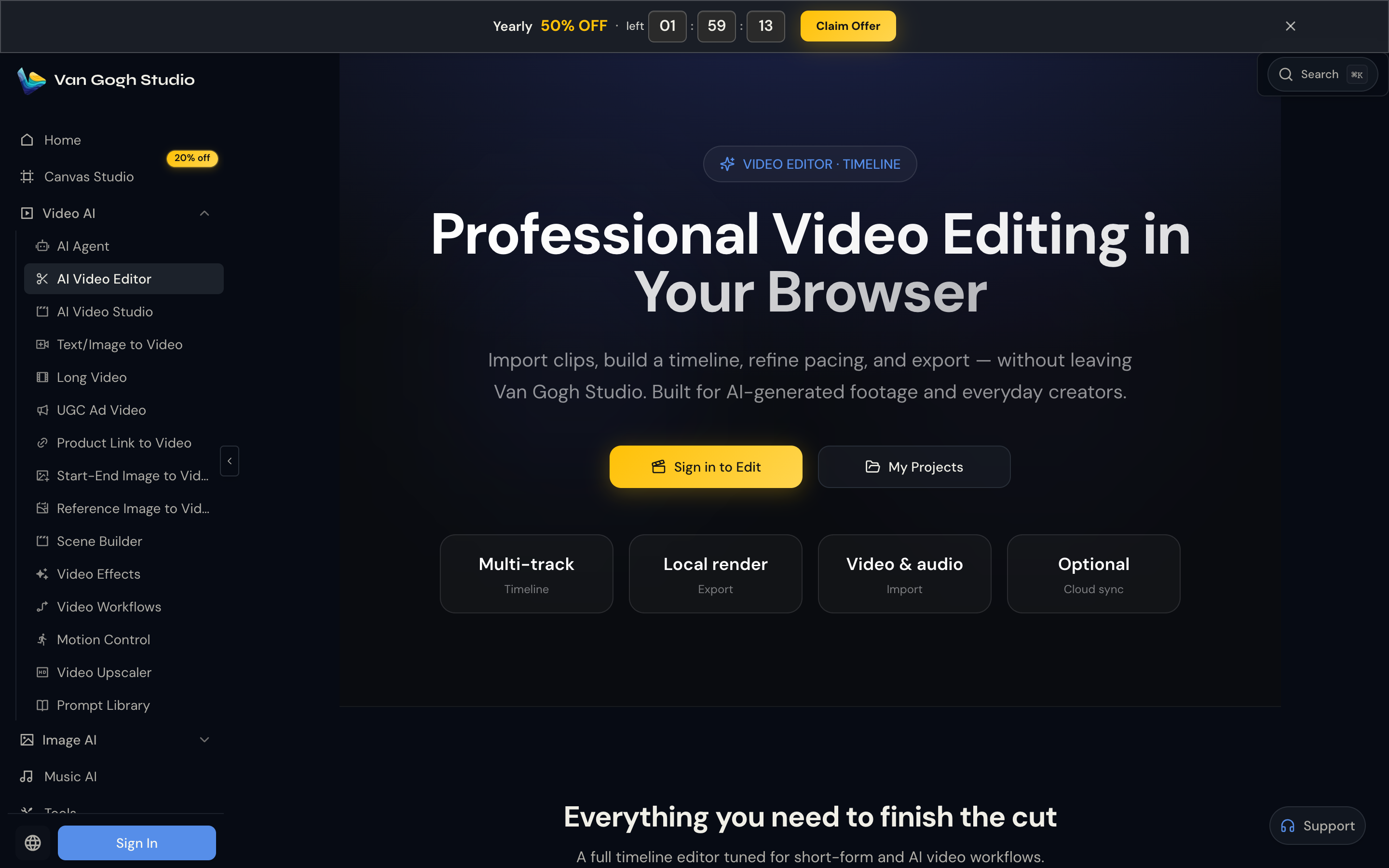
VEED helps trim, caption, and prepare clips. Van Gogh Studio’s AI video editor is more useful when the problem is the look of the shot — backgrounds, objects, mood, style, or camera feel — not only the timeline around it.
Avatar and Agent Paths for Finished Output
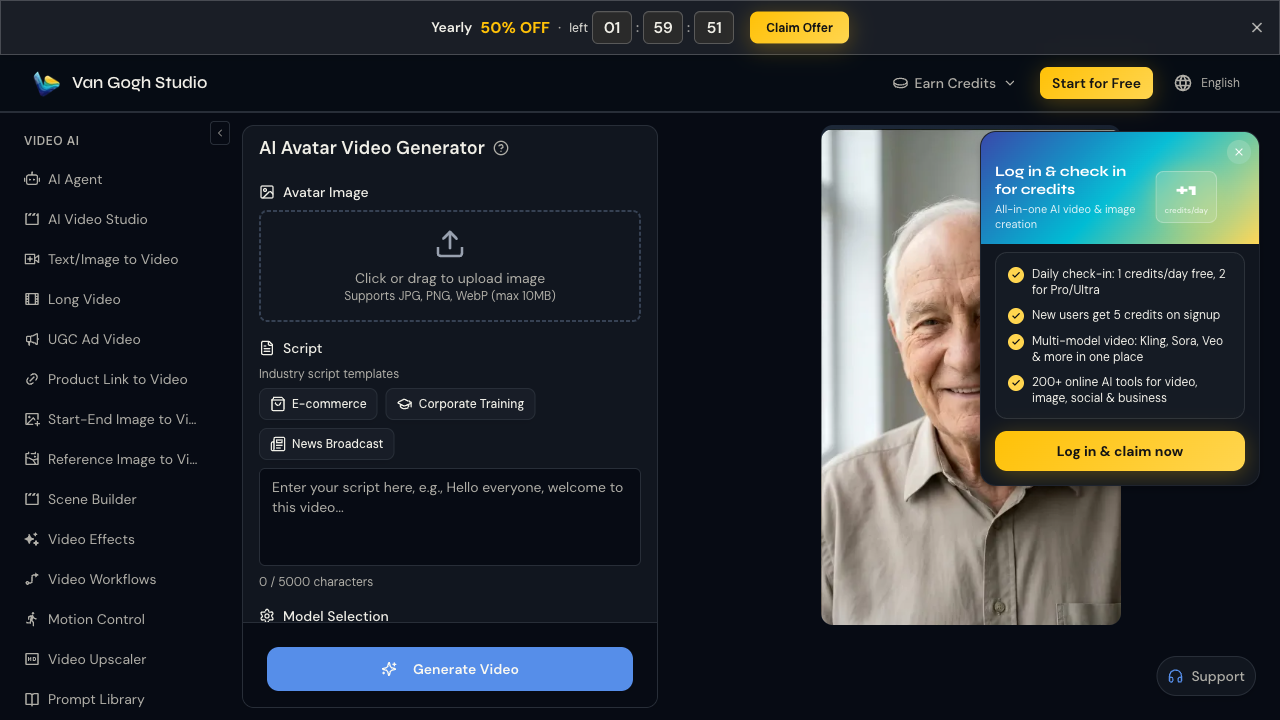
With AI avatar, I can create presenter clips without filming. With Van Gogh Studio Agent, I get more help on structure, pacing, captions, and publish-ready assembly — the layer VEED still leaves to manual packaging and stock taste.
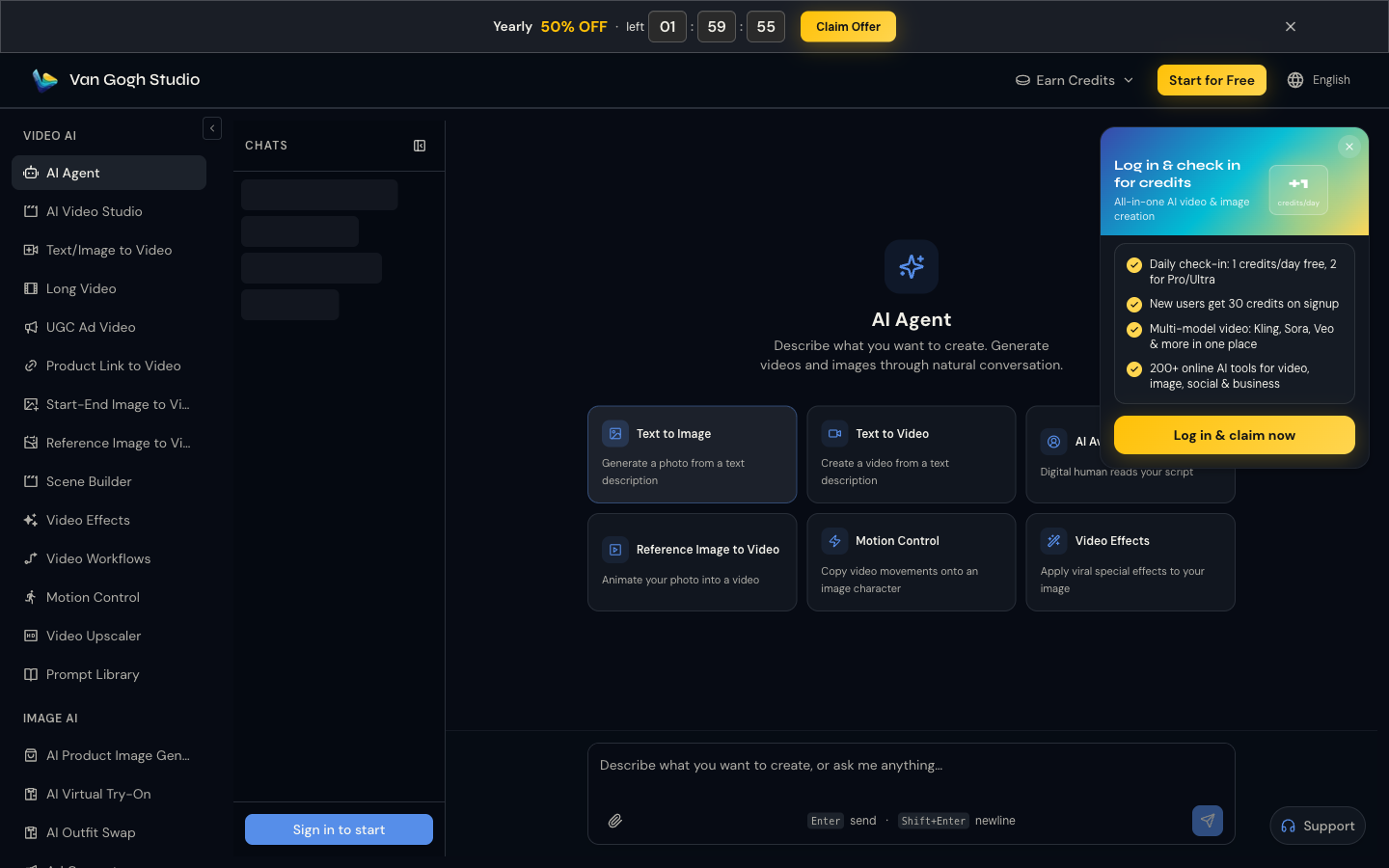
Create Videos with Van Gogh Studio Agent
Stronger Marketing and Product Workflows
For ads, launches, and product promos, I need hooks, variations, and channel-ready formats. Van Gogh Studio’s marketing workflows — including UGC ad video and link to video — are built for that campaign output, not just assembling stock explainers.
Final Verdict: Is VEED Worth Using?
VEED is worth using if you want a beginner-friendly online video editor with practical AI assists. Scripts, captions, voiceovers, screen recording, collaboration, and fast stock-led social drafts are genuine strengths.
Its biggest limitation is category, not a missing button. VEED improves packaging and cleanup. It does not replace generative AI video creation or fully solve originality for ads and brand campaigns.
Use VEED for quick AI-assisted editing and stock-led explainers. Use Van Gogh Studio when you need stronger generative scenes plus publish-ready AI video production in one place.
VEED Review FAQs
Is VEED good for AI video editing?
Yes for task-level editing and packaging. VEED is useful for captions, scripts, voiceovers, trims, and stock-led social drafts. For stronger generative scenes and visual transformation, Van Gogh Studio is the better choice.
Is VEED an AI video generator?
Partly — but be careful with the label. VEED often generates structure (script, captions, voice, stock assembly) more than original cinematic scenes from generative video models.
What is the biggest drawback of VEED?
For me, the biggest drawback is stock- and template-dependent originality. Videos can ship quickly and still feel interchangeable for distinctive brand or product work.
What is the best VEED alternative?
If you want browser convenience plus generative AI video and prompt-based editing, Van Gogh Studio is the better alternative. It covers AI video editing, text to video, image to video, AI avatar, UGC ads, and Agent-led publish-ready videos in one workspace.
Create AI videos free
Try Van Gogh Studio free — text-to-video, image-to-video, and 300+ models in one place. Free credits on signup, no credit card required.
Try Free Video Generator