The original Nano Banana quickly became a go-to AI image model for creators. Nano Banana 2 pushes that further with custom aspect ratios, fast high-res generation, and stronger prompt reasoning — but dense, data-heavy text can still fail.
I ran a set of prompt → output tests on Van Gogh Studio covering extreme ratios, structured menus, labeled infographics, outdoor signage, and multi-detail fashion portraits. Below are the prompts, results, and where the model shines or stalls.
Quick Verdict
| Review point | My take |
|---|---|
| Best for | Ultra-wide / extreme ratios, fast 2K concept art, stylized portraits |
| Strongest upgrade | Canvas freedom (e.g. 8:1, 10:1) + ~20s high-res generation |
| Weakest area | Dense menus, exact prices, and “no hallucination” typography |
| Try it | Nano Banana 2 on Van Gogh Studio via AI Image Generator |
Bottom line: Use Nano Banana 2 to lock composition, lighting, and wide formats. For pixel-perfect copy (menus, UI, legal text), plan a second pass or switch models.
What’s New in Nano Banana 2?
Compared with earlier Nano Banana releases, these upgrades matter most in daily work:
- Faster high-res runs — roughly ~20 seconds for a high-resolution image in my tests; better for volume iteration
- Native high-res default — less dependency on a separate upscale step for many assets
- Flexible aspect ratios — 16:9, 3:2, 1:1, 21:9, plus extremes like 8:1 / 10:1 for scrolls and banners
- Stronger reasoning on complex prompts — multi-part descriptions (outfit + accessories + lighting) hold together more often
Hands-On Tests: Prompt → Output
Each case below shows the exact prompt I used and the image Nano Banana 2 returned (no post-edit).
Test 1: Ultra-Wide Fantasy Scroll (8:1)
Goal: keep one continuous scene across an extreme width without tiling or breaking the story left-to-right.
| Prompt (input) | Output |
|---|---|
| An uninterrupted fantasy scenery scroll in an 8:1 aspect ratio. From left to right: an enchanted forest, a shimmering river, and a far-off mountain range beneath a sunset. |  |
Result: Composition held across the full scroll — forest → river/village → mountains under sunset — without obvious repeats. This is where Nano Banana 2 feels clearly ahead of models that only handle standard ratios.
Test 2: Coffee Shop Menu (Dense Text + Prices)
Goal: render a chalkboard menu with exact section items and prices.
| Prompt (input) | Output |
|---|---|
| At the top, it reads "NANO ROASTERS". A comprehensive hipster coffee shop menu displayed on an oversized chalkboard. Beneath that, there are three different sections. Section 1: "Espresso 3.50", "Latte 4.50". Section 2: "Chemex 6.00", "Aeropress 5.00". Section 3: "Croissant 3.00", "Muffin 2.50". | 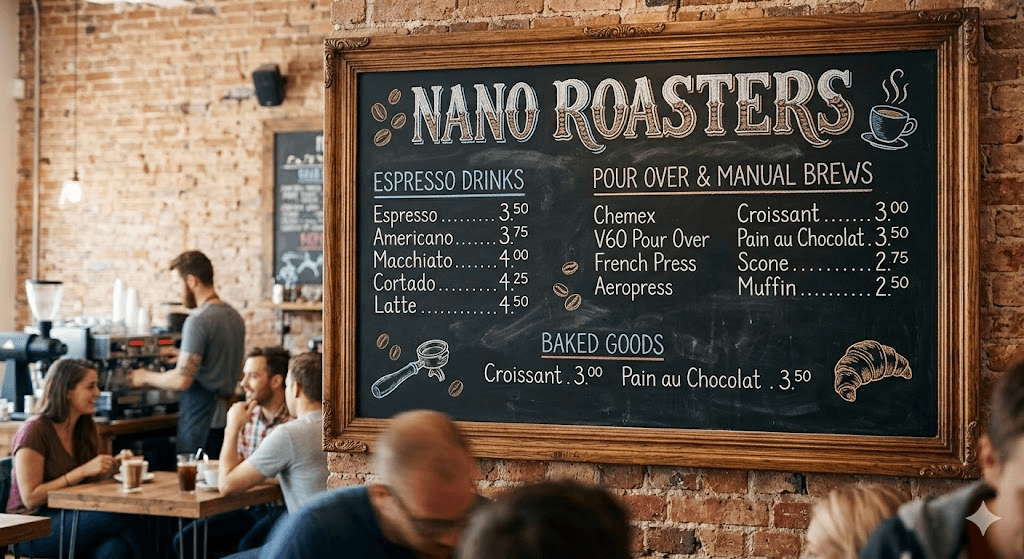 |
Result: The scene looks premium — brick, barista, warm light — and “NANO ROASTERS” is readable. Structured data is the weak spot: Section 2 prices were missing or wrong, and the board invented extra drinks and pastries. Great atmosphere; unreliable spreadsheet-level text.
Test 3: Labeled Infographic (World-Knowledge Style)
Goal: produce a clear educational layout with stage labels, not just a pretty diagram.
| Prompt (input) | Output |
|---|---|
| Infographic about the water cycle | 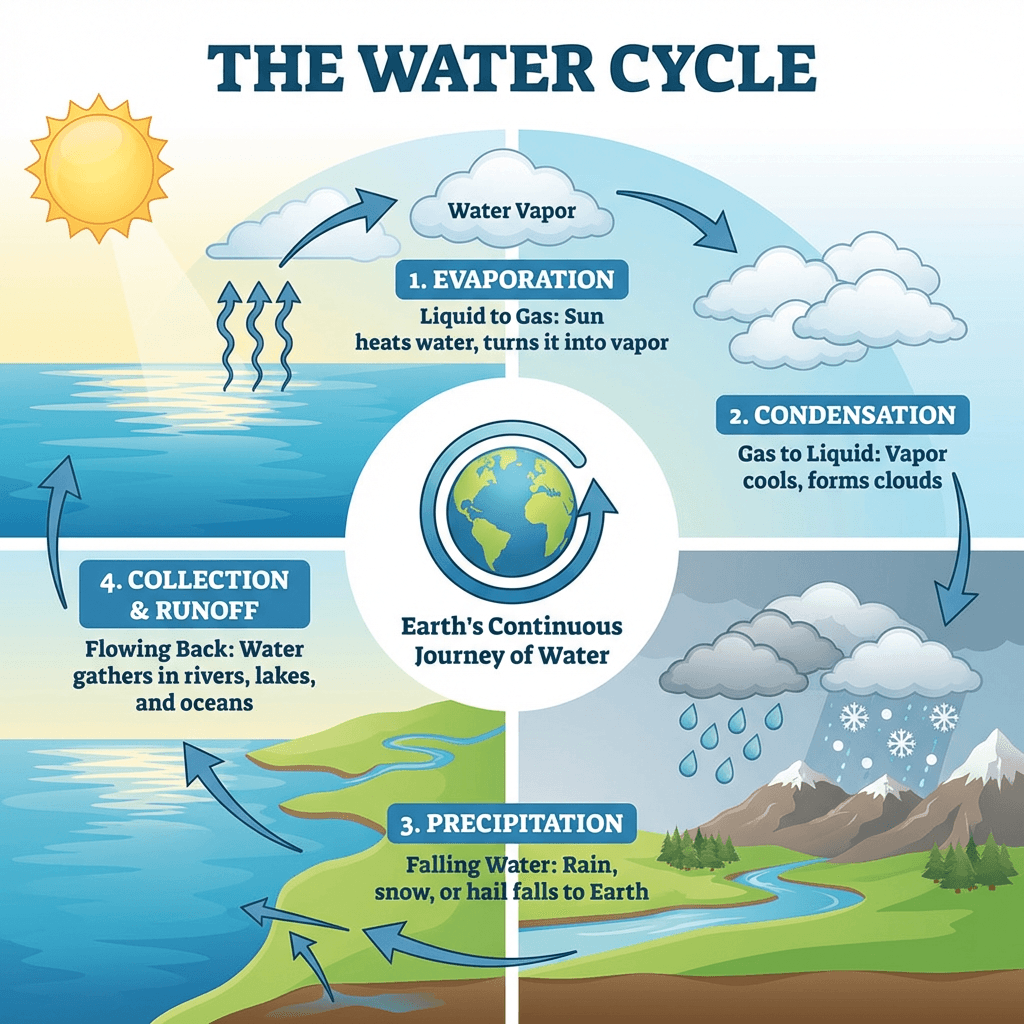 |
Result: Strong layout — evaporation, condensation, precipitation, collection — with readable titles and a coherent cycle. Short, concept-level prompts work better than long price lists for text-in-image.
Test 4: Outdoor Sign Typography
Goal: legible handwritten / elegant text on a physical prop, plus illustrated details.
| Prompt (input) | Output |
|---|---|
| A cinematic close-up of a wooden sign made of recycled materials. The sign features detailed illustrations of local birds and the text "Native Wildlife: Please Observe from a Distance" in elegant, legible handwriting. | 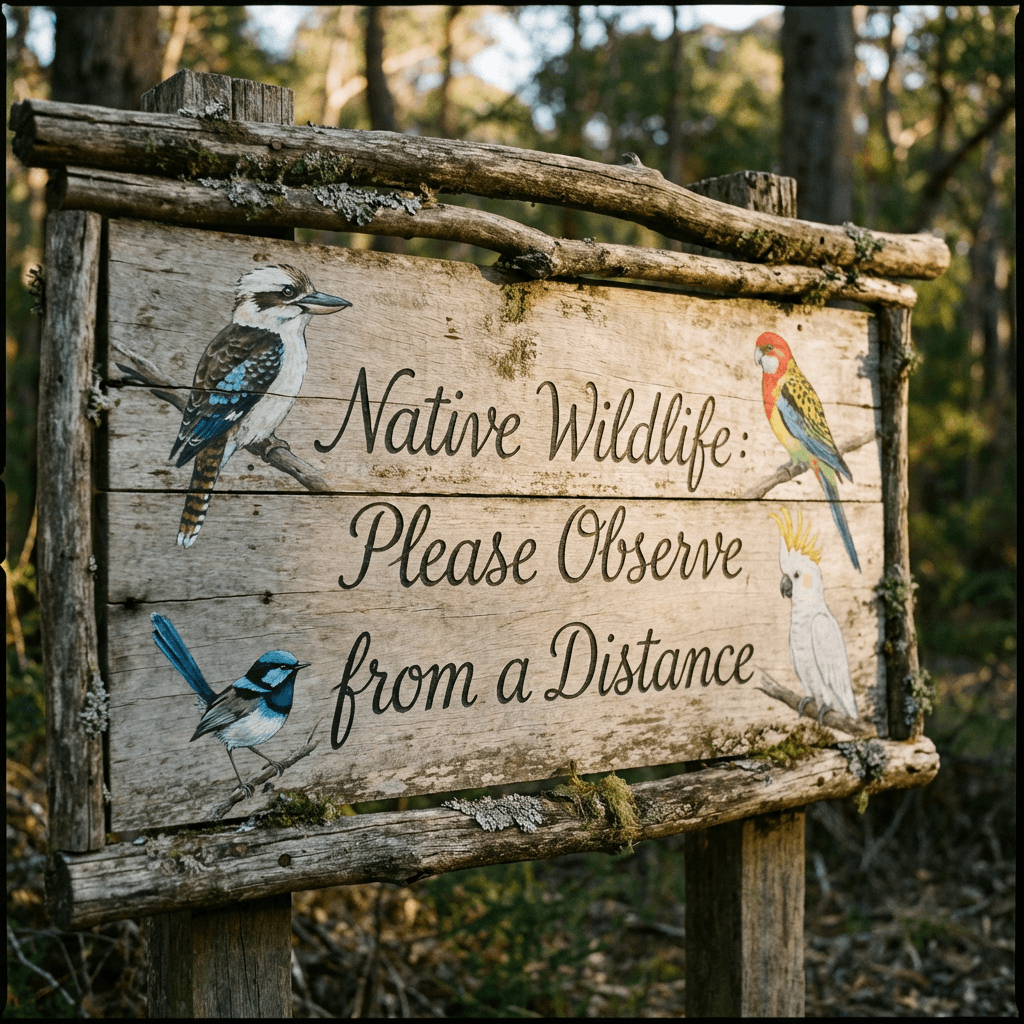 |
Result: The sentence is readable and matches the rustic frame + bird illustrations. Short, display-style copy succeeds much more often than multi-column menus.
Test 5: Multi-Detail Pop-Art Portrait (Prompt Adherence)
Goal: check whether layered style, wardrobe, and accessory instructions stick in one pass.
| Prompt (input) | Output |
|---|---|
| A highly stylized pop art fashion portrait from a low-angle perspective. The subject wears a suit with electric blue swirls and bright pink concentric circles. Accessories include yellow heart-shaped sunglasses and oversized pink earrings. The background is a flat, uniform sky blue with soft, shadowless lighting. | 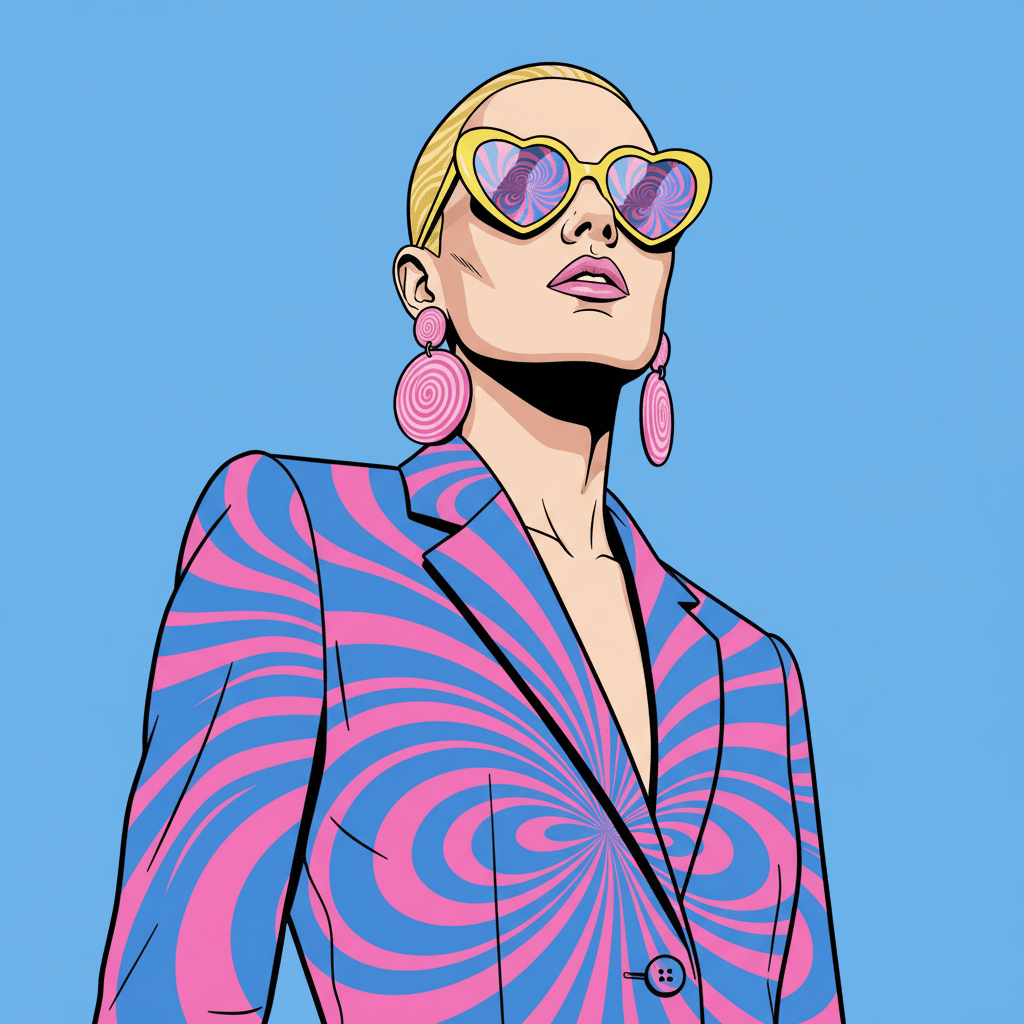 |
Result: Low angle, spiral suit, heart sunglasses, pink earrings, and flat blue background all landed. Complex stylistic prompts are a sweet spot — better than dense tabular text.
Observations: Ratio Flexibility vs. Detail Accuracy
Nano Banana 2 prioritizes canvas control and visual polish over perfect structured typography.
Pros
- Extreme ratios that stay coherent — 8:1 (and similar) scrolls keep a left-to-right narrative
- Fast high-res iteration — ~20s class generations speed up concept exploration
- Strong stylized / multi-detail adherence — fashion and graphic looks follow layered prompts well
- Readable short display text — signs and infographic titles often work
Cons
- Weak dense data text — menus, prices, and “only these items” lists often hallucinate extras
- Not a typesetting engine — brand-critical copy still needs post or another model
- Spec claims vary by surface — treat 2K/4K and thinking features as UI-dependent; verify on Van Gogh Studio
How to Run These Tests on Van Gogh Studio
- Open the AI Image Generator.
- Select Nano Banana 2 in the model picker.
- Paste a prompt from the tables above; set aspect ratio (use 8:1 for Test 1).
- Generate, then iterate — or switch models if you need exact typography.
Final Thoughts
Nano Banana 2 is a specialist: speed + extreme framing + strong stylistic control. It is excellent for wide backgrounds, concept scrolls, infographic-style layouts, and punchy portraits.
It is not the model I trust for a perfect price list or legal microcopy. On Van Gogh Studio I use it for environment and composition, then finish exact text in post — or swap to another image model when copy must be perfect.
Try Nano Banana 2 free on Van Gogh Studio — free credits on signup, no credit card required.
Create AI videos free
Try Van Gogh Studio free — text-to-video, image-to-video, and 300+ models in one place. Free credits on signup, no credit card required.
Try Free Video Generator