I tested Kling 2.5 Turbo to see whether this faster Kling AI video model delivers cinematic short clips worth using — or mainly a speed tier with uneven control.
In this Kling 2.5 Turbo review, I’ll share what it does well, where hands, complex prompts, and finish workflow become the ceiling, who it fits best, and why I would run it inside Van Gogh Studio when I need more than a single model.
Quick Verdict
Kling 2.5 Turbo is a strong AI video model if your main goal is fast cinematic short clips: emotional expression, smarter motion, and solid prompt understanding from concise descriptions. For creators who already think in shots, it punches above a “turbo” label.
It is a weaker choice when you need a complete production system — editing, captions, avatars, campaign assembly, or easy switching across models when one look fails. Kling 2.5 Turbo is a generator model, not a full studio. For that broader path, I prefer Van Gogh Studio.
| Review Point | My Take |
|---|---|
| Best for | Fast cinematic shorts, mood-driven scenes, social motion tests |
| Not best for | Full campaign production, multi-scene assembly, or avatar-led explainers alone |
| Strongest feature | Motion dynamics and prompt understanding for concise cinematic prompts |
| Biggest limitation | Model-only workflow — finishing, editing, and model comparison live elsewhere |
| Learning curve | Easy if you can write clear shot prompts |
| My verdict | Excellent short-clip model; limited as a complete video studio |
What Is Kling 2.5 Turbo?
Kling 2.5 Turbo is a video generation model from Kling AI. It turns text prompts — and image-to-video workflows on platforms that support them — into short cinematic clips with improved motion and expression versus earlier Kling tiers.
Its biggest value is generation quality at speed. I saw stronger emotional beats, cleaner camera momentum, and better handling of short prompts than older Kling runs I remembered.
Compared with a full AI video suite, Kling 2.5 Turbo is one engine. You still need a workspace for editing, comparing models, avatars, and publish-ready structure.
Key Features I Reviewed
Kling 2.5 Turbo’s value is organized around short cinematic generation quality.
Cinematic Motion and Camera Dynamics
In my samurai-in-rain and golden-hour animal tests, motion felt more grounded. Camera ramps and environmental interaction looked less robotic than older generations.
That matters for social and concept clips where atmosphere sells the shot. It does not automatically build a multi-scene ad or branded story.
Prompt Understanding From Short Descriptions
Turbo handled concise prompts better than I expected. I did not always need padded atmosphere language for basic mood.
Complex multi-subject prompts still need care. When too many actions compete, clarity drops — same class of limit most video models share.
Emotional Expression and Detail Physics
Facial mood and small object physics (like a tail flick or rain reflections) improved in several runs. Hands and fine finger work remain a weak spot — piano and close-up hand prompts still need review.
Speed Versus Control Tradeoff
Turbo is built to move fast. That is useful for iteration. Exact shot lists, brand-safe product fidelity, and long structured narratives still need a surrounding workflow.
Pros and Cons
What I Liked
- Fast cinematic short-clip generation
- Stronger motion dynamics and camera momentum
- Better results from concise prompts
- Improved emotional expression in many scenes
- Useful for social and concept motion tests
What Held It Back
- Hands and fine detail can still fail
- Complex prompts can confuse the shot
- No built-in finish path for captions, edits, or campaign structure
- Model-only — not a full production studio
- Weak alone for ads that need hooks, offer flow, and variations
Create Full Videos with Van Gogh Studio Free
Where Kling 2.5 Turbo Falls Short
A Model Is Not a Workflow
Great clips still need structure, sound design choices, captions, brand pacing, and often alternative model looks. Turbo generates; it does not finish.
Anatomy and Complexity Gaps
Close-up hands and crowded multi-action prompts remain risky. Always review before publishing.
Campaign Structure Lives Elsewhere
UGC video ads, product launches, and explainers need more than one strong shot. Hooks, variations, and channel formats require a studio layer.
How I Reviewed Kling 2.5 Turbo
I reviewed it as a video model for short cinematic clips, not as a business video suite.
Main areas I considered:
- Motion quality — camera dynamics, physics, and temporal stability
- Prompt fidelity — whether concise prompts landed the intended mood
- Detail reliability — hands, faces, small object motion
- Speed — whether turbo iteration felt practical
- Use-case coverage — social, concept, product, ads, stories
- Workflow fit — whether a model alone was enough to publish
Is Kling 2.5 Turbo Right for You?
Kling 2.5 Turbo is a strong fit if you want fast cinematic shorts and already have — or plan to use — a platform that hosts the model with editing and publishing tools.
It is less ideal if you expected one website to handle avatars, long stories, campaign assembly, and multi-model A/B looks without extra steps.
In short: Turbo is right for users who need strong short clips. It is less ideal as a standalone production system.
Real Use Cases
| Use Case | My Take |
|---|---|
| Cinematic social shorts | Strong fit — mood and motion shine |
| Concept and mood tests | Strong fit for fast iteration |
| Product hero motion | Mixed fit — review fidelity carefully |
| Multi-scene brand stories | Limited fit alone — needs assembly tools |
| UGC / performance ads | Mixed fit — great shots, weaker campaign structure alone |
| Training / avatar explainers | Not the primary tool — use avatar workflows |
| Long publish-ready narratives | Weak fit without a studio layer |
Kling 2.5 Turbo vs Van Gogh Studio
| Dimension | Kling 2.5 Turbo | Van Gogh Studio |
|---|---|---|
| Main workflow | AI video model for short cinematic clips | Full AI video generation, editing, and publish-ready workflows |
| Generation quality | Strong turbo-tier cinematic motion | Access Kling plus other models in one workspace |
| Model switching | Single-model focus | Compare Kling, Veo 3.1, Seedance 2.5, and more |
| Marketing output | Strong shots; structure elsewhere | Stronger with UGC ad video and campaign workflows |
| Editing flexibility | Generation-focused | Stronger refinement with the AI video editor |
| Best fit | Creators who want a fast cinematic engine | Creators who need finished videos, not only model outputs |
Why Van Gogh Studio Is a Better Kling 2.5 Turbo Alternative
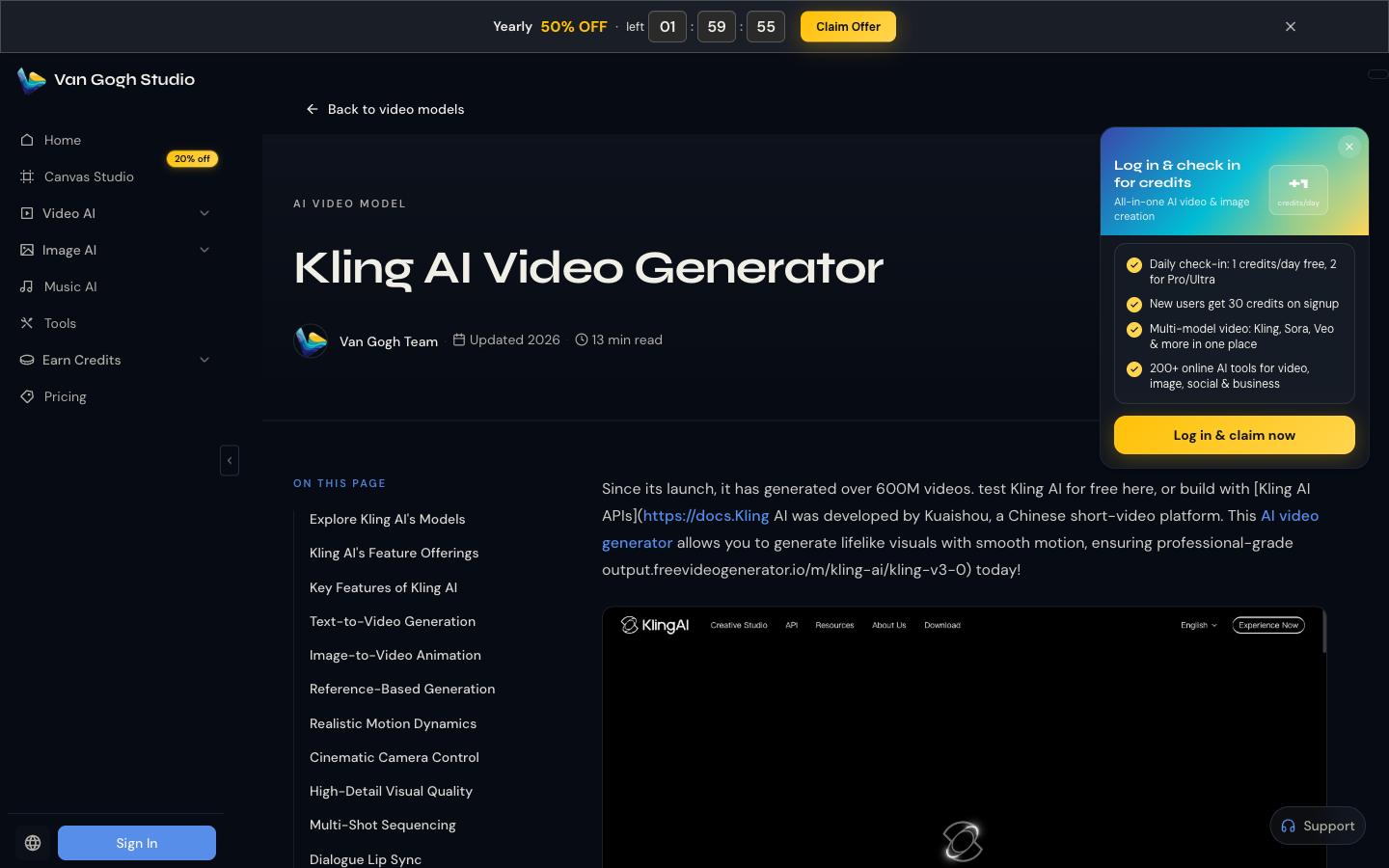
Kling 2.5 Turbo is a strong engine. Van Gogh Studio is stronger when I want that engine inside a real production path — compare models, finish the edit, and publish.
Run Kling Alongside Other Top Models
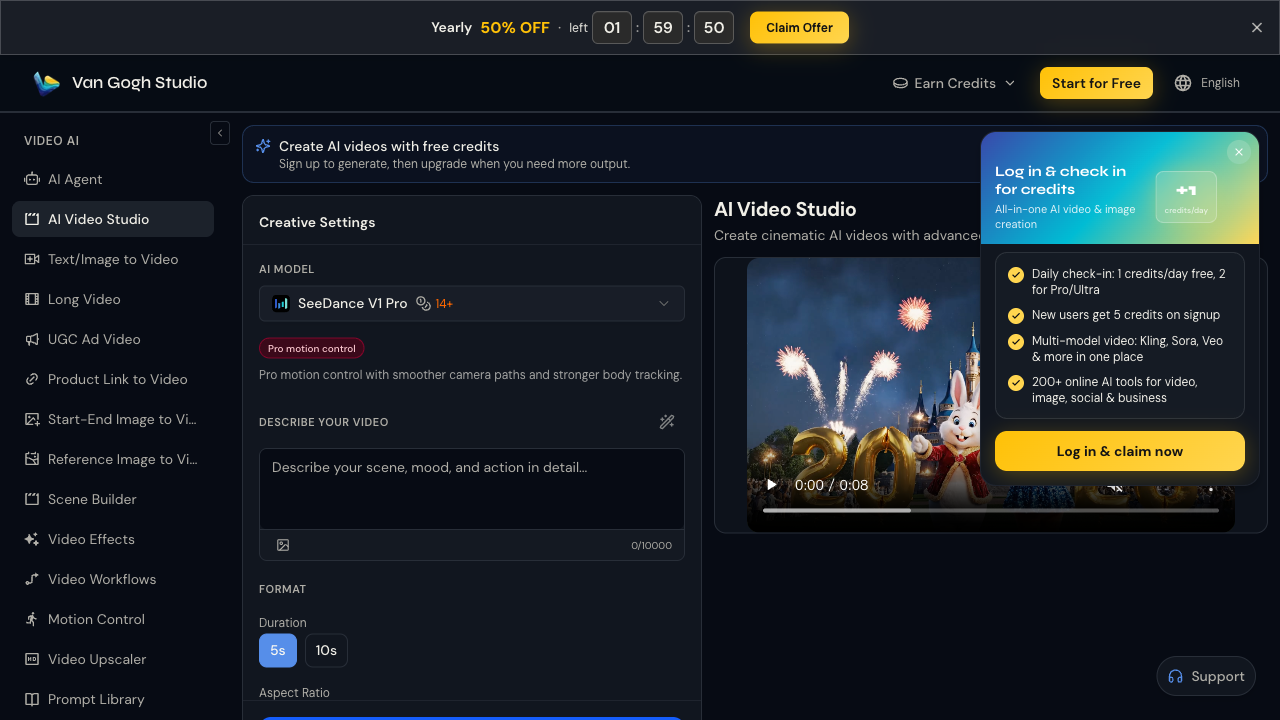
On Van Gogh Studio I can use Kling-class generation next to text to video and image to video paths, then switch when another model wins on fidelity or style.
Post-Ready Videos With Van Gogh Studio Agent
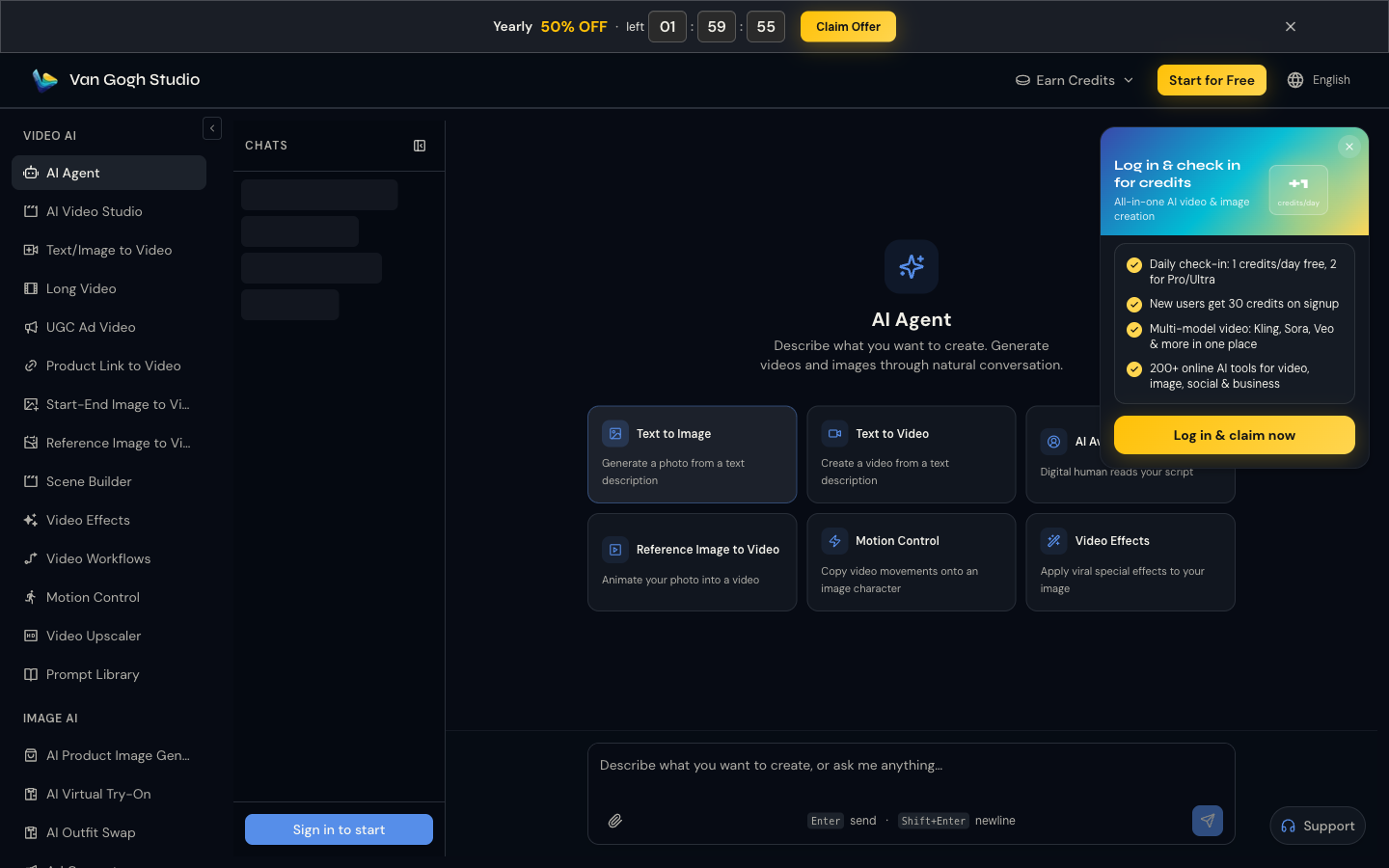
Van Gogh Studio Agent adds structure, pacing, and publish-oriented assembly that a raw model clip does not provide.
Create Videos with Van Gogh Studio Agent
Avatar and Campaign Tools When Clips Need to Sell
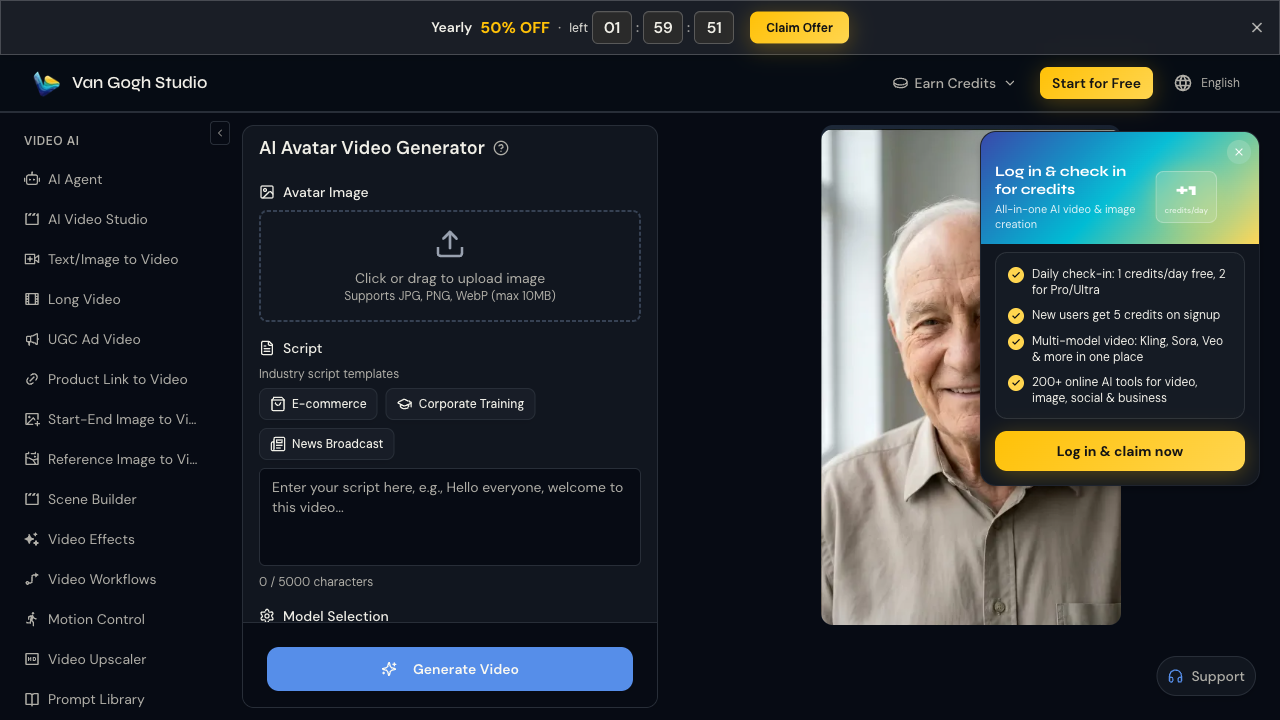
Presenter scenes via AI avatar, refinement in the AI video editor, and UGC ad video help turn strong Kling shots into finished content.
Final Verdict: Is Kling 2.5 Turbo Worth Using?
Kling 2.5 Turbo is worth using for fast cinematic short clips with improved motion and prompt understanding. For mood-driven social and concept work, those strengths are real.
It is less ideal as a complete studio. Hands can fail, complex prompts need care, and finishing still lives in a surrounding workflow.
Use Kling 2.5 Turbo when short cinematic generation is the job. For generation plus editing, model comparison, and publish-ready production, I would choose Van Gogh Studio.
Kling 2.5 Turbo Review FAQs
Is Kling 2.5 Turbo good for AI video?
Yes for short cinematic clips. Motion, mood, and prompt understanding are strong reasons to use it.
Does Kling 2.5 Turbo replace a full video editor?
No. It is a generation model. Captions, assembly, avatars, and campaign structure still need a broader workspace.
What is the biggest drawback of Kling 2.5 Turbo?
For me, the biggest drawback is treating a strong model as a finished workflow. Hands, complex prompts, and publish assembly still need review and surrounding tools.
What is the best Kling 2.5 Turbo alternative?
If you want Kling-quality generation plus a complete AI video workflow, Van Gogh Studio is the better alternative. It covers multi-model video, AI avatar, editing, UGC ads, and Agent-led publish-ready videos in one workspace.
Create AI videos free
Try Van Gogh Studio free — text-to-video, image-to-video, and 300+ models in one place. Free credits on signup, no credit card required.
Try Free Video Generator