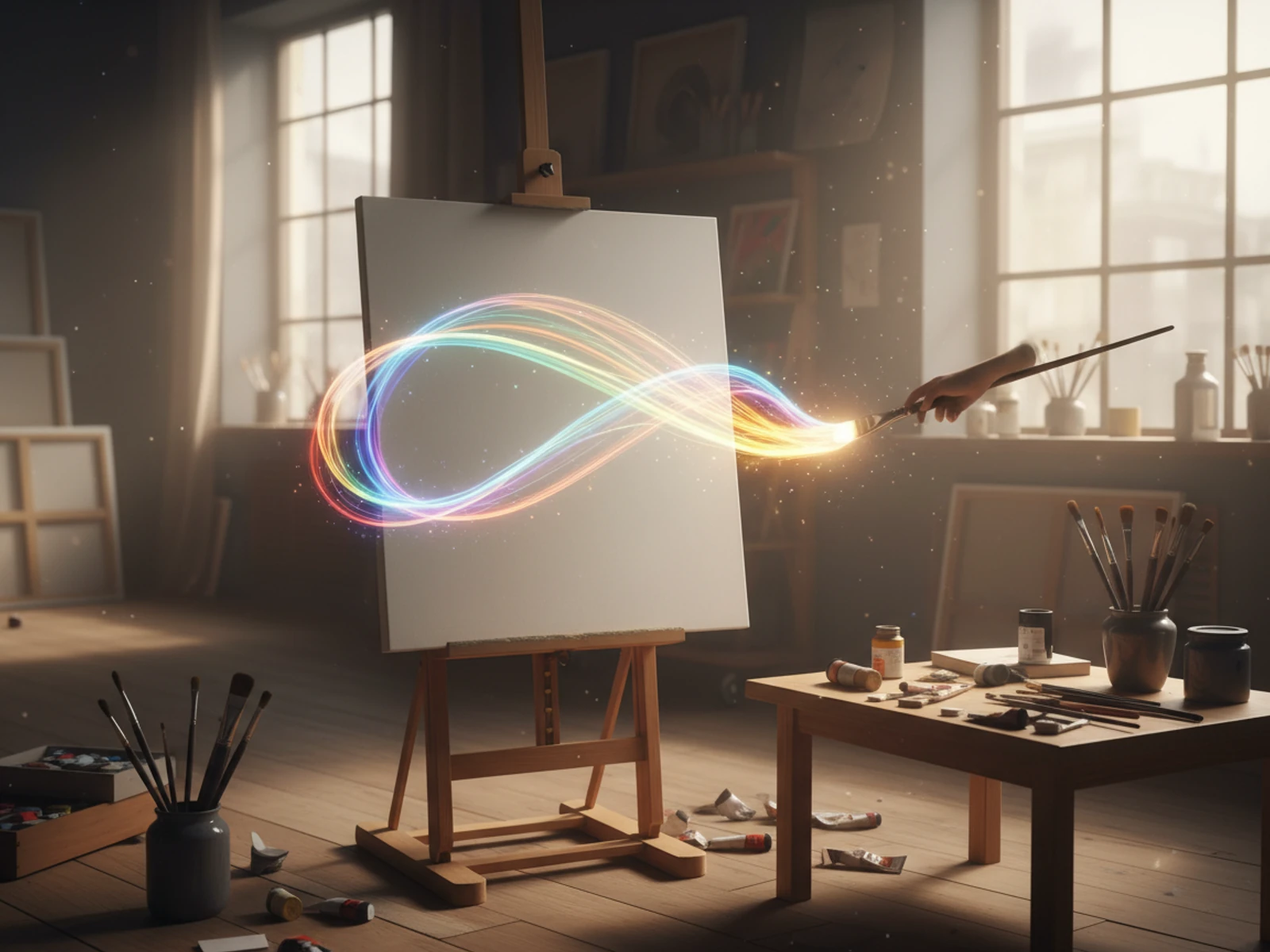
I tried Flova AI to see whether it really delivers on its promise: helping creators build cinematic, character-led videos through a guided production workflow instead of a plain text-to-video box.
In this Flova AI review, I’ll share what it does well, where it feels limited, who it fits best, and why I would choose Van Gogh Studio when I need a broader path from idea to publish-ready video.
Quick Verdict
Flova AI is a strong AI video generator if your main goal is cinematic storytelling, consistent characters, and planned camera movement. The conversational production flow, 360-degree character consistency, and multi-model workspace make it feel more like an AI film assistant than a one-click clip tool.
It is a weaker choice when you need fast, high-volume marketing videos, product-led commerce creatives, or a workflow that finishes publish-ready ads with less review. For a fuller production path across ads, social, and longer stories, I prefer Van Gogh Studio.
| Review Point | My Take |
|---|---|
| Best for | Cinematic scenes, character-led shorts, music videos, and story tests |
| Not best for | High-volume ads, product commerce videos, or low-review publishing |
| Strongest feature | 360-degree character consistency with guided camera direction |
| Biggest limitation | Creative workflow feels slower for campaign-ready output |
| Learning curve | Easier than raw prompt engineering, still needs creative judgment |
| My verdict | Excellent for AI filmmaking experiments; limited as a full publishing studio |
What Is Flova AI?
Flova AI is built mainly around cinematic video creation and character-based storytelling. Instead of only offering a prompt box, it tries to act like a director’s workspace: you describe a scene, shape mood and camera direction, and guide the video through a more production-like process.
Its biggest value is helping creators keep a recognizable subject stable while the camera moves. You can build a character from multiple views, then rotate around that subject while trying to keep face, outfit, and emotional style visually consistent.
Compared with quick social generators, Flova feels more guided and film-minded. It is less about shipping ten ads by Friday and more about building intentional scenes for short films, music videos, and stylized story clips.
Key Features I Reviewed
Flova’s feature set is organized around cinematic direction: character stability, camera control, conversational production, and multi-model flexibility.
360-Degree Character Consistency
Character consistency is Flova’s clearest strength. You can set a confirmed character reference as the visual anchor, then support camera rotations and changing views while trying to keep the same identity intact.
That solves a real AI video problem. Many tools can create a beautiful person for three seconds, then lose the face, outfit, or style when the angle changes. Flova is strongest when the shot is controlled — a 360-degree character turn is exactly the kind of problem it seems built for.
Cinematic Camera Movement
A lot of AI video generators still produce clips that look solid but feel directionless. The camera floats, the subject moves, and something visually interesting happens, but it does not always feel intentional.
Flova pushes more toward direction. You can think in terms of camera angles, lighting, motion, and scene flow. That makes it useful for music videos, short film tests, travel-style reels, and visual storytelling where planned movement matters more than random motion.
Conversational Video Production
Flova’s conversational workflow is one of its better ideas. Instead of wrestling with a long technical prompt, you can describe what you want more naturally, then refine mood, camera angle, and scene direction.
This lowers the barrier for creators who think visually but do not want to write prompt formulas all day. Many people start with a feeling or scene, not a perfect technical prompt, and Flova matches that process better than a blank generation box.
Multi-Model Creative Workspace
Flova also works as a multi-model video workspace. That matters because one AI model rarely handles every creative task well. One model may be better at faces. Another may handle stylized scenes more cleanly. Another may be better at motion.
A multi-model setup gives creators more room to experiment. The tradeoff is that beginners may need time to understand which model fits which job — flexibility helps, but it is not the same as a guided publishing workflow.
Pros and Cons
What I Liked
- Strong 360-degree character consistency for controlled camera shots
- Good fit for cinematic scenes, music videos, and story-based clips
- Conversational workflow feels easier than technical prompting
- Multi-model workspace gives more creative flexibility
- Useful for short films, character tests, and visual direction experiments
What Held It Back
- Output still needs careful review before publishing
- Not the fastest option for ad or campaign workflows
- Fine control can still miss exact hand movements, product angles, or brand details
- Longer projects may still face consistency drift
- Beginners may need time to learn the cinematic production flow
Create Full Videos with Van Gogh Studio Free
Where Flova AI Falls Short
Flova’s limits show up when the video needs predictable, ready-to-use output with minimal review — especially for marketing and product work.
The Workflow Is Creative, But Not Always Fast
Flova feels built for creators who enjoy shaping scenes. That is compelling if you are developing a short film or music video. It is less ideal if your main goal is to create several product ads by Friday.
The more cinematic the workflow becomes, the more decisions you need to make. Camera movement, scene order, mood, sound, and visual continuity all take attention. Some creators will love that. Marketing teams may find it slower than they need.
Fine Control Can Still Be Frustrating
Flova gives you a guided production flow, but AI video still has limits. If you want one exact hand movement, one exact product angle, or one exact brand detail, you may still need several attempts.
A beautiful clip is not enough if the product label is wrong or the character changes halfway through the scene. This is not unique to Flova, but it matters for review — especially on brand-sensitive projects.
Marketing Outputs Need More Finishing
Flova may not be strong enough for marketing videos that need differentiation at volume. Performance ads, e-commerce creatives, UGC video ads, and social campaigns usually depend on fast hooks, product close-ups, scene changes, and platform-native pacing.
Flova’s strengths sit closer to concept and cinematic testing. When the video needs to sell through product clarity and campaign structure, the result may still need another production layer.
How I Reviewed Flova AI
I reviewed Flova as a video generator for real creator problems, not just as a feature list. I focused on whether it could help users move from a scene idea to a video that feels intentional and usable.
Main areas I considered:
- Character consistency — whether the same subject stayed stable across camera angles
- Cinematic control — whether motion, lighting, and scene flow felt planned
- Conversational direction — whether natural language guidance was easier than technical prompting
- Multi-model flexibility — whether model choice improved different video styles
- Output reliability — whether longer or brand-sensitive projects still needed heavy review
- Use-case coverage — whether the tool worked for films, music videos, social, product, and campaign needs
- Business value — whether it solved a real production problem or mainly supported creative experimentation
Is Flova AI Right for You?
Flova is a strong fit if you care more about cinematic quality and character stability than instant publishing. I would recommend it for short films, music videos, AI story scenes, stylized visual sequences, and character-based experiments.
It is also useful if you want a more guided film-style process than a plain text-to-video tool. The conversational workflow and camera-focused direction help when the video depends on a recognizable subject and planned movement.
However, Flova may not be the best choice if you need quick product ads, strict brand control, or social videos with very little manual checking. If you are creating UGC-style ads, commerce product clips, or high-volume campaign variations, you will likely want a more publishing-focused AI video workflow.
In short: Flova is right for users who want to direct scenes. It is less ideal for users who want finished marketing output at speed.
Real Use Cases
| Use Case | My Take |
|---|---|
| Character-led short films | Strong fit — built around characters, scene direction, and cinematic movement |
| Music videos | Strong fit — works well when mood, motion, and recurring subjects matter |
| Stylized social clips | Good fit — eye-catching scenes, but each output still needs review |
| Product ads | Limited fit — useful for concepts, weaker for product-led selling |
| Marketing campaigns | Mixed fit — useful for brand films or teasers, slower for high-volume ads |
| Storyboarding | Good fit — helps test scene ideas before a larger production flow |
| Long narrative videos | Mixed fit — stronger on controlled shots than reliable multi-scene continuity |
Flova AI vs Van Gogh Studio
| Dimension | Flova AI | Van Gogh Studio |
|---|---|---|
| Main workflow | Cinematic character and scene direction | Full AI video generation, editing, and publish-ready workflows |
| Character consistency | Core strength with 360-degree control | Stronger via multi-model generation plus AI avatar for talking presenters |
| Creative range | Narrower film / story focus | Broader coverage across ads, explainers, social, and story videos |
| Marketing output | Better for concept and brand films than campaign volume | Stronger with UGC ad video and campaign-ready workflows |
| Editing flexibility | Guided production flow inside a creative workspace | Stronger follow-up refinement with the AI video editor |
| Finished output | Often still needs careful review before publishing | Van Gogh Studio Agent helps generate structured, post-ready videos |
| Best fit | AI filmmakers and story-driven creators | Creators and marketers who need finished AI videos, not only cinematic tests |
Why Van Gogh Studio Is a Better Flova AI Alternative
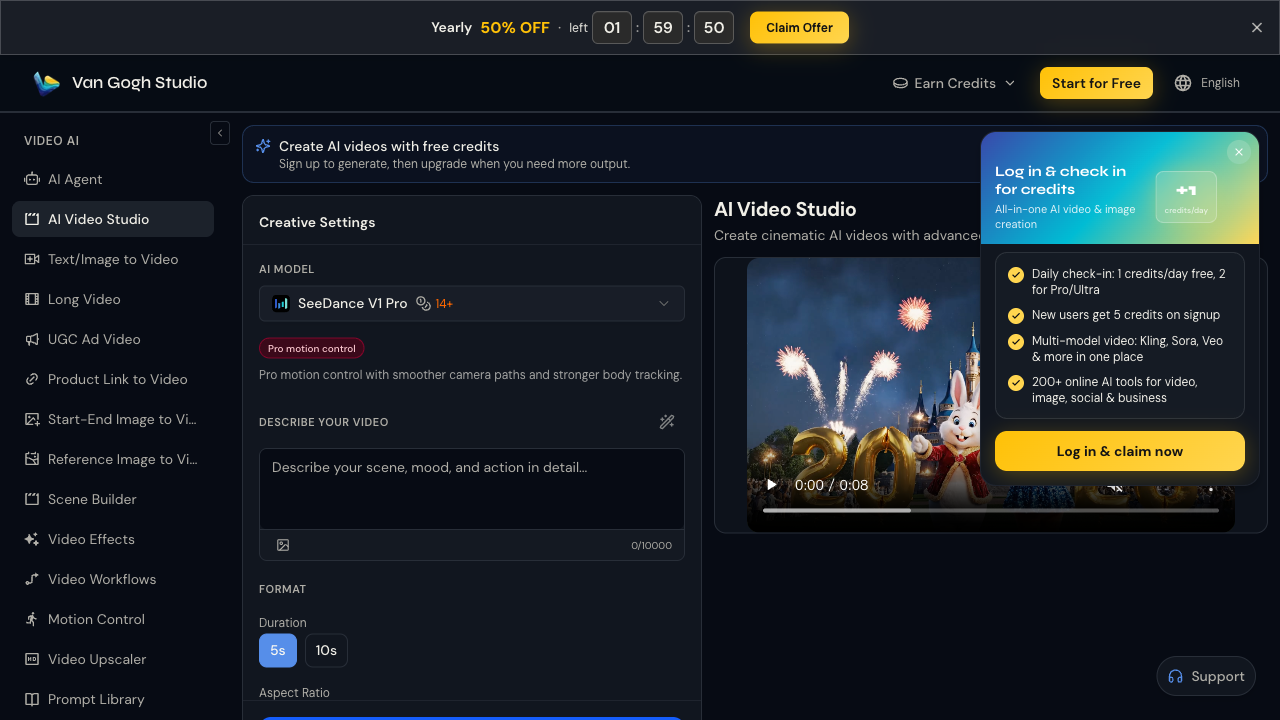
Flova is useful for cinematic character scenes. Van Gogh Studio is stronger when I want an AI creative suite that can support many video styles, editing, talking avatars, and audio in one place.
Broader AI Video Generation, Not Only Cinematic Scenes
Van Gogh Studio gives me more starting points: text to video for concepting, image to video for product stills and character frames, and multi-model access when I want different motion styles. Models such as Veo 3.1, Kling 3.0, and Seedance 2.5 matter when one look is not enough.
That matters after Flova’s cinematic strength. I may like a character shot, but I still need product motion, social cuts, captions, and campaign variations without switching platforms.
Post-Ready Videos With Van Gogh Studio Agent
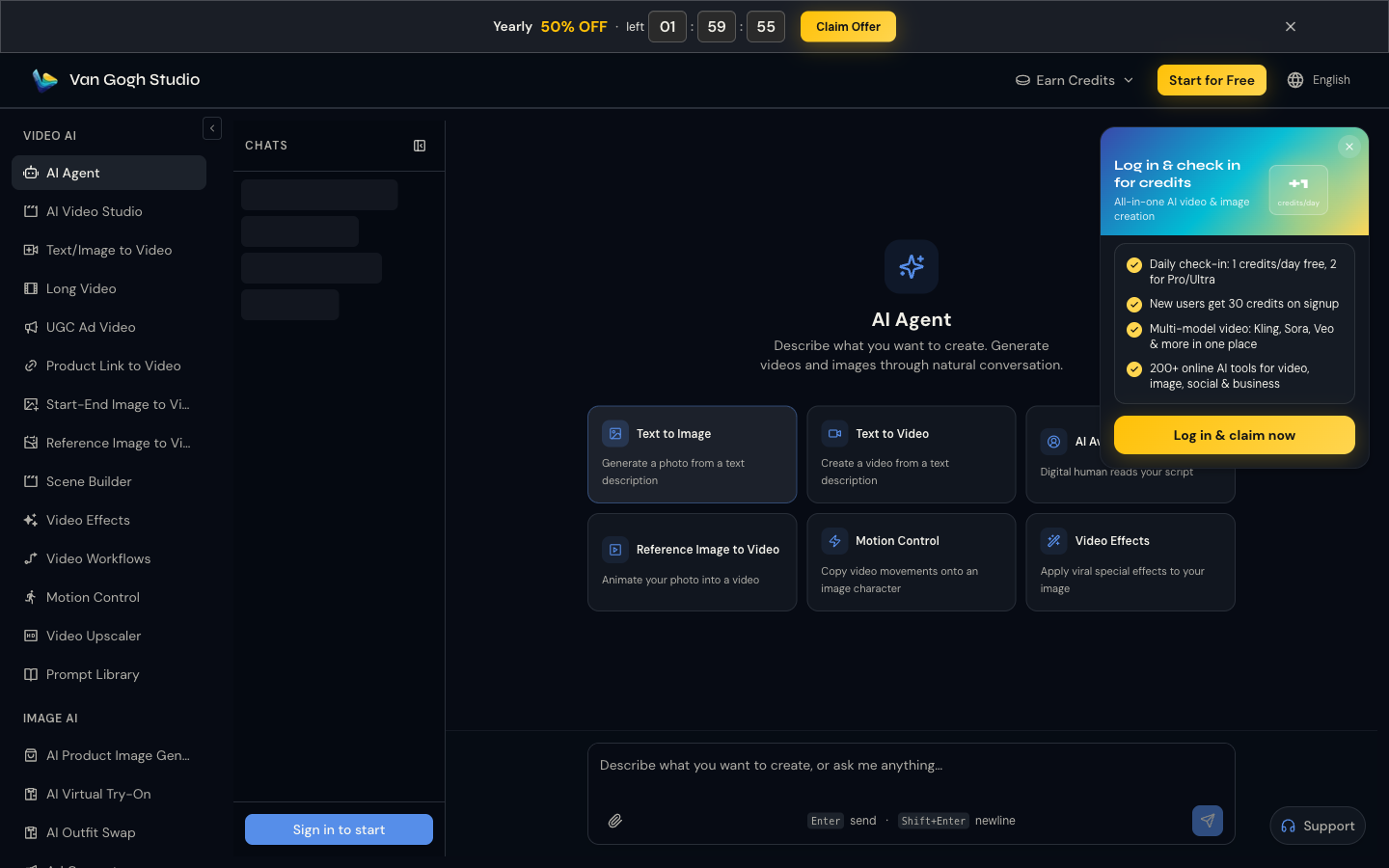
Van Gogh Studio Agent gives a stronger end-to-end production advantage. Instead of only shaping a cinematic clip, it is designed to create structured, production-ready videos with less manual editing.
I can start from an idea, text, image, or URL, and the Agent can help handle structure, pacing, visuals, and sound. That makes it more suitable when I want a finished result instead of a beautiful scene that still needs assembly.
It also supports more content directions — viral video cloning, UGC ads, story videos, anime videos, music videos, and news-style videos — so the workflow stays adaptable for real publishing tasks.
Create Videos with Van Gogh Studio Agent
Avatar Videos Inside a Full Production Flow
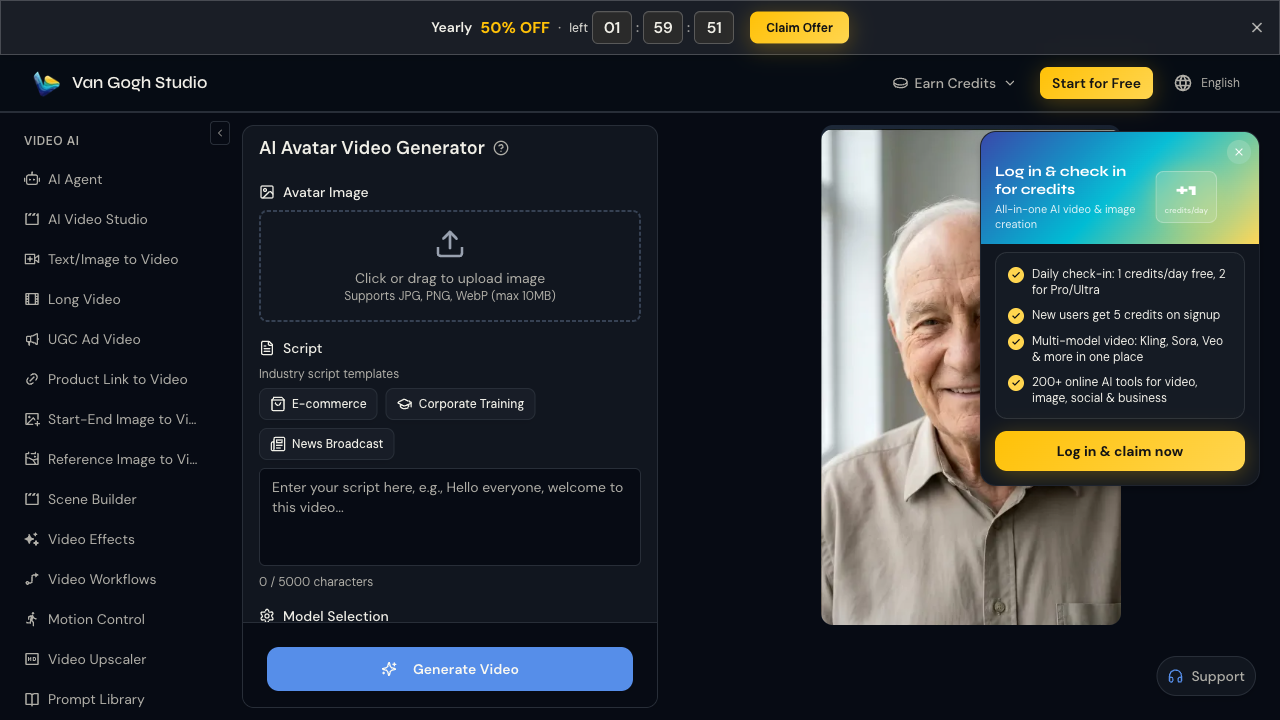
With Van Gogh Studio’s AI avatar video generator, I can turn one photo into a lip-synced talking avatar with natural expressions and gestures — without filming or long avatar training.
The difference is context. Flova is strongest when the character is a cinematic subject. After a presenter clip is ready in Van Gogh Studio, I can keep building the video with text-to-video scenes, product motion, captions, and prompt-based edits instead of stopping at one visual moment.
Create Avatar Videos with Van Gogh Studio Free
Stronger Marketing and Commerce Workflows
For ads, launches, and product promos, I need hooks, variations, pacing, and channel-ready formats. Van Gogh Studio’s marketing and product-video workflows are built for that campaign output, not just one cinematic scene. URL-to-video and photo-to-video paths also help teams move from assets to ads faster via link to video and UGC ad video.
Final Verdict: Is Flova AI Worth Using?
Flova AI is cinematic, character-focused, and helpful for creators who want guided scene direction instead of a plain generation box. For short films, music videos, and character consistency tests, that is genuinely useful.
Creative speed for publishing is the main issue. Flova is not the strongest choice for high-volume product ads, ecommerce visuals, UGC-style campaigns, or videos that need to ship with minimal review.
For a broader AI video workflow, I would choose Van Gogh Studio. It combines multi-model video generation, editing, Agent-led publish-ready workflows, AI avatar tools, and campaign paths in one place — so you can direct, sell, and create without switching platforms.
Flova AI Review FAQs
Is Flova AI good for cinematic videos?
Yes. Flova is one of the stronger options for cinematic scenes, character-led shorts, and music-video style clips because the workflow is built around camera direction and visual continuity.
Does Flova AI support character consistency?
Yes. 360-degree character consistency is its strongest feature. It works best on controlled shots where the same subject needs to stay recognizable as the camera moves.
What is the biggest drawback of Flova AI?
For me, the biggest drawback is that the cinematic workflow is slower and less direct for campaign publishing. If you need product ads, UGC variations, or finished social videos at volume, you will likely outgrow it.
What is the best Flova AI alternative?
If you want cinematic generation plus a complete AI video workflow, Van Gogh Studio is the better alternative. It covers multi-model video generation, AI avatar, editing, UGC ads, and longer story videos in one workspace.
Create AI videos free
Try Van Gogh Studio free — text-to-video, image-to-video, and 300+ models in one place. Free credits on signup, no credit card required.
Try Free Video Generator