Want an ad-free experience? Upgrade your plan.

AI video


Newsletter brands live or die by their click-through rates. You’ve probably tested subject lines, preview text, and send times, but what about the video creatives inside your emails or on your landing pages? Static images are easy to swap, but video is harder to iterate on—until now. With AI video effects, you can generate multiple variations of a video creative in minutes, not days. This guide walks you through a practical workflow for using AI video effects to A/B test creatives specifically for newsletter brands.
A/B testing isn’t just for headlines. Video creatives can significantly impact engagement, but producing multiple versions traditionally requires a video editor, stock footage, and hours of work. AI video generation changes that. You can create variations with different effects, styles, or motion paths, then test which one resonates with your audience. For newsletter brands, this means you can quickly test a product demo, a lifestyle clip, or a UGC-style ad without burning your budget.
Here’s a step-by-step process using the AI Video Studio on FreeVideoGenerator (also known as Van Gogh Studio).
Before generating anything, decide what you’re testing. Are you testing the effect (e.g., zoom vs. pan), the style (e.g., realistic vs. animated), or the message (e.g., benefit-led vs. feature-led)? Write down two or three variables you want to compare. For example, you might test a product close-up with a subtle zoom against a lifestyle shot with a slow pan.
Start with a base video that matches your core message. You can use text-to-video or image-to-video. If you have a product image, upload it and generate a short clip. Keep the base video simple—you’ll apply effects later. For a newsletter brand, a 5-10 second clip is usually enough.
Now comes the fun part. In the AI Video Studio, you can apply various effects to your base video. For A/B testing, create two or three versions with different effects. For example:
Each effect changes the mood and focus, which is exactly what you want to test.
If you’re using text-to-video, you can also generate completely different videos by tweaking your prompt. For example, one prompt might emphasize “clean, minimal, professional” while another says “vibrant, playful, energetic.” The AI will interpret these cues differently, giving you distinct creatives to test.
Once you have your variations, export them in the resolution you need. Then, set up your A/B test in your email platform or ad manager. Make sure to keep everything else constant—same subject line, same placement—so you can isolate the effect of the video creative.
After your test runs, look at the metrics: click-through rate, conversion rate, or engagement. The winner becomes your new baseline. Then, you can iterate by applying the winning effect to new messages or testing even more variations.
Here are a few prompts you can adapt for your newsletter brand:
Parameter tips: For A/B testing, keep the duration consistent (e.g., 5 seconds) so the only variable is the effect or style. Also, consider the aspect ratio—if your newsletter uses a certain size, match that to avoid cropping issues.
Beyond the AI Video Studio, you can use other tools on the platform to speed up your workflow:
Ready to start A/B testing your newsletter creatives with AI video effects? Head over to the AI Video Studio and create your first variation in minutes. New accounts get 21 free credits—no credit card required. Start testing today: AI Video Studio
Free AI tools to go from idea to publish — pick a tool and start creating in minutes.

Create animated stickers with transparent backgrounds
Apply cinematic AI video effects
Open
Script, voiceover & export in one place — ship polished videos fast.
Generate AI videos from text or images
Open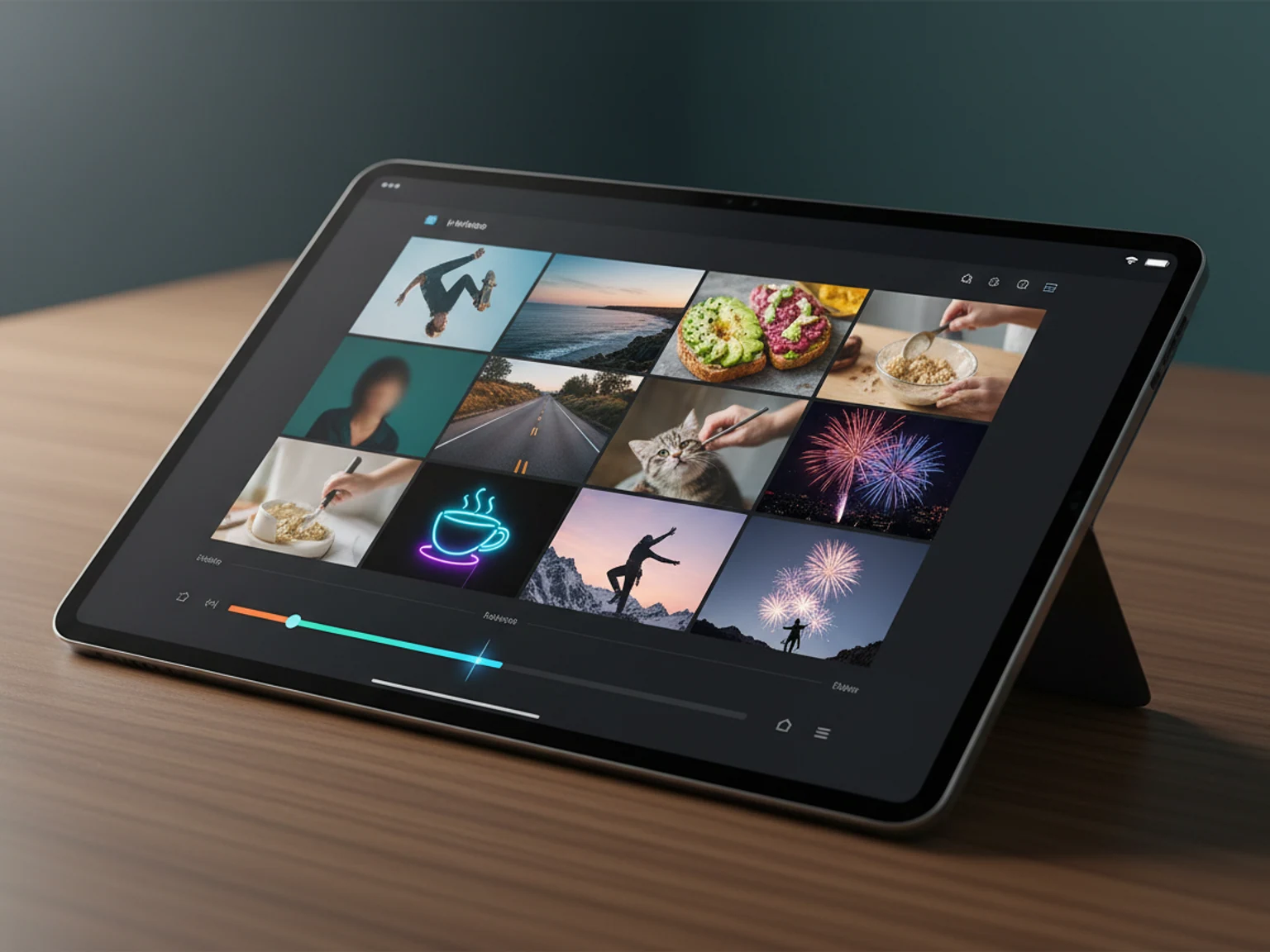
Generate AI videos from text or images
Open
Apply cinematic AI video effects
Open
Generate AI videos from text or images
Open
Upload a still and watch AI bring it to life with natural motion.
Turn still images into cinematic video
Open